至于传统上被视为「无风险资产」的政府债券,作者认为其安全性同样是个迷思,例如 2021 年发行的 30 年期英国公债如今价格已腰斩过半,而通膨连结债券的买入价格也早已反映了市场对通膨的预期。更严峻的是,西方各国政府正深陷庞大的发债需求中,尤其美国国债已超过 40 兆美元,其中约 7.25 兆美元(占 GDP 超过 22%)需在一年内再融资。加上传统企业债到期展延,以及明年 AI 资料中心建设所需的额外上兆美元资金,庞大的资金吸纳压力可能进一步推升债券殖利率,进而在短期内对股市造成剧烈冲击。
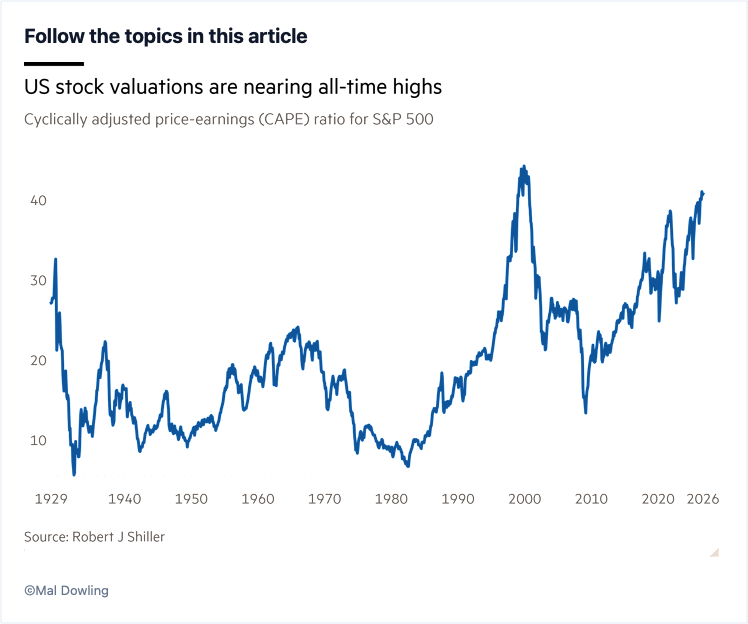
然而,若深入检视股票市场的估值,情况并非全面失控。目前的席勒本益比看似极高,主要是因为现代指数由高估值科技股主导,若剔除美国科技股,其余股票以及英国、日本、中国等全球市场的估值仍处于历史正常水准。投资人仍有许多合理的选择,例如近期因收购美国机器人公司而股价回落至明年预估本益比 21 倍的法国施耐德电机、股价营收比仅两倍的中国云端与电商巨头阿里巴巴、本益比 12 倍的油田服务公司 SLB,以及未依赖债市融资且估值未过度膨胀的中小型股,因此投资人无须急于撤出股市。
Although global equity indices are heavily concentrated in a few tech giants with uncertain profitability—such as richly valued SpaceX and soon-to-IPO Anthropic—and semiconductor stocks recently melted down, fund manager Simon Edelsten argues against liquidating portfolios in panic. In an era of high inflation and geopolitical tensions keeping oil above $107 a barrel, alternative assets look no safer than stocks. While cash appears nominally stable, surging costs like a 50 percent rise in electricity bills over five years have severely eroded its purchasing power; conversely, global equities have risen over 70 percent in that timeframe because strong companies can hedge against inflation by raising prices to protect margins, while balanced portfolios can further de-risk by favoring inflation-resilient sectors like telecoms and lower-inflation countries.
Turning to government bonds, the author dismisses the notion that they are risk-free, noting that a 30-year UK gilt issued at £100 in April 2021 now trades at £40, and index-linked bonds already price in expected inflation at purchase. Furthermore, western governments face massive debt issuance for years to come, led by the US with over $40tn in total debt and $7.25tn in bills—over 22 percent of GDP—requiring refinancing within a year. When combined with traditional companies rolling over maturing bonds and an extra trillion dollars needed next year to fund AI data centers, this massive borrowing demand could drive bond yields even higher and potentially trigger a sharp short-term correction in equity markets.
Nevertheless, a closer look at equity valuations reveals that the broader market is not universally overextended. While long-term metrics like the Shiller index appear extreme due to modern tech-heavy market composition compared to historically bank- and oil-dominated indices, stripping out US tech stocks leaves remaining equities and international markets across the UK, Japan, and China at historically normal valuations. Investors can still find reasonable opportunities, such as French electrical equipment maker Schneider Electric at 21 times next year's earnings following a robotics acquisition, Chinese cloud and retail giant Alibaba at two times sales, oilfield services firm SLB at 12 times earnings, and mid- and small-cap shares that have missed the tech boom and do not rely on bond market funding.