维勒瑞夫—古斯塔夫·鲁西新地铁站以圆形玻璃天窗下闪耀的自动扶梯网格为核心,被设计为“倒置的摩天大楼”,让下行进入地下空间仍保持明亮与城市连通。该站于12月获得凡尔赛奖,成为全球“最美”车站。
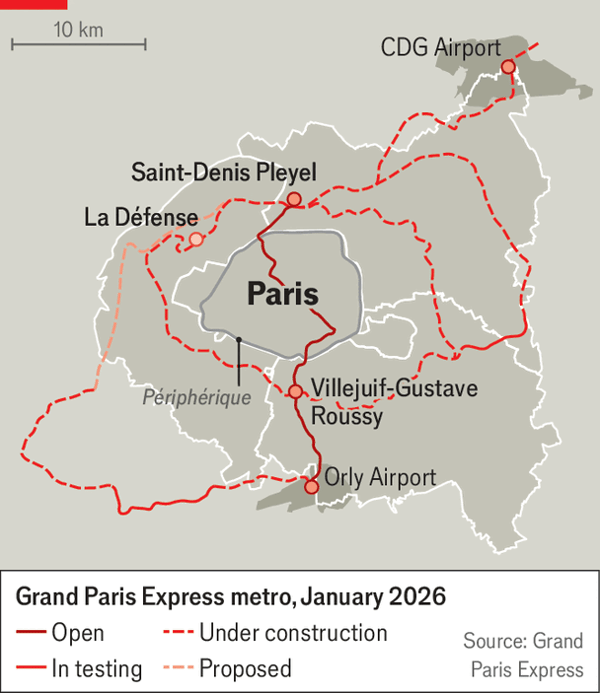
大巴黎正在推进半个世纪以来规模最大的地铁扩建:在建的4条全新无人驾驶线路将新增共68座车站,为地铁系统增加200公里(120英里)里程,并在外郊形成环线。该项目被称为欧洲最大的公共工程之一,总预算预计达到400亿欧元(480亿美元)。
除建筑之美外,新一代车站也服务于缩小巴黎环城公路(périphérique)内外差距的政策目标:大区负责人瓦莱丽·佩克雷斯去年推出全网单一票价,以避免因更长通勤而“惩罚”乘客。整体方向是打造“无边界”的大区,让不同居住地居民享有同等尊严,并以法式语境中的“风格”来体现这种平等。
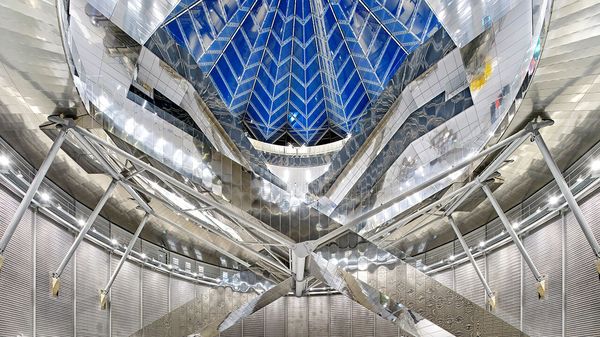
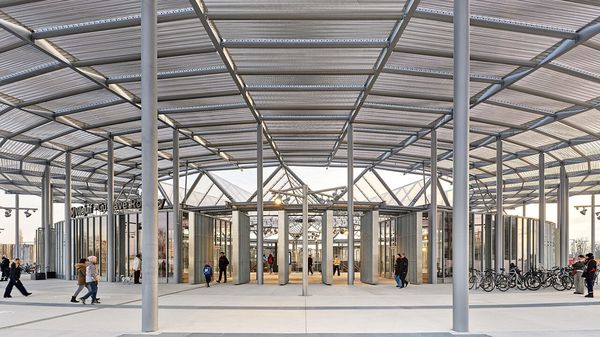
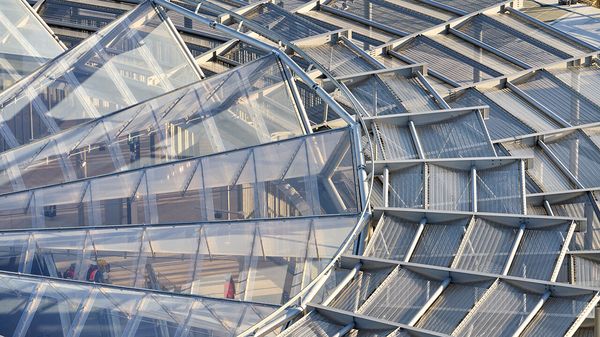
Villejuif—Gustave Roussy, a new Paris Metro station, is built around a circular glass skylight and a shimmering lattice of escalators, conceived as an “inverted skyscraper” that invites descent without darkness and won the Prix Versailles for the world’s “most beautiful” station in December. Even the platform projects in a metallic tube with windows onto the atrium.
Greater Paris is undertaking its biggest underground-network expansion in half a century: four new driverless Metro lines under construction will add 68 stations and 200km (120 miles) of track, creating suburban loops. The budget is expected to reach €40bn ($48bn), making it one of Europe’s largest public engineering projects.
Beyond design, the stations support a statistical reality of longer commutes from the outer suburbs versus addresses inside the périphérique ring-road, prompting a single-price ticket introduced last year to avoid penalising distance. The stated trend is toward a “region without borders” where dignity is equalized across locations, framed as style as well as convenience.
Source: The Paris Metro is getting a dazzling extension
Subtitle: Some new stations are architectural gems
Dateline: 1月 29, 2026 04:18 上午 | VILLEJUIF