德国极右翼工会Zentrum正迅速渗透工业核心地带,挑战拥有约200万会员、自20世纪50年代以来主导劳资关系的IG Metall。该组织成立于2009年,正利用制造业衰退与裁员焦虑扩大影响力。德国汽车及相关产业占出口的20%以上、经济总产出的6%,但自2019年以来已流失超过25万个岗位。随着电动车转型推进,企业将生产与研发转移至中国和东欧,Zentrum在大众、欧宝等工厂站稳脚跟,并预计在奔驰、保时捷和大众即将到来的工会选举中取得显著进展。
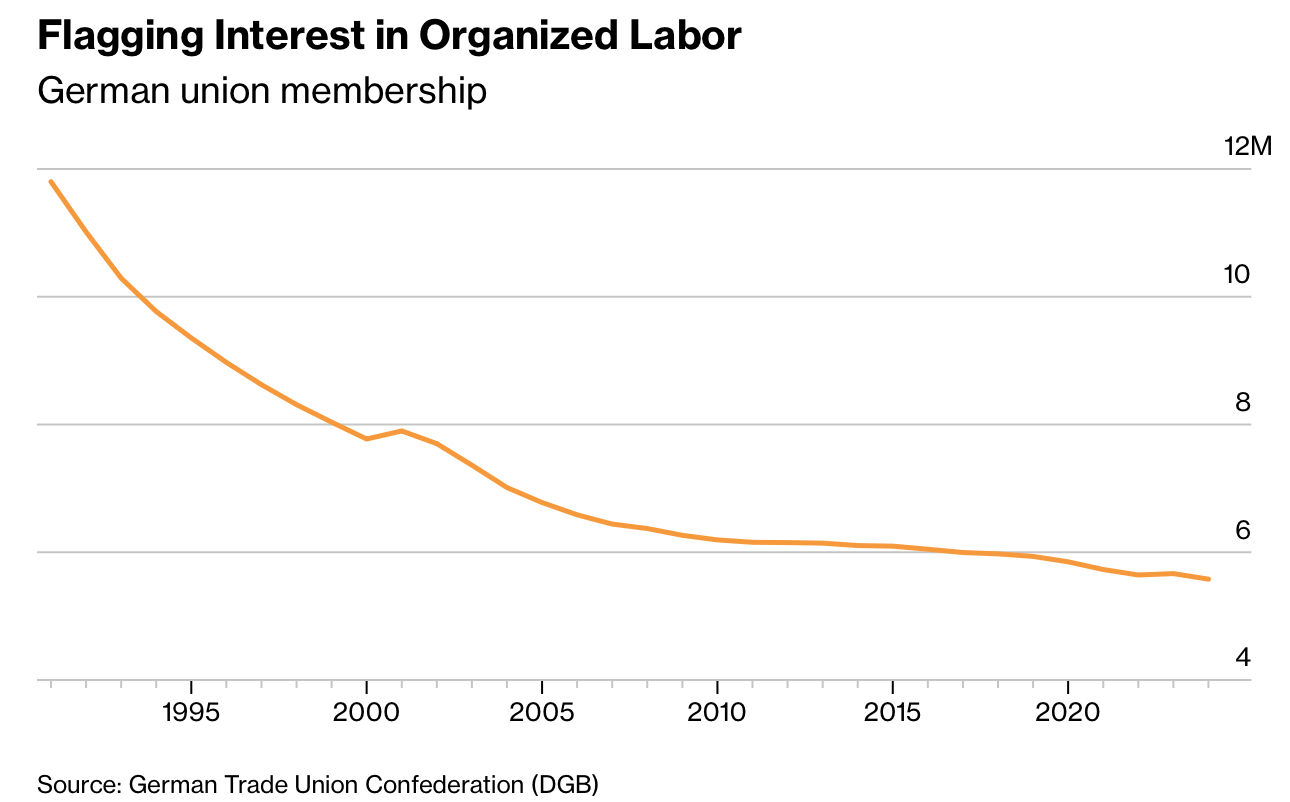
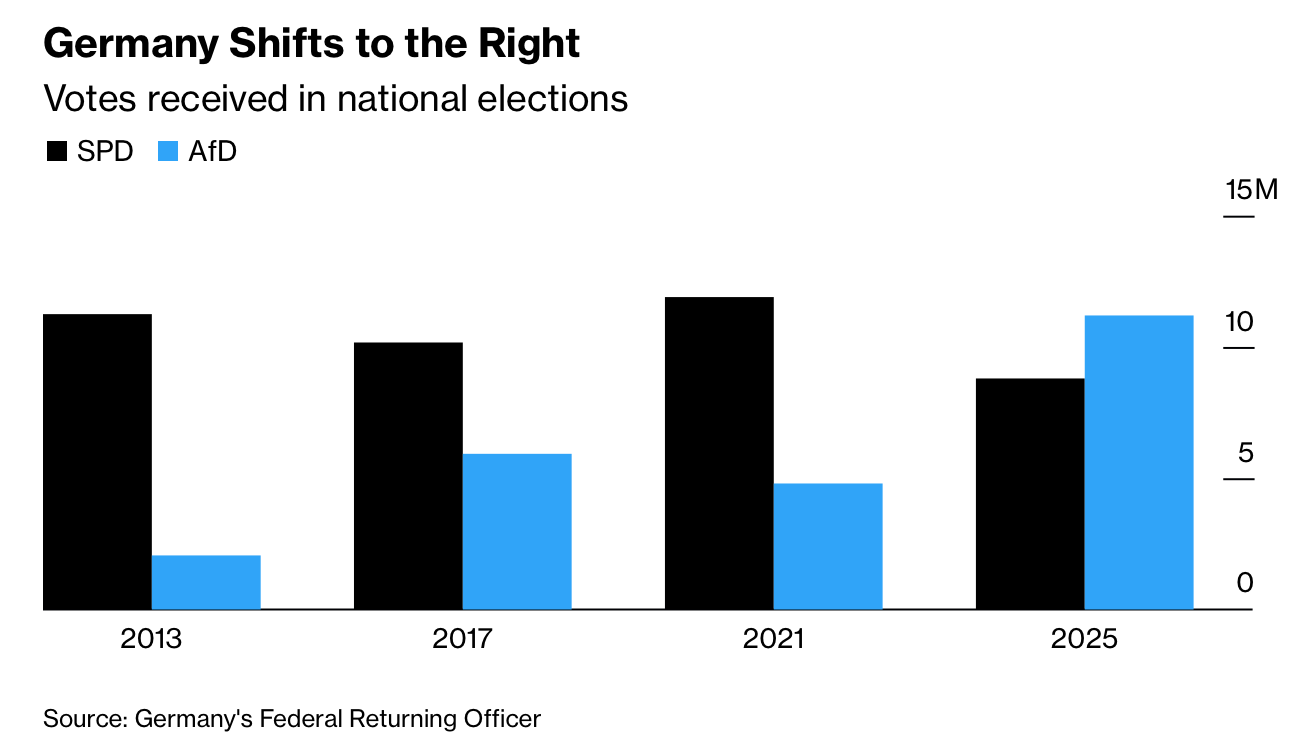
结构性变化削弱了传统劳工阵营。自1990年德国统一以来,工会会员数量已降至当时的一半以下。调查显示,技术型蓝领对德国选择党(AfD)的支持率明显高于全国平均水平,反映出与美国和法国类似的工人阶层右转趋势。与此同时,德国工业部门正以每月约1万人速度裁员。经济研究机构IW的调查显示,近一半行业协会预计2026年将进一步裁员,凸显长期稳定就业模式的瓦解。
主流工会试图以制度化影响力应对。IG Metall强调通过监事会席位和谈判机制换取投资、培训与产品承诺,以减少裁员风险,并反对将工厂变为政治动员场所。相比之下,Zentrum主打个案维权与民族主义叙事,试图在工厂内建立政治基础。随着2026年地方选举临近,Zentrum在大型工厂的渗透可能放大政治不确定性,改变德国劳工与政治格局。
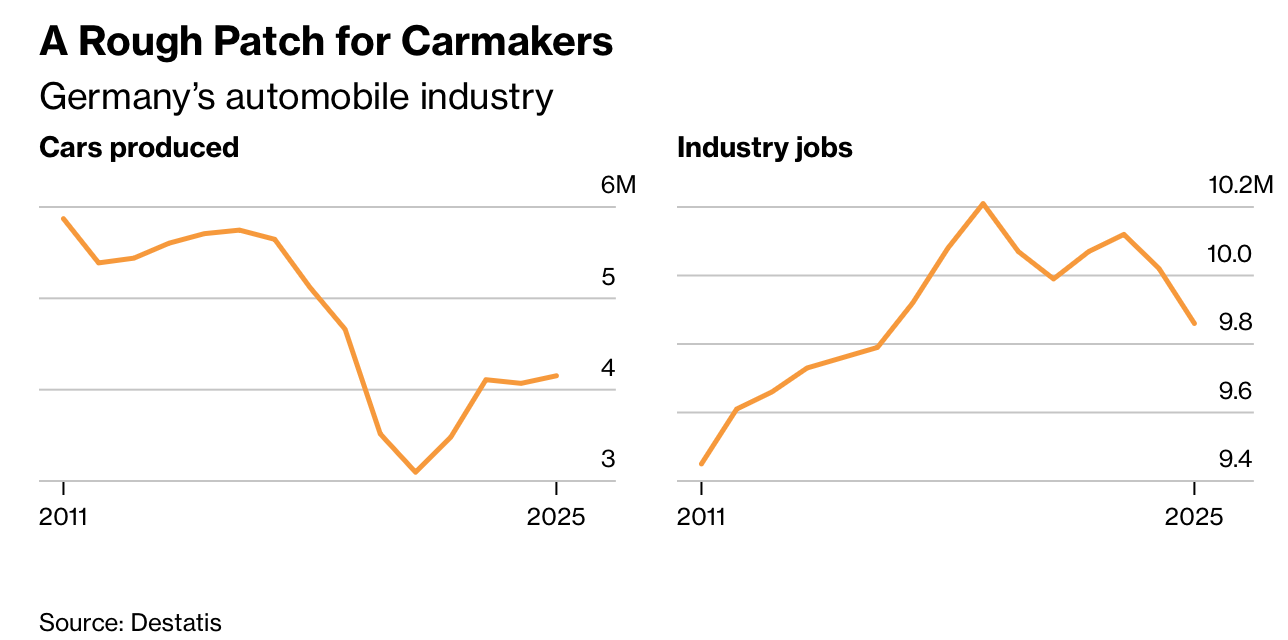
Germany’s far-right union Zentrum is rapidly moving into the industrial heartland, challenging IG Metall, the roughly 2 million-member union that has dominated labor relations since the 1950s. Founded in 2009, the group is exploiting anxiety from industrial decline and layoffs. Autos and related sectors account for more than 20% of exports and 6% of total output, yet more than 250,000 jobs have been lost since 2019. As electric-vehicle shifts push production and research to China and Eastern Europe, Zentrum has gained footholds at Volkswagen, Opel and others, and is expected to make strong gains in upcoming votes at Mercedes-Benz, Porsche and Volkswagen.
Structural change has weakened the traditional labor bloc. Since German reunification in 1990, union membership has fallen to less than half its former level. Surveys show skilled blue-collar workers backing the far-right Alternative for Germany at rates well above the national average, mirroring working-class shifts in the US and France. At the same time, Germany’s industrial sector is shedding about 10,000 jobs a month. An IW survey found nearly half of trade groups expect further job losses in 2026, signaling erosion of a model once defined by stability.
Mainstream unions are responding through institutional influence. IG Metall stresses supervisory board seats and negotiations to secure investment, training and product commitments, aiming to limit layoffs and avoid turning factories into political stages. Zentrum instead emphasizes individual grievance handling and nationalist rhetoric to build political bases on the shop floor. With regional elections approaching in 2026, Zentrum’s penetration of major factories could amplify political uncertainty and reshape Germany’s labor and political landscape.