这些现象并非市场失去理智,而是因为全球总体经济已经从过去由需求主导的「大平稳时代」,转变为受制于供给短缺的新常态。劳动力短缺、能源安全考量以及供应链重组,加上各国政府在国防与基础建设上的巨额支出,使得扩大供给变得更加困难。
在这种供给受限的环境下,殖利率上升反映的是结构性较高的资本成本以及人工智慧投资热潮。股市投资人正在押注这波投资将带来强劲的生产力与获利成长,因此尽管公债不再像过去那样提供可靠的避险功能,投资组合仍需适应这个重视生产力的新体制。
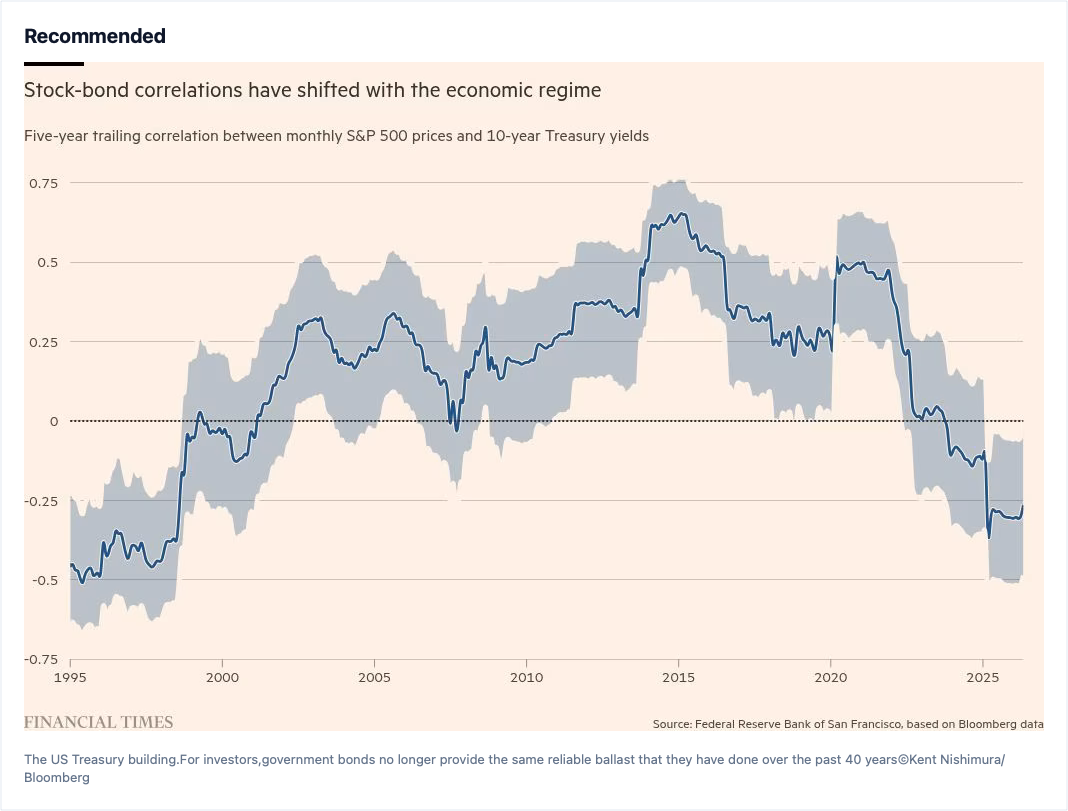
Recent market dynamics present two puzzles: a breakdown in correlation, where US Treasury yields have surged while equity markets continue to hit near-record highs, and a valuation conundrum, where equities appear historically expensive relative to high-yielding government bonds.
These trends do not indicate an irrational market, but rather a macroeconomic shift from the demand-driven "Great Moderation" era to a new regime defined by supply constraints. Labor scarcity, energy security priorities, supply chain rewiring, and heavy government spending on defense and infrastructure have made it increasingly difficult to expand supply.
In this supply-constrained world, rising yields reflect a structurally higher cost of capital and the massive artificial intelligence investment boom. Equity investors are betting that these investments will drive strong productivity and earnings growth, meaning that while government bonds no longer offer their traditional reliable ballast, portfolios must adapt to this new productivity-focused reality.