AI晶片热潮同样冲击了南韩的教育体系与文化产业。顶尖学生过去多选择医学,但2026年入学季,由三星和SK海力士支持的五个半导体课程录取难度已超越首尔大学自然科学系。与此同时,韩国文化产业(包括K-pop、影视与游戏)去年创造了161兆韩元的营收和超过150亿美元的出口额,雇用约69万人,但AI技术正加速渗透这些领域,今年夏天韩国已商业上映首批AI生成的电影长片。
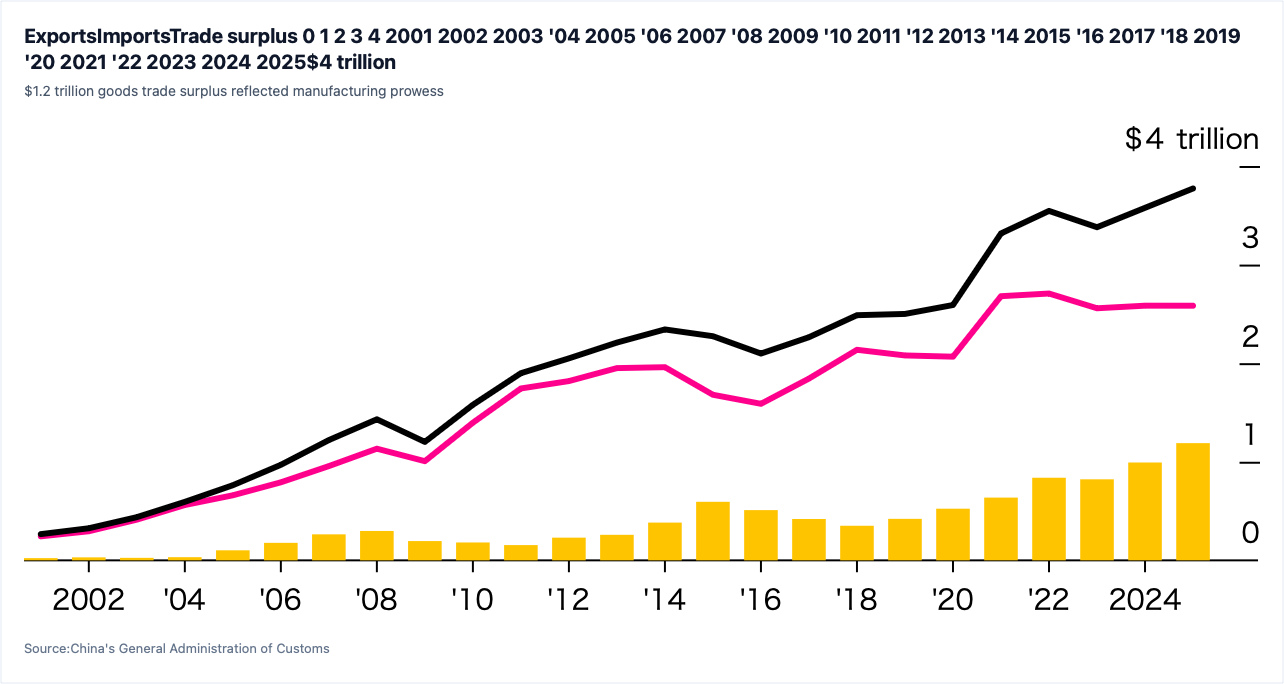
在更广泛的经济层面,文章探讨了中国贸易顺差与日本历史的相似性。澳新银行首席经济学家指出,中国的贸易顺差在过去六年间从占全球GDP的0.5%翻倍至1.0%,其出口占全球总量的15%,而进口仅占9%。他认为,除非中国减少储蓄、增加消费,否则外部顺差不太可能缩小,而贸易、关税和汇率问题将持续成为地缘政治紧张的焦点。
South Korea's booming semiconductor industry is profoundly reshaping the country's economy and social hierarchy. Workers at SK Hynix and Samsung Electronics have become a new social elite, with some receiving performance bonuses of up to $400,000. This cultural shift was satirized on Saturday Night Live Korea, where a luxury store clerk instantly defers to a customer upon discovering he works at SK Hynix — dubbing him "Lord Hynix." The chip boom has also disrupted the dating market, with matchmakers reporting surging demand for semiconductor engineers. (Key numbers: 40)
The AI chip frenzy is transforming South Korea's education system and cultural industries. In the 2026 admissions cycle, five Samsung- and SK Hynix-backed semiconductor programs became harder to enter than natural science departments at Seoul National University, the country's most prestigious institution. Meanwhile, Korea's cultural exports — spanning K-pop, film, TV, and gaming — generated 161 trillion won in revenue and over $15 billion in exports last year, employing roughly 690,000 workers. Yet AI is rapidly reshaping these industries too, with South Korea's first commercially released AI-generated feature films debuting this summer.
On the broader macroeconomic front, the article draws parallels between China's current trajectory and Japan's post-bubble experience. ANZ Bank's chief economist Richard Yetsenga noted that China's trade surplus has doubled over six years to approximately 1.0% of world GDP, with exports accounting for 15% of the global total versus just 9% for imports. He warned that the surplus will shrink only when China saves less or consumes more, and cautioned that Japan's transformative Abenomics reforms did not emerge until 21 years after that country's economic peak — suggesting China's adjustment could be similarly protracted, with trade tensions persisting in the interim.