员工为何仍愿意留位?作者认为核心原因是宏观不确定性:贸易战与真实战争、关于 AI 导致失业的警讯、以及疲弱的美国房地产市场,同时还有一批在疫情期间改为远端且搬往郊外或农村的人,现在可能觉得难以找到符合需求的替代工作。以企业视角看,低离职率常被视为好事;但宏观上它通常反映信心不足。欧洲经济合作与发展组织(OECD)研究显示,劳动力再分配——即从停滞企业流向成长企业——不仅反映经济动态与生产率成长,还会进一步推动两者。
关于 AI,若其确实提高美国生产率,文中认为更可能是使现有职位中的人员更高效,而非立即产生 Joseph Schumpeter 所称的“创造性毁灭”。若以近年乐观预测为准,英美早已应出现大规模劳动力重组;悲观路线会预示大量裁员与「永久弱势群体」形成,乐观路线则预计产业与职业收缩与扩张并存、岗位重新分配。IMF 总裁 Kristalina Georgieva 曾称 AI 已像「海啸」冲击劳动市场,但现有数据没有显示大规模解雇、大规模招聘或大规模跳槽。眼前更像风暴前平静,或许我们高估了当前 AI 叙事的剧烈程度。
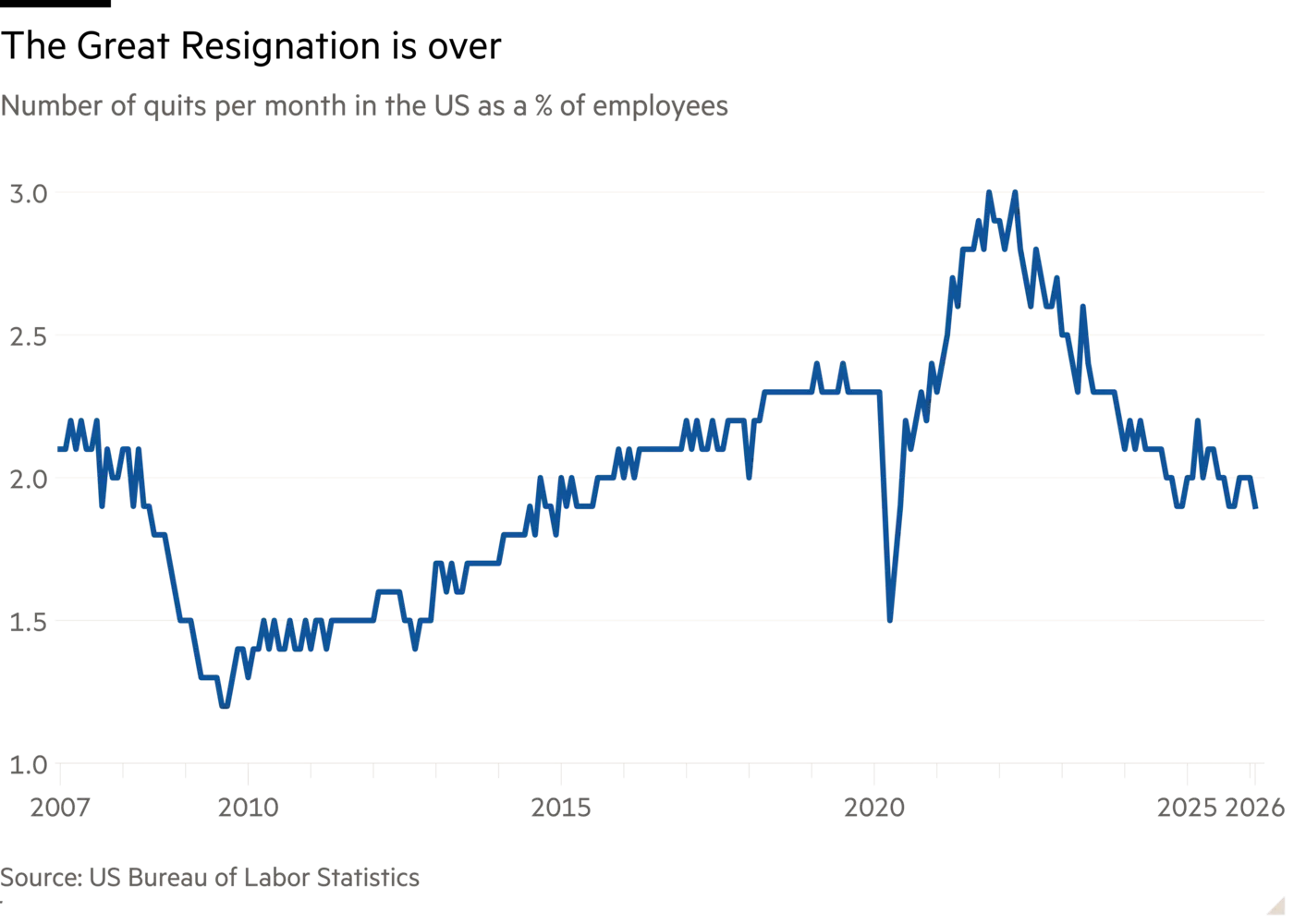
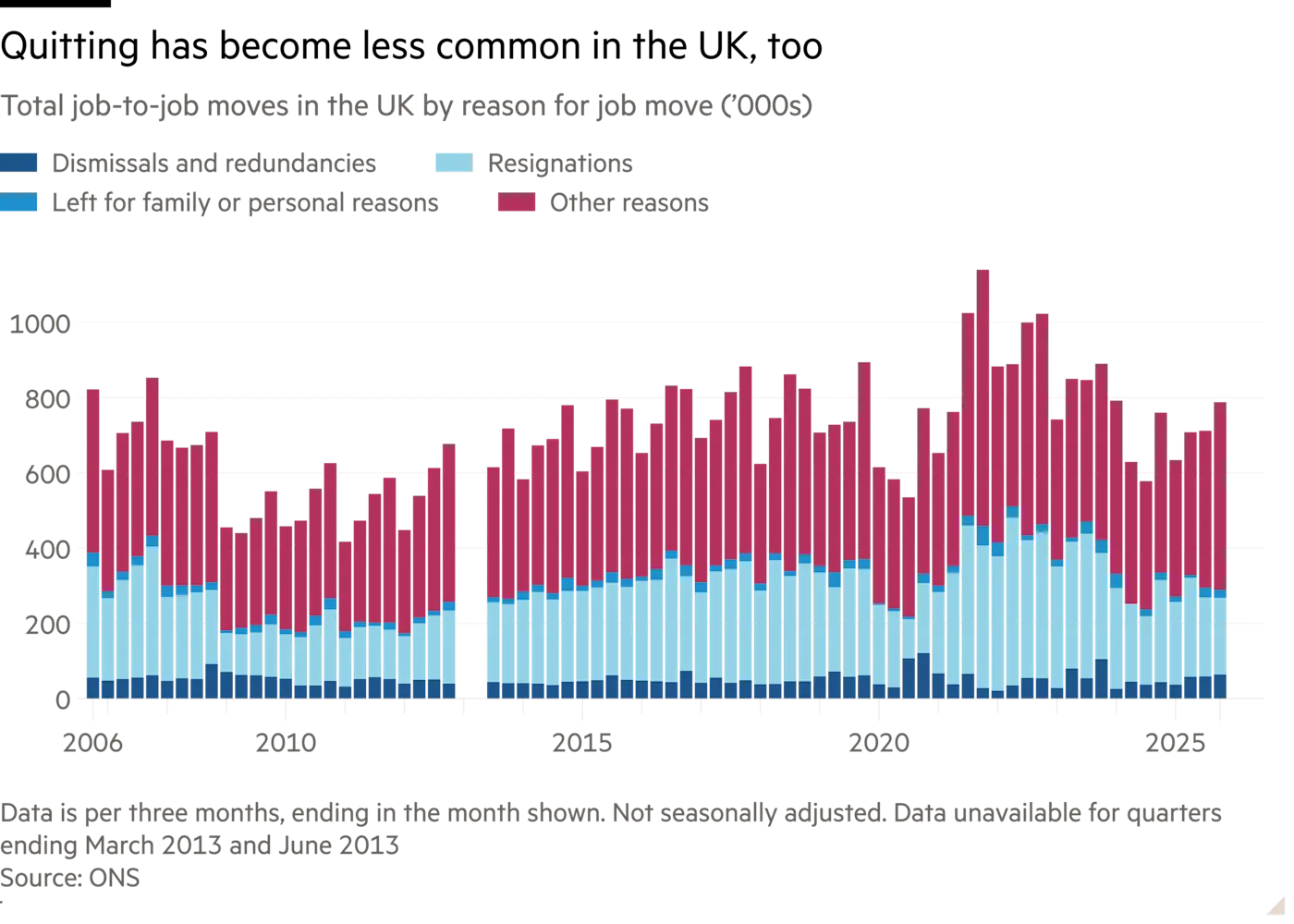
Over the past four years, workplace reporting has shifted from perks such as bringing dogs to the office and “Summer Fridays” to tighter controls like storing phones in lockable pouches, which signals a changed power balance between employers and staff. The best leading indicator is the voluntary quit rate, known as the “Take This Job and Shove It” index by Nick Colas and Jessica Rabe of DataTrek Research. In the US it was about 2.3% before the pandemic, rose to around 3% in 2021, and has since fallen to 1.9%, the lowest pre-pandemic-excluding level in roughly a decade; UK trends are reported as similar. In short, the Great Resignation appears over, replaced by the Great Hunkering Down.
Why are workers staying put despite easier mobility signals? The article links this to macro uncertainty: trade wars, real wars, repeated warnings of AI-related job losses, and a weak US housing market, while some workers who moved to rural or suburban areas during remote-work expansion may now feel trapped in roles with few suitable alternatives. Low attrition is often desirable at company level, but at the macro level it can indicate weak confidence. OECD research suggests labour reallocation—moving people from stagnant firms to growing firms—both reflects and reinforces economic dynamism and productivity growth.
On AI, the tentative productivity gains seen in the US may come mainly from workers doing more within existing jobs, rather than from Joseph Schumpeterian “creative destruction.” If the stronger AI narratives had already materialized, the UK and US should already be in a broad labour reallocation cycle. Optimists would expect sectors and occupations to shrink and expand, with many workers switching jobs and new roles emerging. Yet the data does not show mass firings, mass hiring, or mass quitting, so the market looks calm rather than tsunami-like. It may simply be calm before a later adjustment—or we may be overestimating the drama in the current AI story.