政治家们往往怀抱相互矛盾的住房政策诉求,既承诺提高购房者的可负担性,又试图推高现有业主的房产价值。现实中,富裕国家的住宅价格普遍接近历史最高点,令面临借贷成本攀升的潜在买家望而却步。随着多国央行上调基准利率以应对顽固通胀并化解沉重的主权债务负担,债券收益率与抵押贷款利率再度飙升。在美国,新发放的30年期固定房贷平均利率逼近7%,高于一年前略超6%的水平,且较疫情前几乎翻了一番;其他发达经济体的融资成本同样全线走高。
相比于疫情刚过后的时期,当下的房地产市场对本轮货币紧缩的抵御韧性明显减弱。浮动利率抵押贷款在发达国家的广泛普及加剧了居民的月供压力,而家庭在疫情期间积累的超额储蓄已基本消耗殆尽,住房供应量也较2010年代有所上升。因此,即便名义房价在没有深度衰退的情况下难以出现大幅暴跌,经通胀调整后的实际价格下跌却势在必行。这种调整将有效缓解大都市的经济负担;在这些经济枢纽中,尽管美国薪资增速跑赢了整体通胀,但总体购房与持有成本的涨幅更为迅猛,令首套房买家在首付积累上面临重重困难。
此外,房价回落有望激活过去四年陷入深度冻结的房产交易市场;在此期间,由于固定低利率锁定了存量业主,二手房交易量降至2007至2009年全球金融危机以来的最低点。这种流动性冻结极大限制了劳动力跨区域迁徙与经济活力。最后,房价适度回调有助于破除将住宅视为理想储蓄与投资工具的迷思。住房作为资产具有单一缺乏分散、相关风险难以对冲且与个人未来收入高度相关的内在缺陷,而家庭资产过度捆绑于房产更会催生邻避主义倾向,阻碍新建设并削弱长期经济活力。
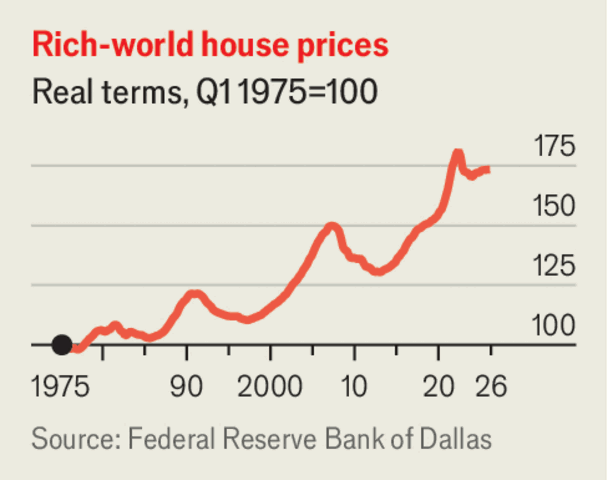
Politicians often embrace contradictory housing goals by promising increased affordability for buyers while simultaneously seeking to boost property values for existing homeowners. In reality, residential property values across rich nations hover near record highs, locking out aspiring buyers who face climbing borrowing costs. As central banks raise benchmark interest rates to counter stubborn inflation and manage sovereign debt expansions, bond yields and mortgages are surging again. In the United States, average 30-year fixed home loan rates are nudging 7%, rising from slightly over 6% a year ago and almost doubling pre-pandemic levels, with similar debt financing pressures escalating across other advanced economies.
The contemporary housing market exhibits far less resilience to this monetary tightening than it did during the immediate post-pandemic shock. The growing prevalence of variable-rate mortgages across developed countries increases immediate payment burdens, coinciding with the exhaustion of pandemic-era household savings and a modest rise in housing inventory compared to the 2010s. Consequently, even if nominal values avoid a collapse outside a severe recession, real inflation-adjusted prices are primed to drop. Such a correction would relieve urban centers where, despite American wage gains outpacing headline inflation, the cumulative expenses of homeownership have expanded at an even faster pace, severely penalizing first-time buyers.
Furthermore, softening valuations could unfreeze transaction volumes that have stagnated over the past four years, a period during which home sales dropped to levels unseen since the global financial crisis of 2007-09. Historically low fixed-rate locks had discouraged owners from listing properties, severely restricting labor mobility and broader economic dynamism. Finally, a valuation pullback serves as a timely reminder of the structural flaws in viewing residential housing as a primary investment vehicle. Homes represent undiversified, poorly hedged assets heavily correlated with local earnings, and excessive household exposure often incentivizes NIMBY resistance to new development that would otherwise support sustained economic growth.
Source: Why house prices may be in trouble
Subtitle: In a big serving of bad news, there are crumbs of comfort
Dateline: Sep 24th 2026\n