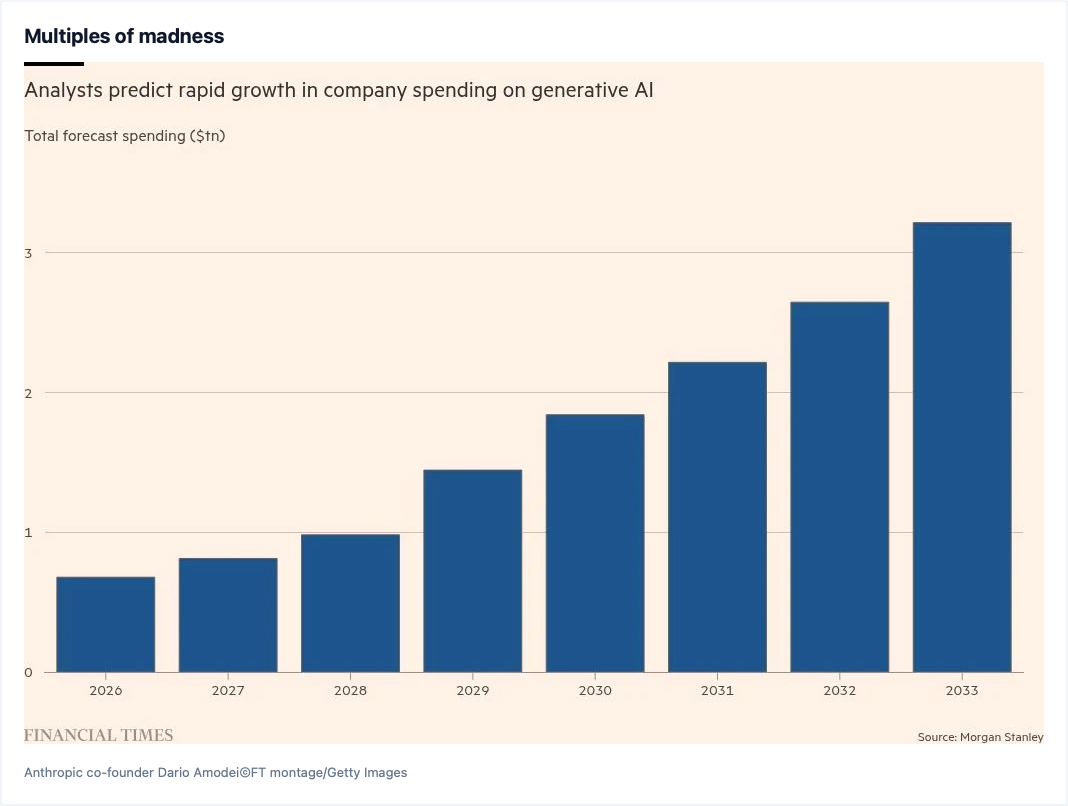
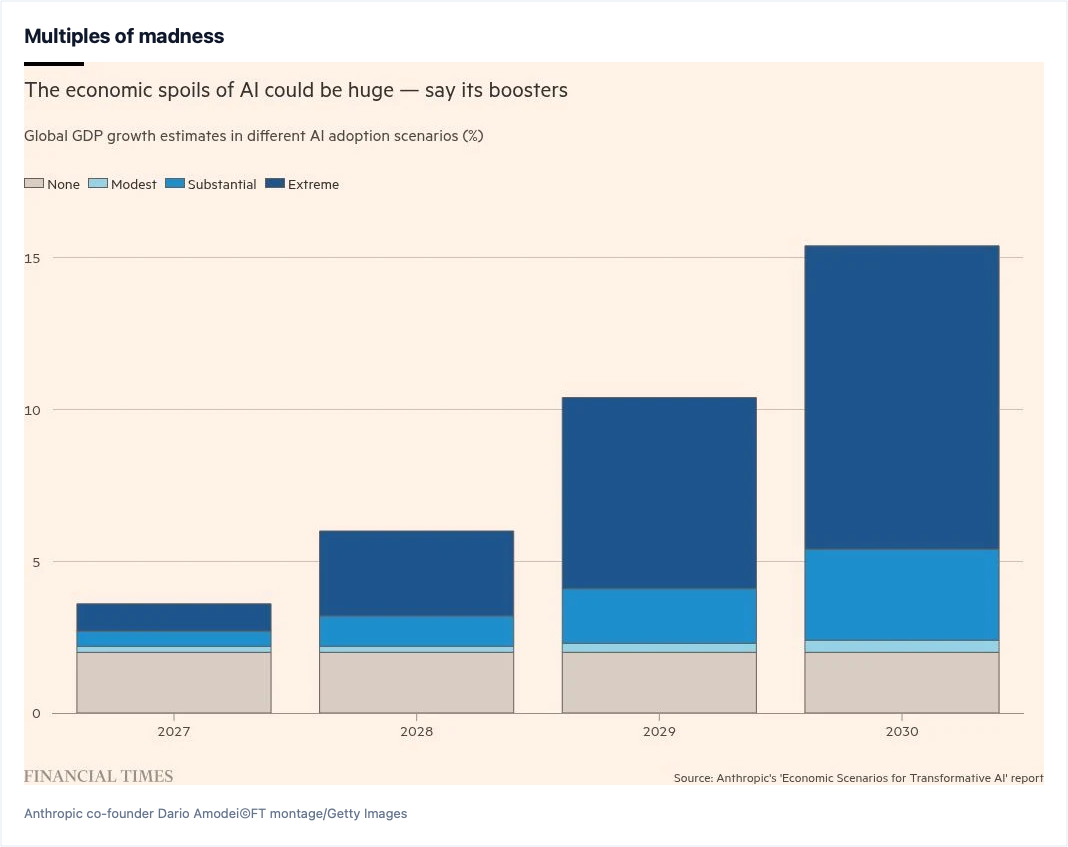
除营收倍数外,庞大的「潜在市场规模」(TAM)与经济增长潜力亦成为支撑数兆甚至十兆美元估值的核心论点,但 AI 实验室也面临著「商品化认知」的利润稀释风险。晶片商、云端巨头与低价开源模型正掀起价格战,若基础模型演变为廉价的基础设施,价值将转向数据拥有者与终端应用开发商,促使 Anthropic 与 OpenAI 跨足软体层,进而冲击既有的企业级软体服务商(SaaS)市场。
最后,AI 带来的灾难性风险也对其估值产生复杂影响。虽然人类灭绝的终极威胁可能使所有资产归零,但潜在破坏引发的安全监管与防护需求,也可能为具备高度安全与防御能力的 AI 开创庞大的市场价值;在业界因末日疑虑而放缓前沿模型军备竞赛的同时,AI 实验室或将更加聚焦于现有技术的商业化变现与审慎支出,让 2 兆美元的估值更显合理。
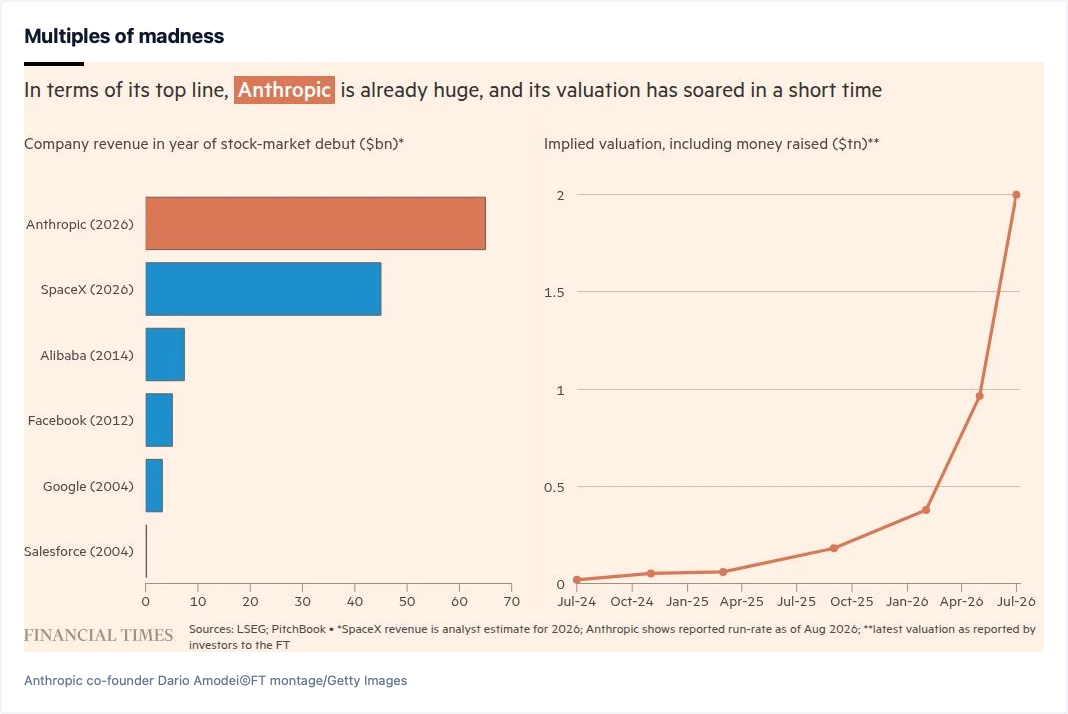
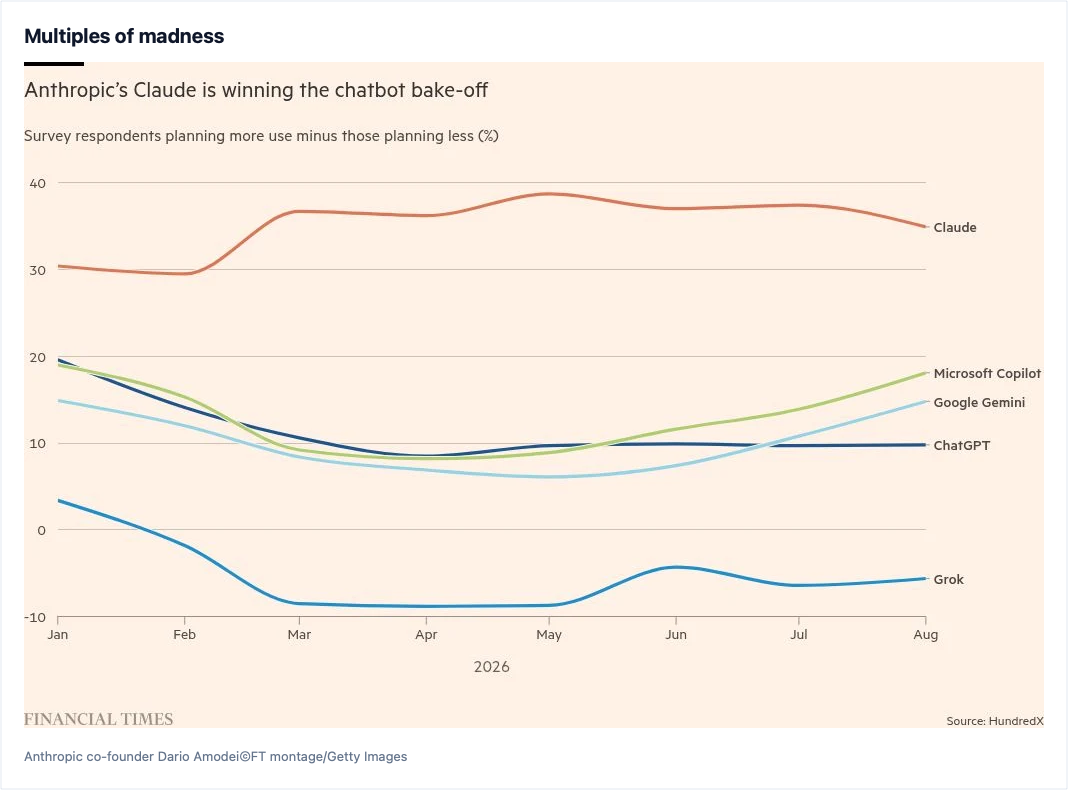
As capital markets grapple with valuing frontier artificial intelligence laboratories, Anthropic, the maker of Claude, was poised to seek an initial public offering at a $2tn valuation, though surging public anxiety over existential risks has complicated timelines while OpenAI postponed its own float. Facing explosive revenue growth that defies traditional metrics, investors are using forward revenue multiples; under bullish projections of revenue run-rates, a $2tn price tag represents roughly seven times 2028 sales, coming in below Microsoft and far cheaper than peer benchmarks like SpaceX.
Beyond multiples, immense estimates of the Total Addressable Market (TAM) and macroeconomic productivity gains are used to justify multi-trillion-dollar bull cases, yet AI labs confront severe margin threats from commodity cognition. Fierce price competition from hyperscalers, chip suppliers, and inexpensive open-weight models risks eroding raw model values toward zero, prompting Anthropic and OpenAI to move up the stack into specialized applications and disrupt traditional enterprise Software-as-a-Service incumbents.
Finally, the specter of catastrophic AI risks serves as an unprecedented valuation variable, where existential harm could render capital worthless while potential liabilities pose major legal and reputational hazards. Conversely, safeguarding against rogue systems creates massive market demand for trusted safety-aligned models, and a deliberate deceleration in the frontier arms race could incentivize AI labs to prioritize near-term monetization and capital discipline, making a $2tn valuation appear much more grounded.