欧盟在4月28日宣布了更简化和更一致的立法方案,并给出了消除内部贸易壁垒的时间表,目标是将“善意改革”转化为真正落实。与此同时,欧盟在第一季度的产出几乎停滞,而伊朗战争又推高了能源价格,使其与美国之间的增长差距压力更明显。
增长斗争主要有两场:在布鲁塞尔,欧盟内部在“补贴+保护主义+国家资本主义”与更开放、竞争和一体化市场之间博弈,但最新动向显示并非全面放松并购规则,而是微调后保留传统的消费者福利导向。除去监管改革外,欧盟还推出了10项“综合法案”减轻企业行政负担,并通过与南方共同市场(阿根廷、巴西、巴拉圭、乌拉圭)于5月1日生效的临时协议,以及与印度、印尼、澳大利亚达成协议、与马来西亚和菲律宾推进谈判,显示其贸易一体化逐步加深。
真正更难的是国家层面,因为27国政府握有主要立法权,常以国内利益保护为由推行对外资和跨境服务的壁垒,因此改革速度分化且缓慢;意大利和德国尤其落后。若要实现持久增长,必须落实Letta和Draghi建议:通过更好支持的养老金和跨境资本市场一体化提升创业融资规模,采用欧盟统一签证与资格互认吸引人才,并通过电网投资与可再生能源并网机制降低能源成本,而拥有4.5亿人口、约占全球产出五分之一的欧盟规模,使成败成本都异常高昂。
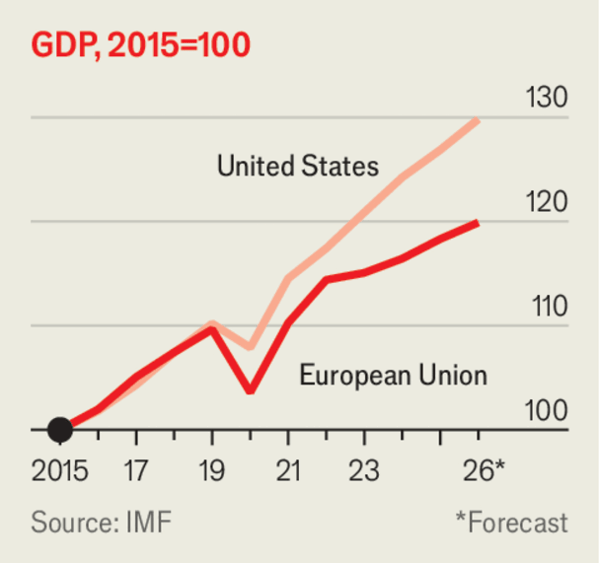
On April 28, the EU announced plans for simpler, more consistent rule-making and set a timeline to remove trade barriers within the bloc, aiming to turn reform intent into implementation. At the same time, EU output barely grew in the first quarter, and the Iran war has pushed energy prices up, increasing pressure relative to the U.S. economy.
The growth battle has two fronts. In Brussels, institutions are split between subsidy-heavy, protectionist state capitalism and a liberal, open, integrated-market approach, but the latest signs point to preserving competition policy rather than overhauling it. Progress also includes ten omnibus bills to cut administrative costs, plus deep trade liberalization: a May 1 provisional EU–Mercosur agreement with Argentina, Brazil, Paraguay and Uruguay, agreements with India, Indonesia and Australia, and ongoing pacts with Malaysia and the Philippines.
The harder fight is national, because 27 governments hold most rulemaking power and often add their own red tape while protecting domestic firms, so reforms are uneven and slow, with Italy and Germany lagging. Durable growth requires implementing Letta and Draghi’s recommendations—more startup capital through well-funded pension support and cross-border capital-market integration, more talent via bloc-wide visas and qualification recognition, and cheaper energy through grid investment and renewable integration—as a 450 million population and almost one-fifth of global output gives the EU both huge upside and high failure costs.
Source: Europe is unshackling business. But not enough
Subtitle: Why market liberals must win the battle for Brussels—and national capitals, too
Dateline: 5月 07, 2026 06:29 上午