栖息地丧失是核心趋势:森林砍伐已使美洲虎原始分布范围减少超过一半,而现存范围约为900万平方公里(350万平方英里),比2000年又缩小了四分之一。它们已在乌拉圭、萨尔瓦多和美国灭绝,全球约一半剩余种群在巴西,其余多被困在彼此隔离的森林斑块中。
政策协作正在扩大,但基线曾极低:跨境生态廊道行动始于2018年,已有16个拉丁美洲国家签署,2024年9月推出区域计划以统一监测并缓和人兽冲突。在伊瓜苏地区,种群从1990年约800只跌至2005年的40只(约下降95%),在对数千个农场和学校开展干预后,枪杀事件大幅下降,如今回升到100多只。
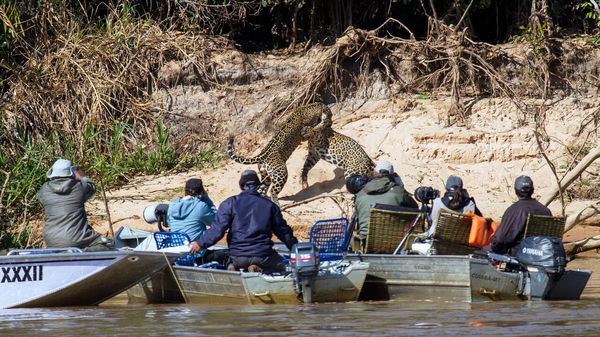
经济数据表明“活着的美洲虎”价值更高:亚马孙一片横跨3.5万平方公里的双保护区内种群约1000只且保持稳定。潘塔纳尔在2017年的美洲虎旅游年收入近700万美元,而牛损失每年仅12万美元(约58:1);凯门保护区每年约损失3%牛群,并通过GPS项圈追踪70只中的4只(约5.7%)来提高观测与保护效率。
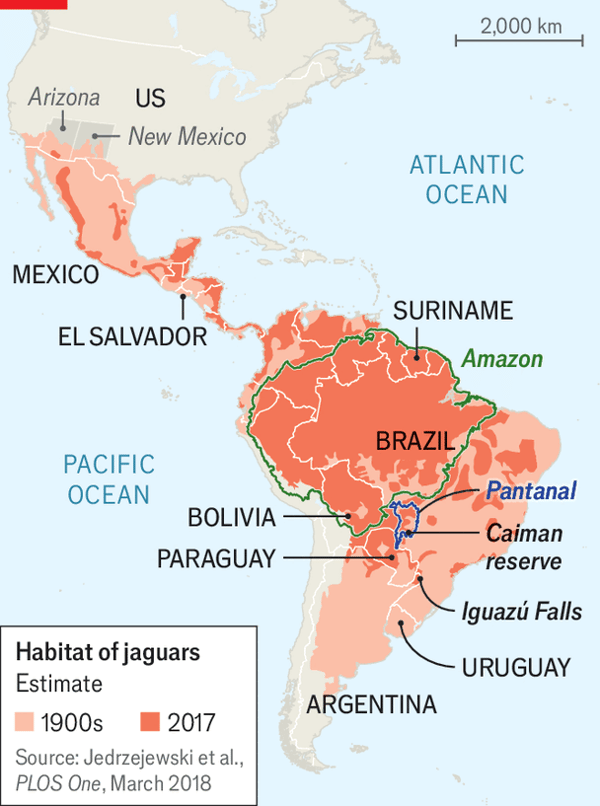
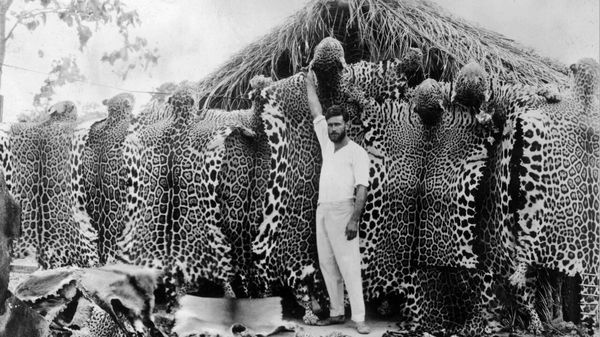
Habitat loss is the dominant trend: deforestation has cut the jaguar’s original range by more than half, and the remaining area is about 9 million square kilometers (3.5 million square miles), another quarter smaller than in 2000. Jaguars are already extinct in Uruguay, El Salvador, and the United States, about half of all survivors are in Brazil, and many of the rest are stranded in isolated forest fragments.
Policy coordination is expanding, but from a very low baseline: the transnational corridor effort began in 2018, 16 Latin American countries have signed on, and a regional plan launched in September 2024 to standardize monitoring and reduce conflict with landowners. In the Iguazu system, numbers fell from roughly 800 in 1990 to 40 in 2005 (about a 95% drop), then rose to over 100 after outreach to thousands of farms and schools sharply reduced shootings.
Economic signals show a strong conservation case: in one Amazon landscape, two reserves spanning 35,000 square kilometers support a stable jaguar population of around 1,000. In the Pantanal, 2017 jaguar tourism generated nearly $7 million annually versus only $120,000 in yearly cattle losses (about 58:1), while one ranch reports about 3% herd loss and tracks 4 of 70 jaguars by GPS (about 5.7%) to improve protection and viewing reliability.
Source: The battle to save South America’s skull-crushing big cat
Subtitle: Farmers and villagers realise that jaguars are worth more alive than dead
Dateline: 2月 19, 2026 04:18 上午 | Miranda, Mato Grosso do Sul