此一反弹表明东盟国家的制造业似乎已经摆脱了三月至六月间因中东冲突而导致的疲软期。同时,北亚的主要制造业中心也因为中东局势缓和以及对人工智慧相关电子产品的持续需求,使其 PMI 保持在 50 的扩张荣枯线之上。
然而,亚洲其他地区的数据则呈现对比:中国的制造业活动下滑,官方数据甚至显示萎缩,加深了人们对其经济放缓的担忧;印度的制造业扩张速度虽然仍保持在 50 以上,但也放缓至近五年来的低点。
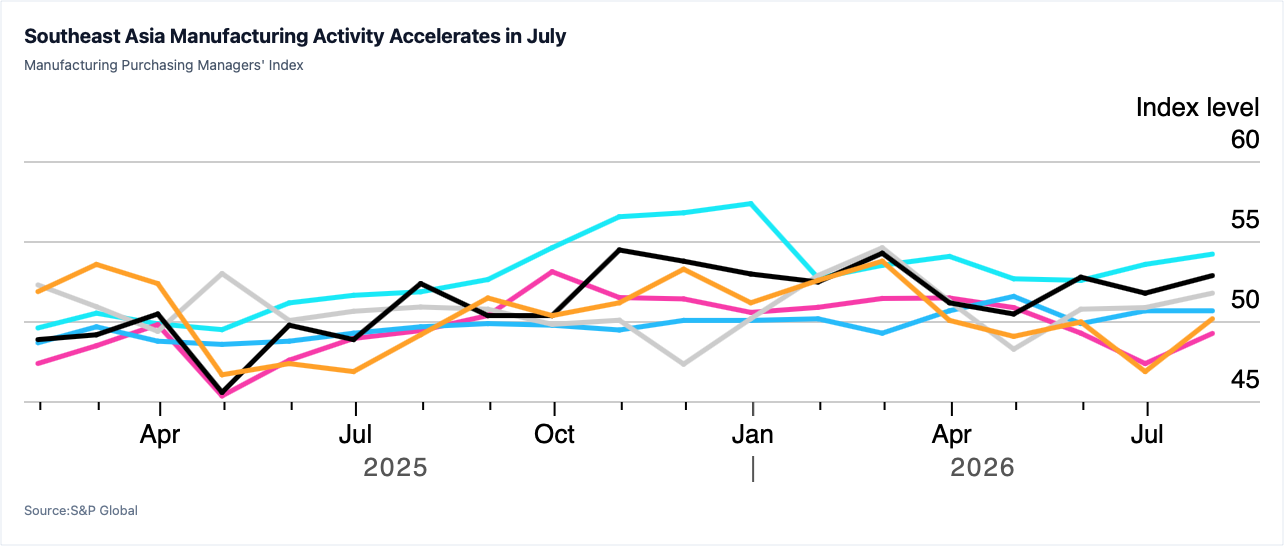
Southeast Asia's manufacturing sector experienced a strong rebound in July, with the purchasing managers' index (PMI) rising from a June low to 52.8. Led by Thailand and Vietnam, the growth rate of new orders and production reached its fastest pace since the Middle East conflict, accompanied by significant increases in purchasing activity, employment, and business confidence.
This rebound indicates that the manufacturing sector in ASEAN countries appears to have moved past the softer patch seen between March and June caused by the Middle East conflict. Meanwhile, major manufacturing hubs in North Asia also kept their PMIs firmly above the 50-point expansion threshold, driven by easing Middle East tensions and sustained demand for AI-related electronics.
However, data from other parts of Asia presented a stark contrast: China's manufacturing activity slumped, with official figures even showing a contraction, reinforcing concerns about an economic slowdown. In India, while the manufacturing expansion rate remained above the 50-point mark, it softened to a near five-year low.