西雅图的科技巨头现正将数十亿美元投入人工智慧基础设施,同时削减职位,导致高价住宅待售时间大幅拉长,并赋予买方多年来罕见的议价优势。此外,华盛顿州对富裕居民的增税政策,加上大型雇主转向外地扩张及知名富豪相继迁出,进一步加剧了这波市场低迷。市场正高度关注西雅图究竟仅是特例,还是对其他依赖高薪白领聚落之豪宅市场的早期警讯。
若人工智慧持续将财富高度集中于少数特定据点,同时促使其他企业在裁减高薪员工的情况下维持营收成长,其经济冲击恐将远超出科技业本身。西雅图的高端物业价格调整尤为显著;例如,一栋原为萨克斯风演奏家 Kenny G 建造的水岸豪宅于 2022 年以 8500 万美元挂牌出售,最终于五月份仅以 3800 万美元成交,跌幅高达 55.3%。
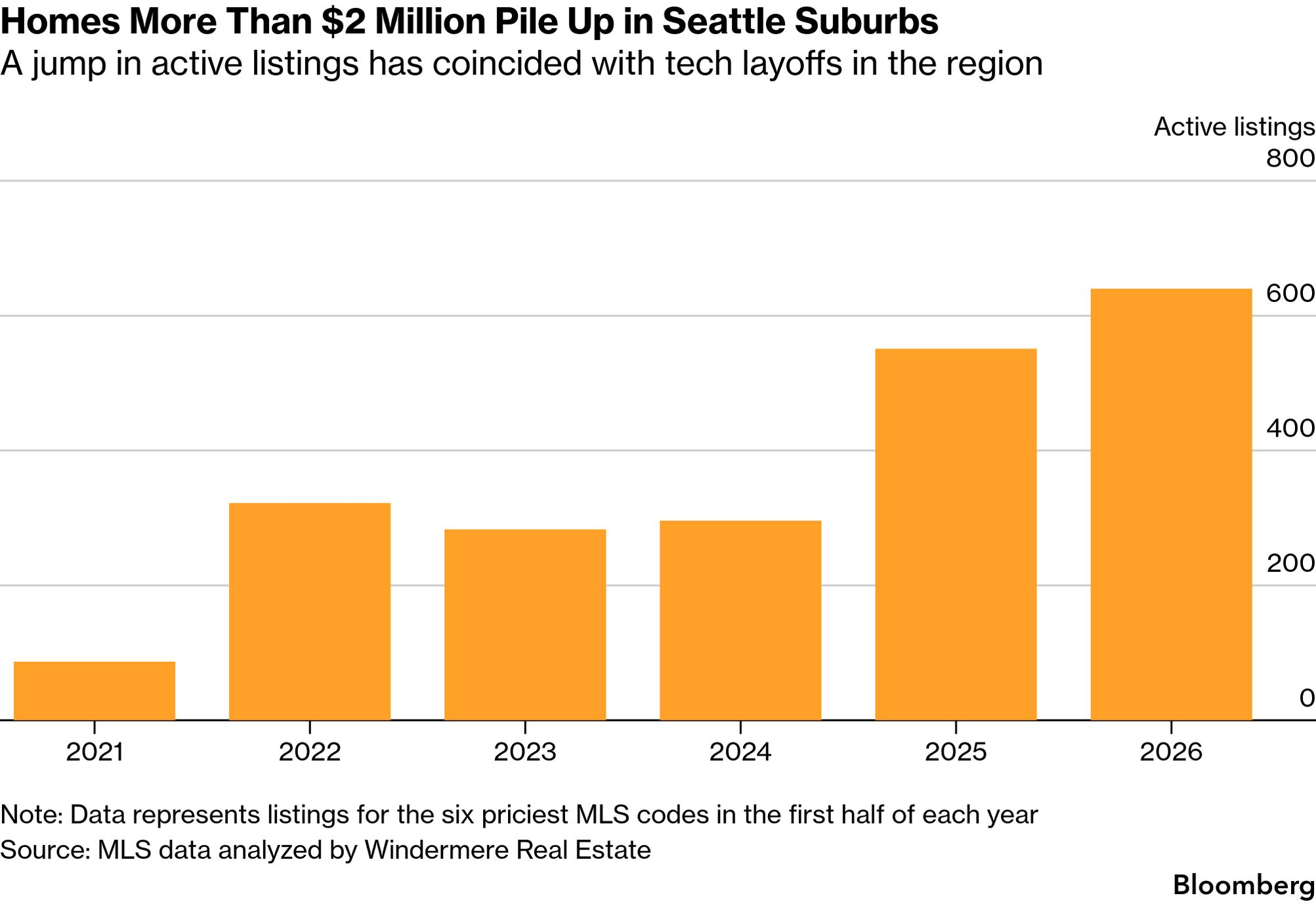
Seattle and San Francisco demonstrate divergent trends in luxury real estate during the AI era. Driven by thousands of job cuts at Microsoft, Amazon, and Meta, pending sales for the top 5% of Seattle homes dropped 15% in the three months through July, despite national luxury gains. Conversely, San Francisco's surge in AI startups, including OpenAI and Anthropic, created substantial wealth, lifting its median home sale price by 14% year-over-year to $1.7 million in March.
While Seattle previously prospered from Big Tech expansion, companies are now redirecting billions into AI infrastructure while reducing headcounts, leaving expensive residences on the market longer and shifting leverage to buyers. This downturn is compounded by state tax increases on affluent residents, corporate expansion elsewhere, and the departure of notable billionaires. Observers question whether Seattle represents an isolated anomaly or an early warning for luxury housing markets heavily reliant on dense concentrations of affluent white-collar workers.
If AI continues to concentrate wealth into select hubs while enabling corporate growth alongside workforce reductions, broader economic repercussions will extend beyond technology. High-end property valuations in Seattle highlight this vulnerability; notably, a waterfront mansion originally built for saxophonist Kenny G, listed in 2022 for $85 million, sold in May for $38 million—representing a sharp 55.3% price reduction.