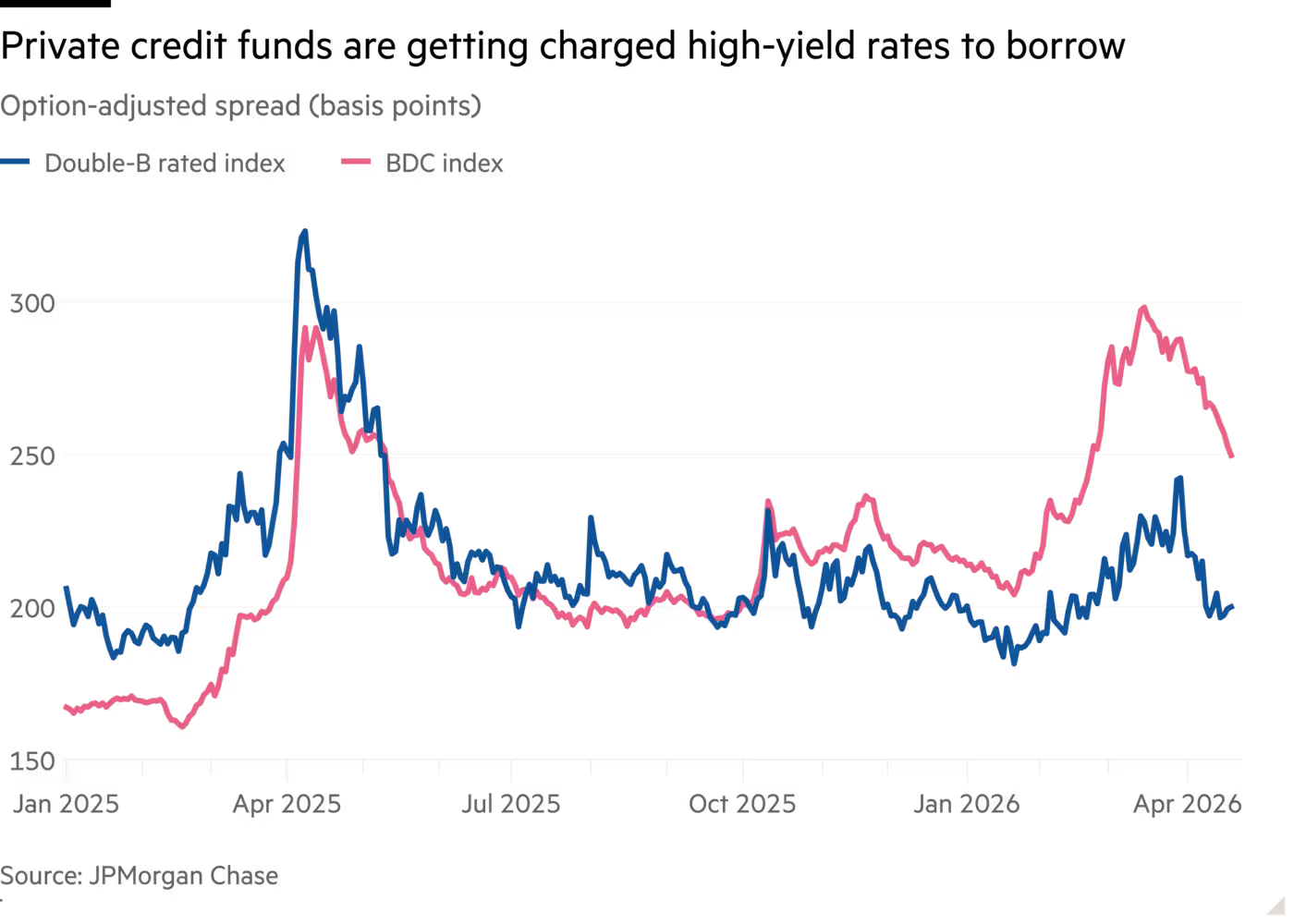
这份新闻简报也突出了人们对预测市场和私人信贷日益升高的担忧。Vanguard 执行长 Salim Ramji 将预测市场称为「一种金融剥削」,并把投资与赌博划清界线,理由是 Kalshi、Polymarket 以及 Robinhood 等平台引发了对市场滥用和内线交易的警惕。另一方面,随著银行收紧杠杆条款、投资者要求更高的收益溢价,私人信贷基金面临更高的借款成本;JPMorgan 表示,用于向私人信贷基金放贷的债务溢价,自今年年初以来上升了0.34个百分点,自2025年初以来上升了0.83个百分点,而业务发展公司在2026年第一季度出售了约68亿美元债券,较去年同期下降近22%,也比2024年下降约36%。
这些趋势指向一个更昂贵且更具选择性的另类资产市场,随著融资条件恶化,较富裕的投资者、共同基金与散户买家也被吸引进入私人交易。OpenAI 上个月在创纪录的 122bn 融资轮中从散户投资者募集了 3bn,而 OpenAI 与 Anthropic 都正为预期中的上市扩大其投资者基础;SpaceX 也在接近一次重大的市场亮相。该文指出,报酬可能会因承销银行与费用结构而有显著差异;同时,私人信贷部门正承受赎回请求、银行放贷趋紧以及对贷款品质的怀疑所带来的压力,尤其是在暴露于 AI 相关风险的科技连结投资组合中。
Investor demand for stakes in fast-growing private companies such as Anthropic is creating lucrative business for banks, but the fees charged for access are far from uniform. In February, Morgan Stanley offered wealthy clients participation in Anthropic’s $30bn funding round for a 1% access fee, while Goldman Sachs reportedly proposed a more complex structure with a management fee plus a share of profits. Anthropic, the maker of Claude, raised money from investors including Singapore’s sovereign wealth fund, Coatue and Nvidia, and the round valued the company at $350bn as it moved toward what could be one of the largest IPOs on record.
The newsletter also highlighted rising concern around prediction markets and private credit. Vanguard chief executive Salim Ramji called prediction markets “a form of financial exploitation” and drew a line between investing and gambling, citing platforms such as Kalshi, Polymarket and Robinhood’s caution over market abuse and insider trading. Separately, private credit funds are facing higher borrowing costs as banks tighten leverage terms and investors demand greater yield premiums; JPMorgan said the premium on debt used to lend to private credit funds has risen 0.34 percentage points since the start of the year and 0.83 percentage points since early 2025, while business development companies sold about $6.8bn of bonds in the first quarter of 2026, down nearly 22% year on year and about 36% from 2024.
These trends point to a more expensive and more selective market for alternative assets, with wealthier investors, mutual funds and retail buyers being pulled into private deals even as financing conditions deteriorate. OpenAI raised $3bn from retail investors in a record $122bn funding round last month, and both OpenAI and Anthropic are broadening their investor bases ahead of expected listings, alongside SpaceX, which is also nearing a major market debut. The article suggests that returns can differ sharply depending on banker and fee structure, while the private credit sector is under pressure from redemption requests, tighter bank lending and skepticism about loan quality, especially in technology-linked portfolios exposed to AI-related risks.