此波下跌趋势紧随全球抛售浪潮,市场开始质疑AI技术能否产生足够的需求以实现商业化获利。此外,中国国内激烈的竞争环境以及美国进口限制等考量,进一步加剧了科技股的压力。分析人士指出,多数A股科技公司估值高昂且处于亏损状态,叠加地缘政治风险,导致回档幅度更为剧烈。
尽管北京政府在首波抛售后采取了提振投资人信心的措施,且中国央行亦鼓励向科技等特定领域发放贷款,但市场仍未能展现有效反弹。在长假前夕,沪深300指数本周再度下跌1.8%,连续第八周收黑,创下自2012年以来最长的周线连跌纪录。
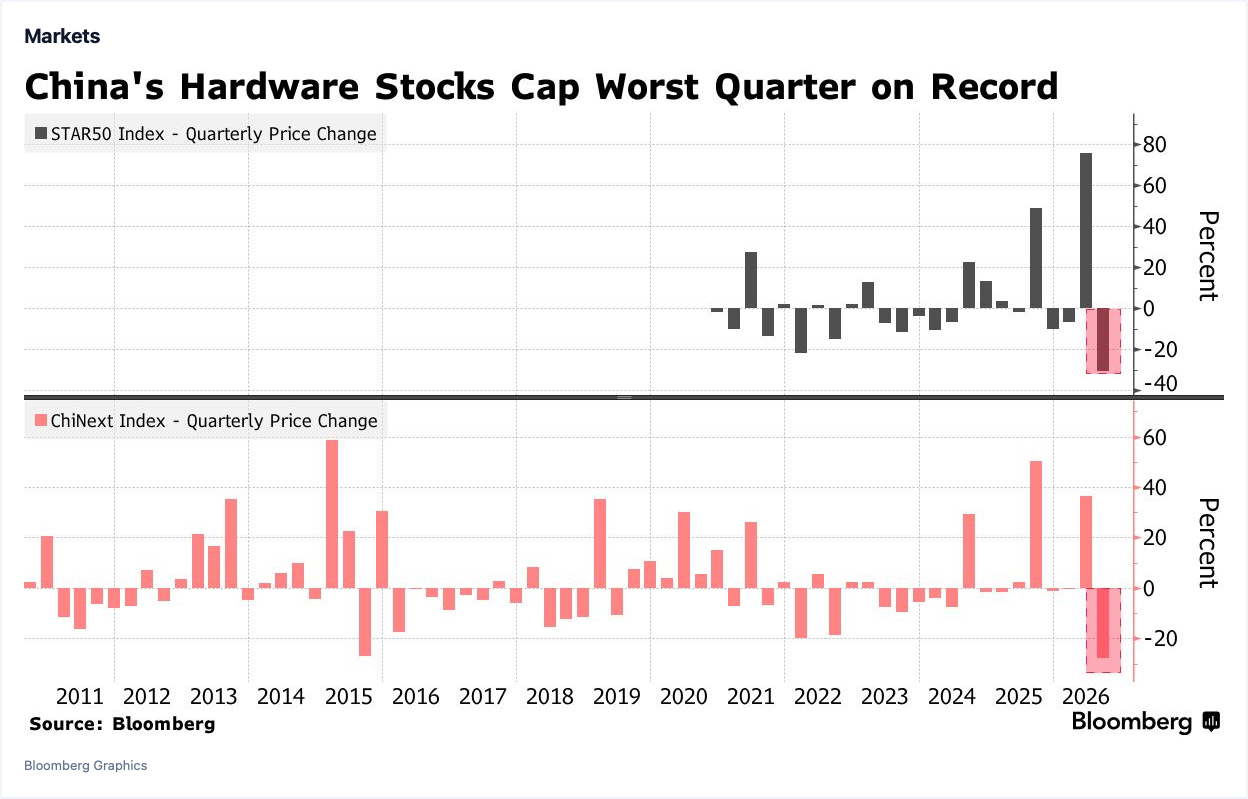
Chinese tech hardware shares posted their worst quarterly performance on record, triggered by a sharp selloff in July. Rising skepticism over whether AI companies can justify their inflated valuations and aggressive capital spending led the tech-heavy Star 50 and ChiNext indexes to plunge by roughly 30% each since late June, with major AI-related players like Biwin Storage and Moore Threads dropping at least 40%.
The slump mirrors a broader global selloff driven by investor doubts regarding sustainable demand and the near-term monetization of AI technologies. Chinese tech firms have faced additional headwinds, including fierce domestic competition and tightening U.S. restrictions, with analysts noting that sky-high valuations, lack of profitability, and geopolitical overhangs have intensified the market retreat.
Despite initial stabilization efforts by Beijing and the central bank's initiatives to spur targeted lending toward the technology sector, the market has struggled to mount any meaningful recovery. The onshore CSI 300 Index fell 1.8% ahead of the public holiday, extending its weekly decline to eight straight weeks—its longest losing streak since 2012.