一艘名为Karachi的油轮在美以对伊朗发动打击后成功通过霍尔木兹海峡,目前正驶往巴基斯坦,成为少数仍能离开波斯湾的船只之一。该船于2月25日从富查伊拉出发,预计3月18日抵达,航行周期约21天。航行过程中信号曾受电子干扰影响,轨迹显示其在周日完成关键穿越,并于周一出现在阿曼苏哈尔附近水域。
霍尔木兹海峡通常承担全球约20%的石油运输,但在冲突爆发后运输几乎停滞,仅有“涓滴式”船只通过,反映出流量大幅下降。Karachi为2022年建造的Aframax级油轮,其成功通行成为观察当前供应链恢复能力的重要样本。市场参与者正通过追踪类似船只数量,评估实际可流通原油规模与供应中断程度。
航线数据显示,该船绕行伊朗拉拉克岛并贴近伊朗海岸航行,其他成功出海船只亦采取类似路径,显示航运策略向高风险区域边缘转移以规避潜在威胁。其在阿联酋达斯岛装载原油,但吃水数据显示并未满载,暗示运输量可能低于标准容量。整体趋势显示,在地缘冲突下,运输频率、装载率与通行路径均发生结构性变化。
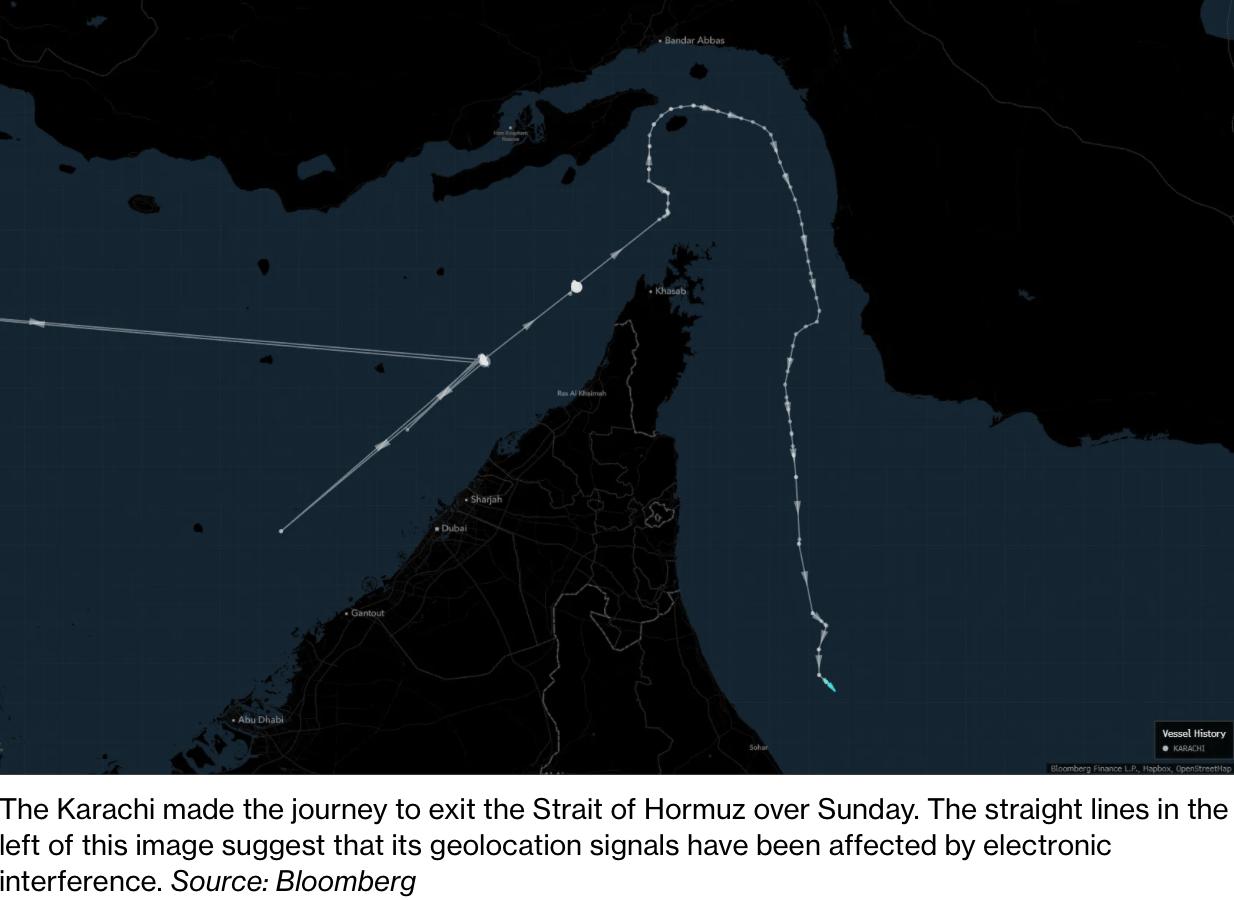
A tanker named Karachi has successfully transited the Strait of Hormuz following US and Israeli strikes on Iran and is now heading to Pakistan, becoming one of the few vessels exiting the Persian Gulf. The ship departed Fujairah on Feb. 25 and is expected to arrive on March 18, implying a voyage duration of about 21 days. During transit, its signals were affected by electronic interference, and tracking data show it completed the critical passage on Sunday and was near Sohar, Oman by Monday.
The Strait of Hormuz typically handles about 20% of global oil flows, but traffic has nearly halted since the conflict began, with only a trickle of vessels passing, indicating a sharp drop in throughput. Karachi, a 2022-built Aframax tanker, serves as a key data point for assessing current supply chain resilience. Traders are monitoring such movements to estimate how many barrels can still transit the chokepoint and gauge disruption levels.
Route data show the vessel navigated around Iran’s Larak Island and stayed close to the Iranian coastline, a pattern also observed in other outbound ships, suggesting a shift toward edge-of-risk routing strategies. It loaded crude at Das Island in the UAE, but draft readings indicate it was not fully laden, implying suboptimal cargo volumes. The overall trend reflects structural changes in transit frequency, load factors, and routing behavior under geopolitical stress.