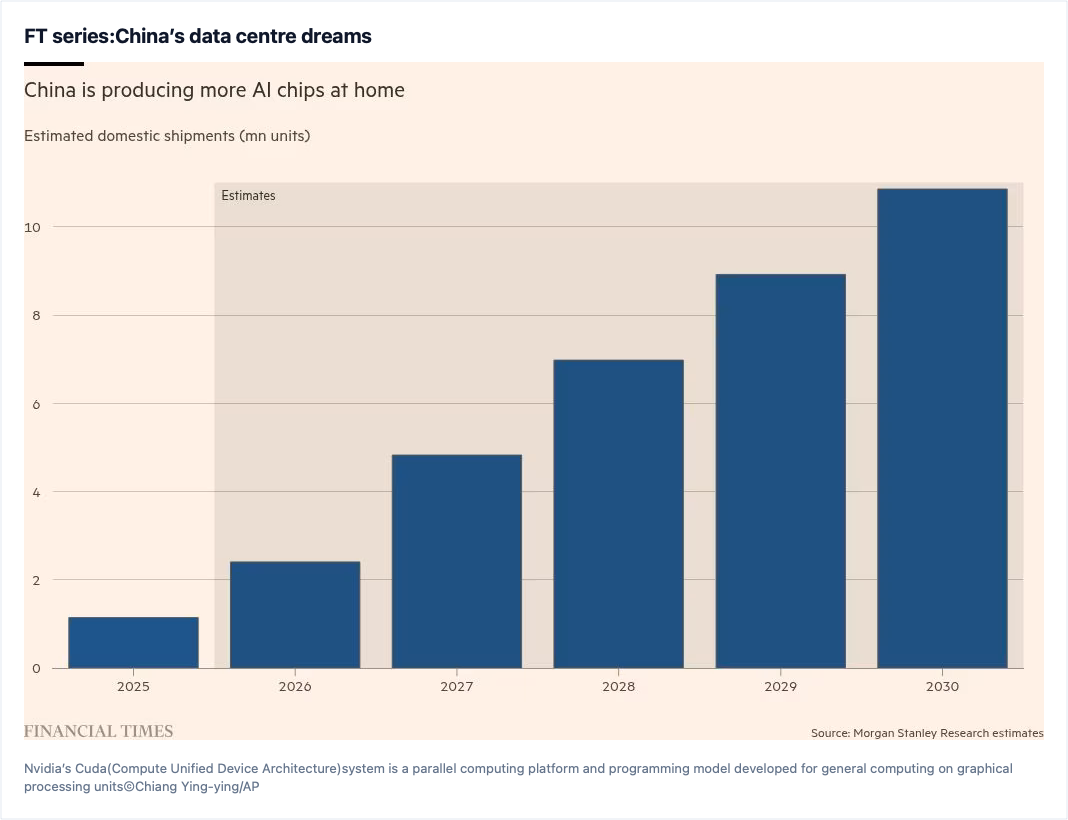
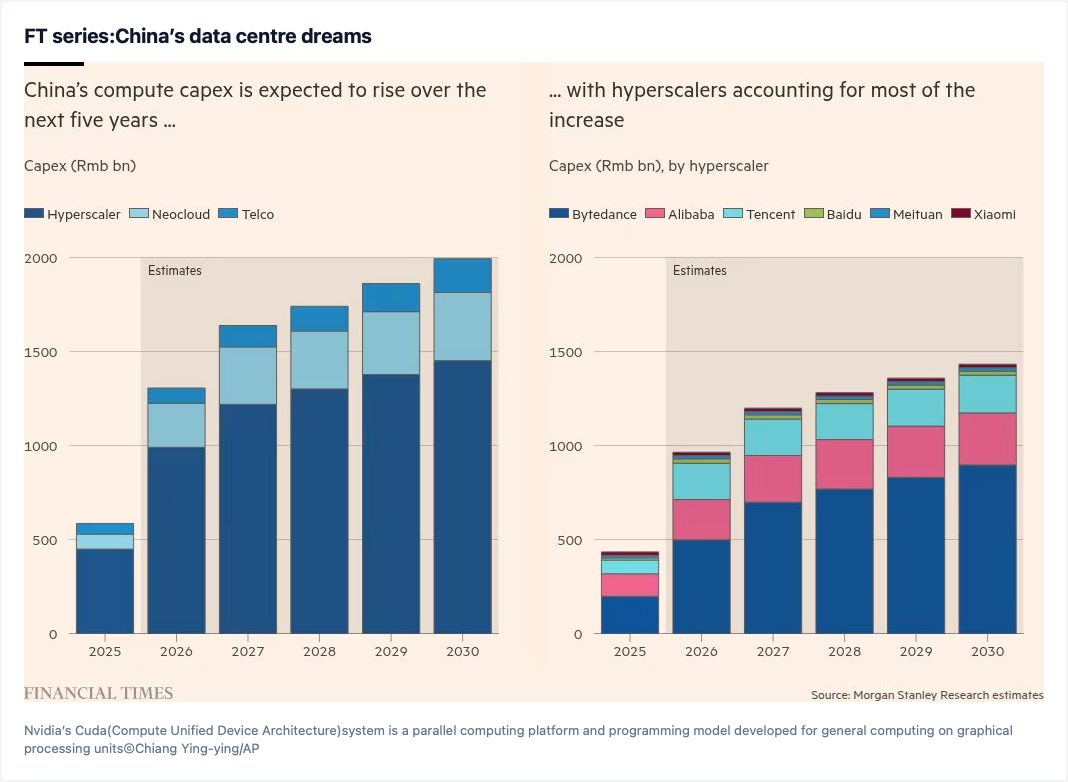
华为、阿里巴巴、百度及寒武纪等本土厂商正加速扩产,华为预计今年出货160万颗晶片,并计划透过丛集网络技术弥补单晶片性能的不足。然而,随著字节跳动、腾讯等科技巨头大举投资模型开发,业界共识认为算力缺口短期内难以缓解,甚至可能持续至2030年,本土晶片目前仍面临软体生态系相容性与大规模训练能力的挑战。
为了因应算力缺口,中国企业不仅大量向海外云端服务商租借搭载辉达高阶晶片的伺服器,更已预订超过两百万颗辉达即将推出且符合出口规范的全新工作站处理器。这种日益扩大的供需失衡,不仅对中国实现AI自主战略构成重大挑战,同时也为辉达在严格法规限制下维系其在中国市场的庞大影响力提供了契机。
Facing severe domestic artificial intelligence compute shortages, Chinese technology companies have purchased over one million Nvidia gaming and workstation chips this year. Despite strict US export controls on advanced AI processors and Beijing's drive for technological self-reliance, surging demand has vastly outpaced domestic supply, forcing companies to repurpose consumer and workstation hardware for basic AI workloads such as the prefilling phase of inference.
Domestic chipmakers including Huawei, Alibaba, Baidu, and Cambricon are rapidly expanding output, with Huawei on track to produce 1.6 million AI chips this year while using advanced clustering networks to compensate for single-chip performance gaps. However, with tech giants like ByteDance and Tencent aggressively ramping up AI investments, an industry consensus suggests the compute deficit will persist until at least 2030 amid ongoing software ecosystem and pre-training challenges.
To bridge the growing gap, Chinese firms are leasing Nvidia-powered GPUs in overseas data centres and have already placed orders for over two million units of Nvidia's upcoming compliant workstation processors. This widening supply-demand imbalance poses a major hurdle to Beijing's ambition for a self-sufficient AI ecosystem, while creating a substantial opening for Nvidia to maintain its critical market presence under export restrictions.