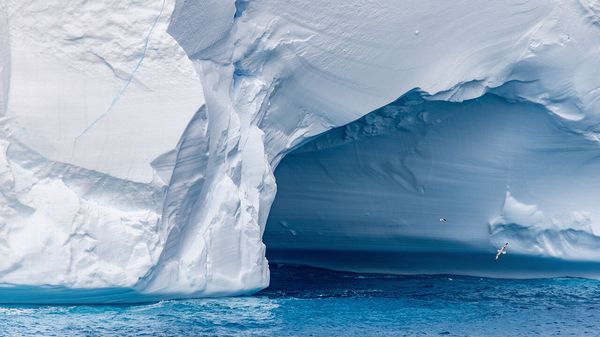
A23a曾断断续续地成为世界上最大的冰山,面积在3500至3900平方公里之间,估计重达一万亿吨,水上部分高40米,水下延伸400米。它于1986年与另外两个同伴一起诞生于菲尔希纳冰架,诞生后立即沉入威德尔海海底,并在那里被困了30多年,直到2020年微弱的融化才使其脱困。它以每天30公里的速度沿着“冰山胡同”向东北方向漂移,随后在一个泰勒柱涡流中被困了八个月,每天旋转15度,之后进入了南极绕极流。
在整个旅程中,这座冰山都受到了严密监控。它意外地带走了苏联遗弃的“友谊1号”科考站,后来又接受了诸如“皇家研究船萨姆·大卫·爱登堡号”等科考船以及哨兵3号等卫星的研究,记录下到2025年时其面积已缩减至最初的一半。科学家们对它消亡所带来的生态影响存在激烈争论。虽然较小冰山的解体此前曾通过阻塞海豹和企鹅的觅食地、并以过量淡水破坏海洋食物链而威胁到当地野生动物,但A23a的巨大体量表明,它的解体反而可能通过释放大量长期冰封的营养物质来施肥南大洋,从而刺激绿色浮游植物的爆发式增长。
最终,A23a的融化成为了海水变暖和气候变化的一个显著象征,突显了人们对冰川流失加速以及南极大陆未来命运的担忧。这座冰山生命中最后的几个月里,在其布满伤痕的表面上出现了平行的深蓝色融水线,最终导致了它的完全消融。它的生命周期突显了极地冰川重归海洋的必然转变,展示了在不断变化的气球气候中,冰体消亡这一自然但日益加速的循环。
A23a was intermittently the largest iceberg in the world, measuring between 3,500 to 3,900 square kilometers, weighing an estimated one trillion tonnes, and extending 40 meters above and 400 meters below the water. Born in 1986 from the Filchner Ice Shelf alongside two siblings, A23a immediately sank to the Weddell Sea floor, remaining trapped for over 30 years before a slight melt in 2020 freed it. It drifted northeast along Iceberg Alley at 30 kilometers per day, eventually getting trapped for eight months in a Taylor column vortex where it rotated 15 degrees daily, before entering the Antarctic Circumpolar Current.
Throughout its journey, the iceberg was closely monitored. It accidentally carried Druzhnaya 1, an abandoned Soviet research station, and was later studied by research vessels like the RRS Sir David Attenborough and satellites like Sentinel-3, which recorded its shrinking to half its original size by 2025. The ecological impact of its dissolution was highly debated among scientists. While smaller iceberg breakups had previously threatened local wildlife by blocking seal and penguin feeding grounds and disrupting the marine food chain with excessive freshwater, A23a's massive size suggested its breakdown could instead fertilize the Southern Ocean by releasing vast stores of long-frozen nutrients, stimulating green phytoplankton blooms.
Ultimately, A23a's melting serves as a prominent symbol of warming seas and climate change, highlighting concerns over accelerating ice loss and the future of the Antarctic continent. The iceberg's final months were marked by deep parallel blue lines of meltwater on its scarred surface, leading to its complete dissolution. Its lifecycle highlights the inevitable transformation of polar ice returning to the ocean, illustrating the natural yet increasingly rapid cycle of ice decay in a changing global climate.
Source: A23a had more adventures than most
Subtitle: The world’s biggest iceberg has finally melted away, aged 40 or so
Dateline: Jul 02, 2026 08:46 AM