中国肉类消费正从过去数十年的扩张进入下行调整。根据美国农业部,连续13年成长后,中国牛肉消费量将于今年转为下降,并在2026年再度下滑,部分城市餐饮通路销量下跌幅度高达50%。猪肉在价格回落至2000年代低点附近的情况下仍陷入「结构性平台」,鸡蛋市场供应过剩,消费者能以美国一颗鸡蛋的价格购买六颗本地鸡蛋。这一转折与消费停滞、线上外送崛起以及年轻族群更健康导向的饮食选择同步出现,使中国向类似1980年代美国的「麦克鸡块化」迈进,即肉类从炫耀性消费转为廉价日常品。
鸡肉成为相对受益者,但偏好结构也剧烈转变。2024年黄羽鸡销量仅占17.5%,饲养量萎缩7.3%,相较之下价格约只有其一半的白羽鸡占据其余大部分市场。上海等地关闭活禽市场(禁令延至2028年)加速此趋势,降低消费者对品种与产地的敏感度。与此同时,国内养殖业正尝试自建白羽鸡种源以减少对进口育种的依赖。
环境面影响显著。中国农业每年排放近10亿吨二氧化碳当量,与印尼2.87亿人口总排放相当;牛肉等高价肉类具有更高碳足迹,而鸡肉的排放强度最低。黄羽鸡生长期约为白羽鸡的两倍,需双倍饲料与肥料,使转向白羽鸡提高每吨温室气体的蛋白质产出效率。虽然饮食转变并不足以解决气候问题,但当前由经济压力驱动的下行消费正在无意间降低整体环境负担。
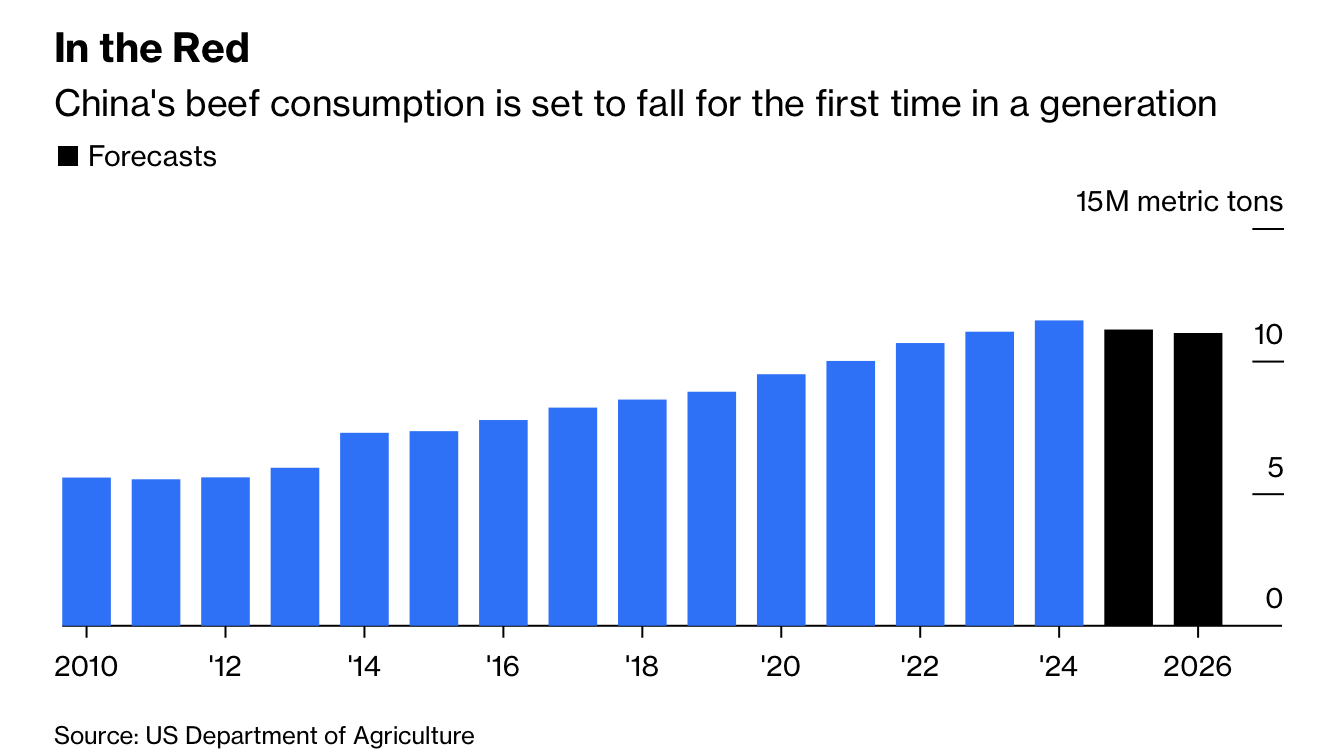
China’s meat consumption is shifting downward after decades of growth. According to the US Department of Agriculture, beef consumption will fall this year after 13 years of increases and decline again in 2026, with restaurant and takeaway sales in some cities dropping by as much as 50%. Pork has reached a “structural plateau” despite prices near their lowest levels since the 2000s, while eggs are oversupplied to the point that consumers can buy half a dozen for the price of one US egg. Amid stagnant spending, rising delivery culture, and more health-conscious younger consumers, China is moving toward a US-style 1980s “McNuggetization,” where meat shifts from aspirational to cheap and utilitarian.
Chicken is the relative winner, but preferences have changed sharply. In 2024, yellow-feather chicken accounted for only 17.5% of sales and saw a 7.3% flock contraction, while far cheaper white-feather breeds made up nearly all the remainder. The closure of live-poultry markets—Shanghai has banned them until 2028—accelerates this shift and reduces consumer interest in provenance. Domestic producers are also developing local white-feather breeding lines to reduce dependence on imported genetics.
The environmental implications are sizable. Chinese agriculture emits nearly 1 billion metric tons of CO₂-equivalent annually, comparable to Indonesia’s total emissions. High-cost meats such as beef carry higher carbon footprints, whereas chicken has the lowest. Yellow-feather chickens require roughly twice the grow-out time, feed, and fertilizer of white-feather breeds, meaning the shift increases protein output per ton of greenhouse gases. While dietary changes alone cannot solve climate issues, today’s economically driven consumption shift is incidentally reducing China’s environmental load.