尽管美国在2025年实施关税,全球经济并未出现衰退,报复性措施也有限。贸易依赖型经济体表现出韧性:新加坡2025年国内生产总值增长4.8%,高于预期;越南第四季度增长超过8%,为2011年以来最快,单月出口同比增长接近25%。这些结果显示,关税的实际冲击弱于最初担忧。
关键原因在于名义税率与实际支付税率之间的差距。2025年9月下旬,美国平均法定关税约为27.4%,但进口商实际承担的仅约一半。差异来自多重机制,包括“在途豁免”导致关税延后数月生效、对特定产品或企业的例外安排,以及对承诺在美国投资制造的企业给予优惠。此外,美加墨贸易中相当一部分仍受新北美贸易协定保护,保留了原有的关键条款。
前景仍存不确定性。国际货币基金组织预计全球经济今年增长3.1%,与2025年基本持平。尽管美元经历动荡,美国国债市场录得自2020年以来最佳表现,部分得益于人工智能投资热潮。经济学家警告,贸易战的损害可能需要多年才能完全显现。越南和新加坡的强劲数据为全球提供了暂时的缓冲信号,但并不足以消除长期结构性风险。
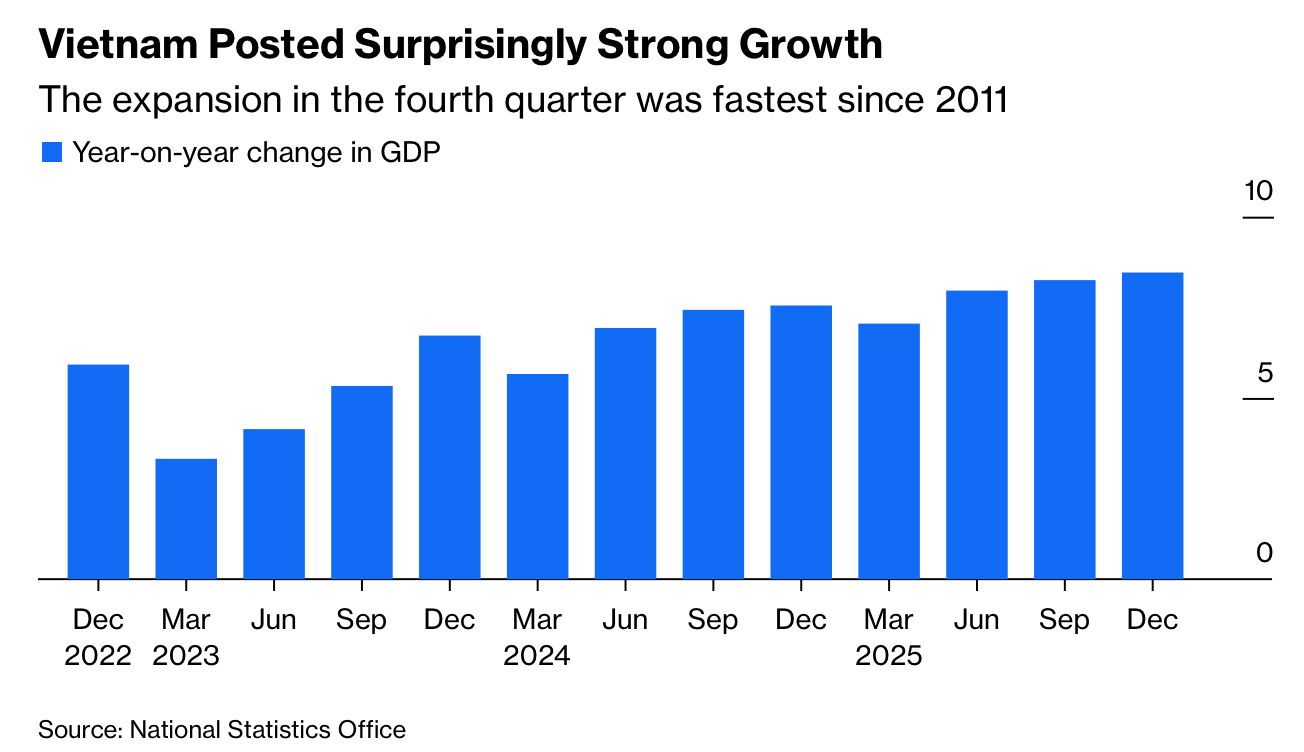
Despite US tariffs imposed in 2025, the global economy has not fallen into recession, and retaliation has been limited. Trade-dependent economies have shown resilience: Singapore’s gross domestic product grew 4.8% in 2025, exceeding expectations, while Vietnam’s fourth-quarter growth topped 8%, its fastest pace since 2011, with monthly exports jumping nearly 25%. These outcomes suggest the real impact of tariffs has been weaker than initially feared.
A key explanation is the gap between statutory and effective tariff rates. In late September 2025, the average legal tariff rate was about 27.4%, but importers paid only around half that. This reflects multiple mechanisms, including shipment lags that delay enforcement, exemptions for specific products or firms, and preferential treatment for companies pledging US manufacturing investment. In addition, a large share of US trade with Canada and Mexico remains covered by the agreement that replaced NAFTA, preserving many core provisions.
Uncertainty remains. The International Monetary Fund forecasts global growth of 3.1% this year, little changed from 2025. Despite dollar volatility, US Treasuries posted their best performance since 2020, partly driven by the artificial intelligence boom. Economists caution that the full damage from the trade war may take years to emerge. Vietnam’s and Singapore’s strength offers short-term reassurance, but does not eliminate longer-term structural risks.