中国在战前就依赖中东约三分之一原油、25%天然气进口;中东同时也是甲醇、聚乙烯与硫磺等关键来源。部分聚乙烯价格已翻倍,部分碳纤维上涨20%,而在高纯度氦方面,2023年10月后期冲击后涨幅可达110%,低等级液态氦自年初以来高65%。Peng Shaozong指出能源密集型行业(如物流、运输、航空、航运、钢铁)成本最高可升25%,并提醒工业用气体短缺正在扩大。下游也见到订单缩水与调价,某户外用品订单从1万件被缩减到3千件;Wenzhou货架制造商因核心塑胶原料上涨被迫提高新订单价格。
分析人士认为中国能源与化工供应紧缩虽使部分氦分销商受益、提高售价,但也驱动政策回头检视防线。Peng Shaozong在3月末的政策文件中称不能「过度乐观」,建议面对最坏情境、提高战略俭核。中国未全面动用战略石油储备,但国家主导油企承压吸收成本,对外界影响尚被部分缓冲。中国已在战争初期对柴油、喷气燃料与部分肥料实施名义上禁运;若冲突持久,塑胶、复合肥料与硫酸等或再受限,可能牵动全球供应。习近平则指示同步推进可再生能源、核能与煤炭支撑下的电气化转型,以建立更绿色与多元韧性的体系。
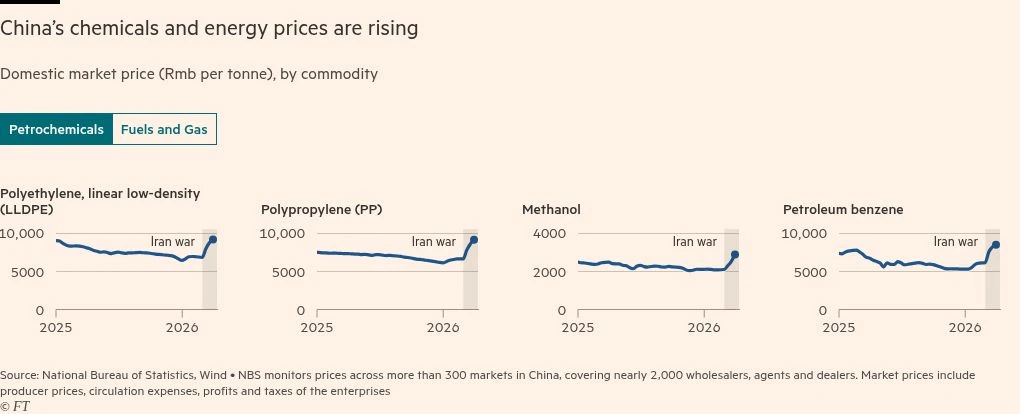
After six weeks of the Iran war, China’s supply chains are showing acute stress, suggesting limits in Xi Jinping’s long-built resilience architecture. China initially appeared better prepared than peers as a factory hub, but global oil price spikes, shipping delays, and input disruptions have already reached core manufacturing, and March recorded China’s first factory-gate price year-on-year increase since 2022. A ceasefire announced by U.S. President Donald Trump and Iran could help only if sustained beyond the initial two weeks, allowing oil and gas flow through the Strait of Hormuz to normalize trade.
Before the conflict, China already sourced about one-third of its oil and 25% of its natural-gas imports from the Middle East. Key petrochemical and agricultural inputs—including methanol, polyethylene, and sulfur—are concentrated there. In this shock, some polyethylene prices doubled, some carbon fibre prices rose 20%, high-grade helium surged 110% after the attacks began, and some liquid helium was about 65% higher than at the start of the year. Peng Shaozong said costs in logistics, transport, aviation, shipping, and steel climbed up to 25%, while one buyer reportedly cut orders from 10,000 units to 3,000. A Wenzhou shelf-maker and a Yiwu camping-goods exporter cited raw-material inflation (including “core plastics” and fabric) forcing price hikes.
Risk is now visible across policymakers. While some helium distributors benefit from buyers stockpiling, analysts and officials fear broader fragility. Peng warned China should drop wishful thinking, plan worst-case scenarios, and consider releasing oil reserves and diversifying supply as prices rise. China has so far avoided full strategic-oil-disbursement, with state-controlled oil sectors absorbing part of the increase, but it already imposed de facto bans on diesel, jet fuel, and some fertilizers; analysts say prolonged war could trigger further controls on plastics, fertilizer blends, and sulfuric acid, which would ripple outward internationally. Xi has responded by pressing faster expansion of renewable power, alongside nuclear and coal, and broader electrification of transport and industry to reduce vulnerability. (Key numbers: 3)