地缘政治正越来越深地重塑全球旅游业,尽管需求仍在增长。联合国统计显示,去年国际过夜旅行达到 15 亿人次,已高于 2019 年疫情前峰值;未来十年还预计再增长逾 50%。但战争造成最剧烈的冲击:伊朗战争已导致数千架次航班取消,中东地区每天至少损失 6 亿美元游客支出。以色列去年仅接待 130 万国际游客,比 2019 年下降 71%,表明战争冲击不仅即时,而且具有持续性。
更广泛的政治摩擦正在改变旅行流向、成本和准入。俄罗斯游客前往申根区的人数在 2024 年比 2019 年下降 90%;西方航空公司因避开俄罗斯领空而增加飞行时间,每多飞 1 分钟,票价约上升 1.60 美元。如今从伦敦飞德里的时间比 2021 年多 1 小时,飞东京多 2 小时。中国则把出境旅游用作政策工具:赴日中国游客在 2025 年 12 月同比下降 45%,但中国游客总体海外出行量相较 2000 年已增长近 9 倍,其中独立出行比例从 2005 年的 14% 升至去年的 83%。
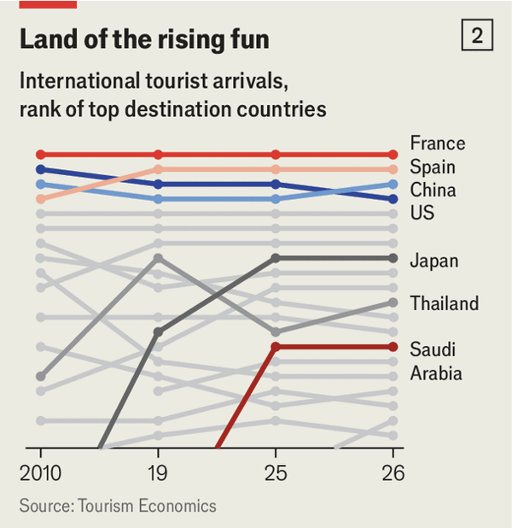
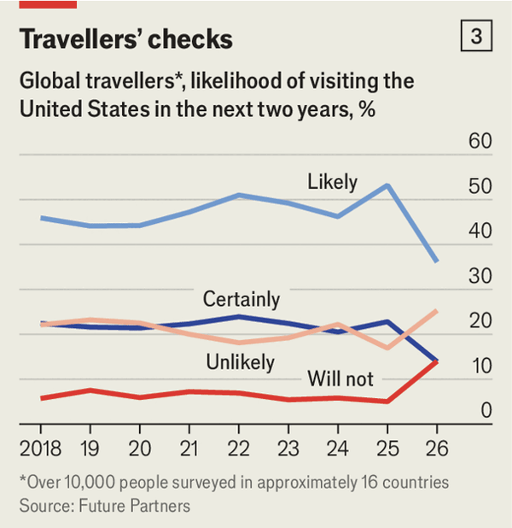
美国则通过限制入境而削弱自身吸引力。来自 19 个非洲、亚洲和加勒比国家的公民如今无资格申请旅游签证,其他一些人还须缴纳高额保证金。市场研究显示,过去一年中,认为自己在美国“不受欢迎”的全球旅客比例已超过翻倍,明确拒绝赴美的比例几乎增至 3 倍。结果是,美国成为唯一未能受益于旅游繁荣的主要目的地:去年国际游客到访量下降 6%,2025 年旅行逆差扩大至 720 亿美元。趋势很清楚:政治正越来越决定人们是否能旅行、如何旅行以及代价多高。
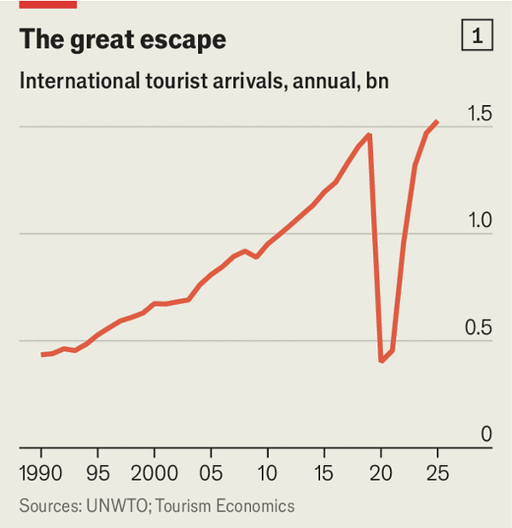
Geopolitics is reshaping global tourism more deeply even as demand keeps rising. The UN counts 1.5bn international overnight trips last year, above the pre-pandemic peak in 2019, and forecasts growth of more than 50% over the next decade. But wars cause the sharpest shocks: the Iran conflict has already cancelled thousands of flights and is costing the Middle East at least $600m a day in visitor spending. Israel received only 1.3m international visitors last year, down 71% from 2019, showing that war damage is not just immediate but persistent.
Broader political frictions are also redirecting flows, raising costs and narrowing access. Russian visits to the Schengen area in 2024 were down 90% from 2019; Western airlines, forced to avoid Russian airspace, face longer routes, and each extra minute is estimated to add $1.60 to fares. Flights from London now take 1 hour longer to Delhi than in 2021 and 2 hours longer to Tokyo. China, meanwhile, uses outbound tourism as a policy tool: visits to Japan by Chinese travellers fell 45% year on year in December 2025, even though Chinese overseas travel overall was almost 9 times higher than in 2000 and the share travelling independently rose from 14% in 2005 to 83% last year.
America, by contrast, is weakening its own appeal by restricting entry. Citizens of 19 countries in Africa, Asia and the Caribbean are now ineligible for tourist visas, while some others face hefty bonds. Market research shows the share of global travellers who do not feel welcome in America has more than doubled in a year, and the share outright refusing to visit has almost tripled. The result is that America is the only major destination failing to benefit from the travel boom: international visits fell 6% last year, and its 2025 travel deficit widened to $72bn. The trend is clear: politics is increasingly determining whether people can travel, how they travel and at what cost.