2019年全球4000万架次定期航班飞行了约610亿公里,其中逾40%的航班留下了飞机尾迹,且在5%的飞行里程中形成了长期驻留的卷云。这些覆盖全球千分之一天空的持久尾迹通过吸收和重新释放红外辐射产生净升温效应,其引发的全球变暖效应可能超过了航空引擎直接排放的二氧化碳。持久尾迹主要在海拔8000至13000米、厚度仅数百米的冰过饱和区(ISSR)形成,只要引导飞机微调高度绕开这些区域,即可大幅遏制变暖效应。
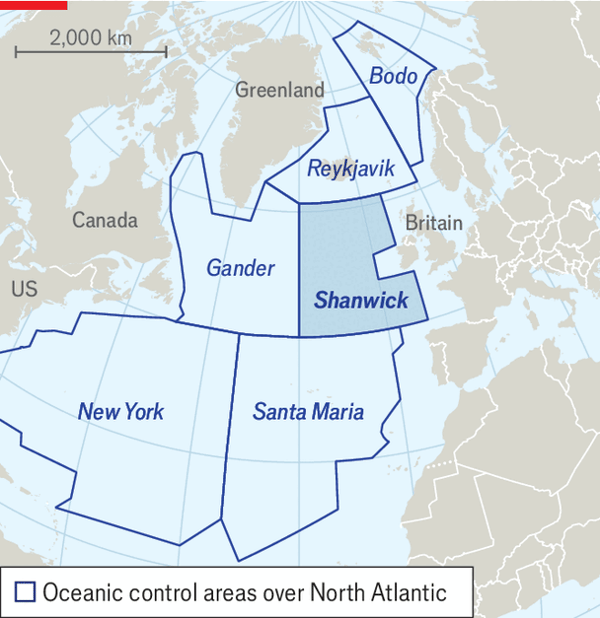
2026年8月18日,由英国国家航空交通服务公司(NATS)、帝国理工学院、Contrails.org、剑桥大学、英国气象局及谷歌(提供140万英镑算力支持)等联合发起的“蓝天行动”(Operation Blue Skies)正式启动。该试验总预算500万英镑,选定覆盖180万平方公里的北大西洋山威克(Shanwick)空域展开;该空域虽仅占地球表面积的0.4%,却贡献了全球约5%的尾迹变暖。在接下来的两个冬季中,空管人员将在20至40天内对航班高度实施数百米的微调,以实测规避飞行的大规模可行性与减排成效。
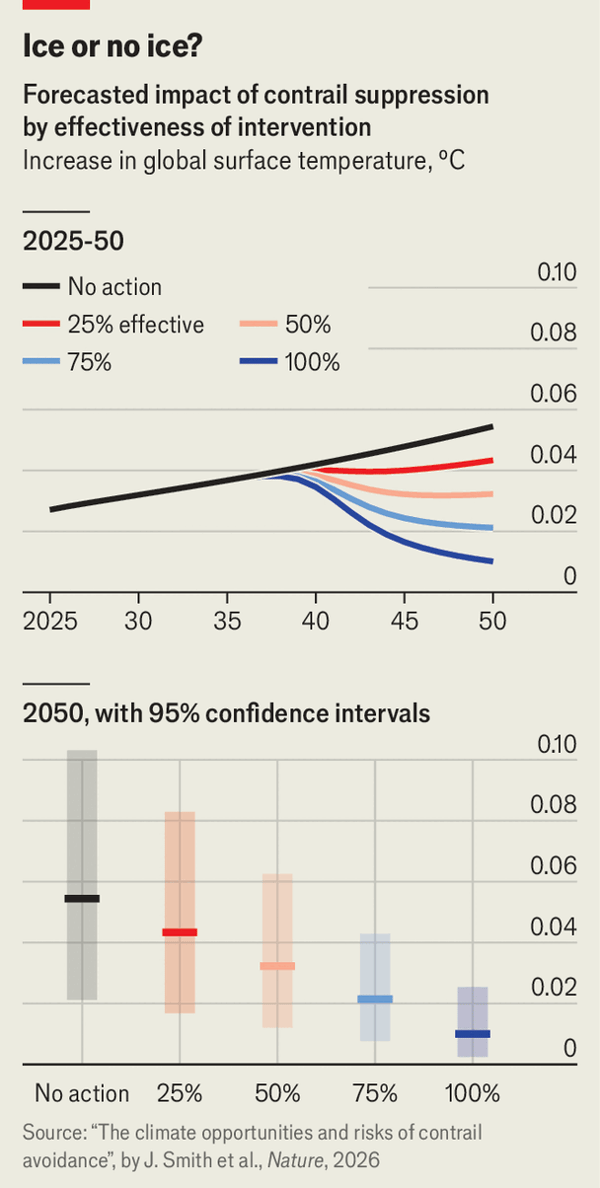
研究表明,尾迹变暖具有高度集中性,全球80%的尾迹升温效应仅由2%的航班产生,通过调整不足5%的航班路线即可消除70%的尾迹变暖。剑桥大学的模型预测,到2050年航空业将贡献约0.01℃的升温(占全球2℃升温总量的5%),其中过半源于尾迹;若在2035年启动消除率达75%的规避计划,可将航空变暖总量削减约三分之一。尽管微调航线会导致绕飞航班燃油消耗增加不到2%(行业总燃油成本仅增加千分之一),但每多排放1吨二氧化碳即可消除约100吨二氧化碳当量的温室效应,其成本效益显著优于昂贵的可持续航空燃料(SAF)。
In 2019, 40m scheduled passenger flights traversed roughly 61bn kilometres, with over 40% creating contrails and 5% of total flight distance generating persistent cirrus clouds that blanket approximately 0.1% of the sky. By absorbing and re-emitting terrestrial infrared radiation, these persistent trails produce a net warming effect that likely exceeds the climate impact of aircraft carbon dioxide emissions. Persistent contrails form exclusively within ice-supersaturated regions (ISSRs) situated at altitudes of 8–13km; because these regions are only a few hundred metres deep, slight vertical flight adjustments can effectively prevent cloud formation.
On August 18th, a British consortium launched "Operation Blue Skies", a £5m trial spanning 1.8m square kilometres of North Atlantic airspace in Shanwick—an area representing 0.4% of Earth's surface yet accounting for roughly 5% of global contrail warming. Backed by NATS, Imperial College London, Contrails.org, Cambridge University, the Met Office, and Google (contributing £1.4m/$1.9m in computing resources), air-traffic controllers will alter flight paths by a few hundred metres across 20 to 40 days over the next two winters to validate predictive rerouting at scale.
Data indicates that contrail warming is intensely concentrated, with just 2% of flights driving 80% of total contrail-induced temperature increases; rerouting fewer than 5% of flights could eliminate 70% of this warming. Cambridge models estimate aviation will drive roughly 0.01°C of warming by 2050 (representing 5% of an anticipated 2°C global rise), with over half caused by contrails; an avoidance scheme with 75% efficacy starting in 2035 would cut aviation's total warming contribution by roughly a third. While lower cruising increases diverted flights' fuel burn by under 2% (raising global airline fuel expenditures by merely 0.1%), each additional tonne of engine CO2 burned avoids roughly 100 tonnes of CO2-equivalent warming, vastly outperforming sustainable aviation fuels on cost.
Source: Contrail-free flying could help the climate
Subtitle: A trial over the Atlantic aims to show how
Dateline: 8月 20, 2026 05:59 上午