为了应对科技巨头庞大的资本支出需求,摩根士丹利设计出结合传统专案融资保护机制与广泛发行债券特性的混合型金融商品。透过让具备优良资产负债表的科技巨头(如Google)提供担保,企业能以更低的利率筹集资金,同时吸引保险公司与退休基金等更广泛的投资人参与。这种模式成功地将巨额的人工智慧运算合约转化为证券,大幅扩展了可用于基础设施的资金池。
这套融资模式正从资料中心建设延伸至直接为图形处理器等硬体设备融资,例如近期为CoreWeave安排的数十亿美元联贷案。然而,随著贷款对象逐渐从资金雄厚的科技巨头转向直接消耗算力的人工智慧实验室,底层信用风险也随之增加。分析师警告,这是一波史无前例的巨大资本支出周期,市场目前缺乏历史经验可供借鉴,因此参与企业的财务健康状况将是未来关注的潜在风险。
Morgan Stanley has successfully overtaken its long-time rival Goldman Sachs in the first half of the year, with its debt and equity capital market fees growing to $2.3 billion to rank second globally, driven by innovative financing structures for the AI boom. The bank has become Wall Street's primary architect and dominant adviser in AI infrastructure financing, funneling tens of billions of dollars into data center construction. These deals are not only changing the trajectory of the technology sector but also dramatically reshaping the operations of capital markets.
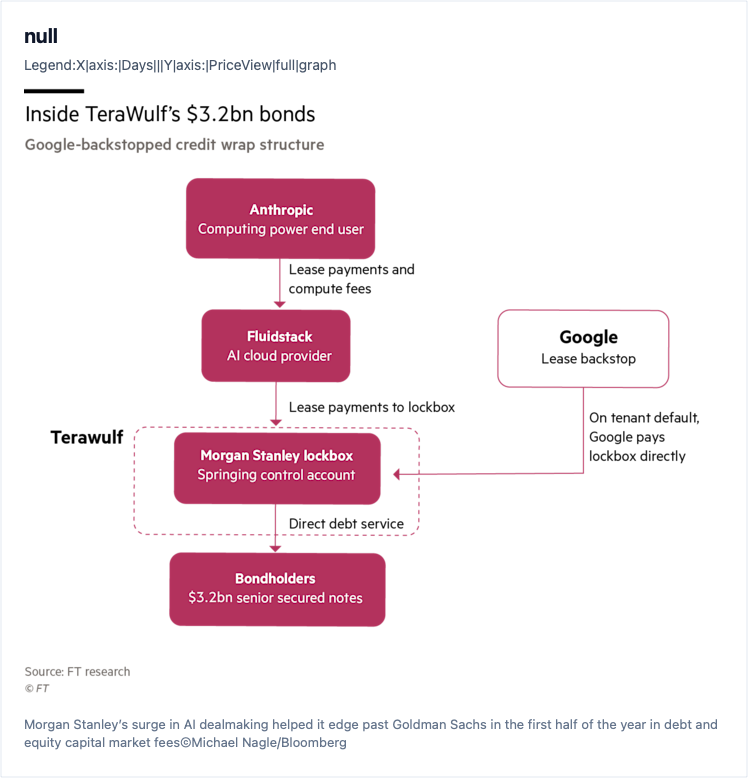
To address the massive capital expenditure needs of tech giants, Morgan Stanley designed hybrid financial instruments that combine the protections of traditional project loans with the broad distribution of bonds. By having hyperscalers with pristine balance sheets, such as Google, guarantee the leases, companies can raise funds at much lower interest rates while attracting a wider pool of investors like insurers and pension funds. This model successfully packages massive AI computing contracts into securities, significantly expanding the pool of capital available for infrastructure.
This financing model is now expanding beyond data centers to directly fund hardware like graphics processing units, as seen in the recent multibillion-dollar syndicated loan arranged for CoreWeave. However, as lending moves away from well-capitalized tech giants toward the AI labs directly consuming the computing power, the underlying credit risk increases accordingly. Analysts warn that this is an unprecedented massive capital expenditure cycle with no historical playbook, making the financial health of participating companies a critical potential risk to monitor.