据该研究的主要作者、ESO天文学家Olivier Hainaut表示,每颗卫星穿越望远镜视野时,都会留下一道明亮的光迹,抹去可观测天空的一小部分。尽管单一光迹可能仅构成轻微干扰,但数以千计此类光迹的累积效应会对数据收集和夜空摄影造成重大问题。全球卫星产业自2019年以来急剧扩张,主要由网际网路服务星座驱动,如Elon Musk的SpaceX Starlink和Amazon的Project Kuiper(原文中称为Leo)。
该研究的结论来自于在帕拉纳天文台进行的模拟,该天文台位于智利的阿塔卡马沙漠——全球顶级天文观测地点之一。建模检视了预计卫星数量将在广视野望远镜观测中产生持续干扰的情境。这些发现凸显了低地球轨道快速商业化与科学界进行无阻碍研究能力之间的矛盾,强调了迫切需要监管框架和缓解策略以维护地面天文学的完整性。
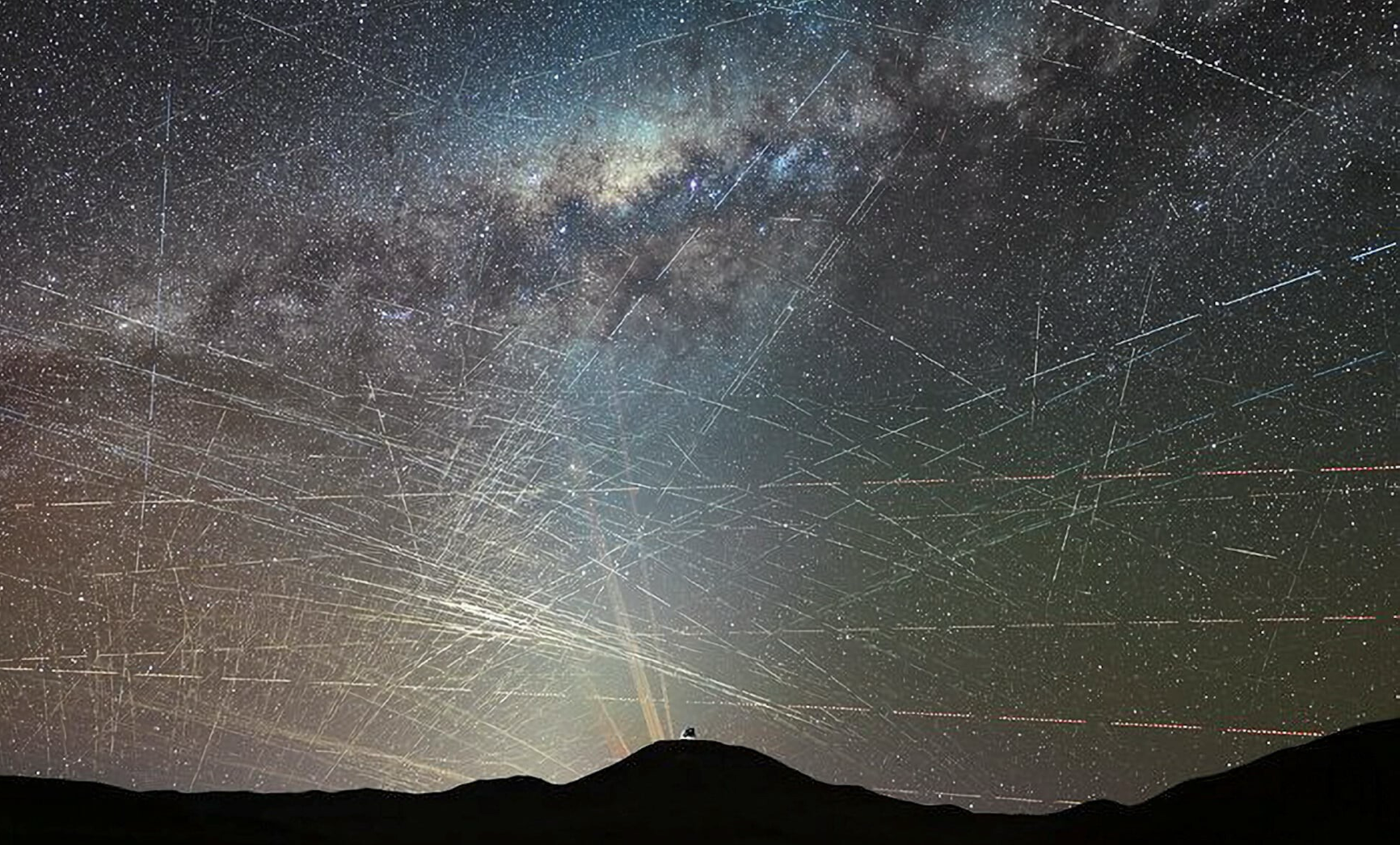
A study published in the journal Astronomy & Astrophysics by the European Southern Observatory (ESO), which operates telescopes in northern Chile, has found that the proliferation of satellites poses a growing threat to astronomical observations. The research revealed that existing proposals to launch more than 1.7 million satellites into orbit—including some exceptionally bright ones—would substantially degrade the quality of ground-based astronomical work. Currently, approximately 15,000 satellites orbit the Earth, but this number is poised to increase by more than a hundredfold if all proposed constellations are realized.
According to ESO astronomer Olivier Hainaut, the lead author of the study, each satellite crossing a telescope's field of view leaves a bright streak of light that wipes away a small portion of the observable sky. While a single streak may constitute only a minor nuisance, the cumulative effect of thousands of such streaks creates major problems for data collection and night-sky photography. The global satellite industry has expanded dramatically since 2019, driven primarily by internet service constellations such as Elon Musk's SpaceX Starlink and Amazon's Project Kuiper (referred to as Leo in the source).
The study's conclusions were derived from simulations conducted at the Paranal Observatory, located in Chile's Atacama Desert—one of the world's premier astronomical sites. The modelling examined scenarios in which the projected satellite population would create persistent interference across wide-field telescope observations. These findings underscore the tension between the rapid commercialization of low-Earth orbit and the scientific community's ability to conduct unimpeded research, highlighting an urgent need for regulatory frameworks and mitigation strategies to preserve the integrity of ground-based astronomy.