然而,从中长期来看,这股资料中心建设热潮却潜藏著严重的产能过剩与投资回报风险。布鲁金斯学会(Brookings Institution)估计,若要让这些资料中心获得合理的经济回报,到 2032 年,AI 服务支出需达到每年 3.7 兆美元,相当于美国 GDP 的 9.2%。研究机构 Gartner 也指出,到 2030 年前需要 8.5 兆美元的 AI 营收才能支撑新资料中心的投资回报,但实际预测的营收仅有 3.6 兆美元,显示预期与现实之间存在巨大落差。
在短期严重短缺与中长期产能过剩的双重极端之间,股票市场可能面临剧烈震荡。尽管AI带来的生产力奇迹尚未完全实现,或者政治反弹、电力与晶片短缺及债务融资压力可能迫使建设放缓,但考量到 AI 股价已反映极高的成长预期,任何减速都会对股市造成严重冲击。历史经验表明,由科技革命引发的市场狂热往往倾向于过度投资,难以实现软著陆,投资者在面对科技高层可能再次上调资本支出计划时需谨慎以对。(关键数字:nearly four years)
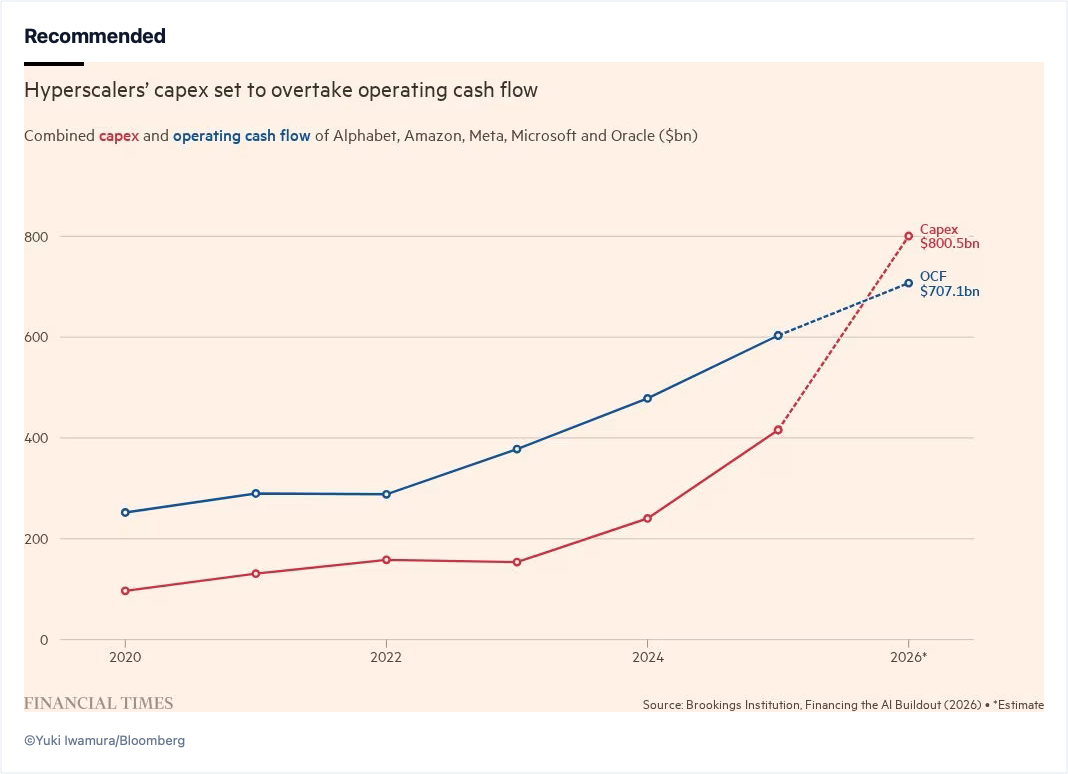
Surging demand for raw AI computing power continues to drive an unprecedented boom in near-term data center capital spending among tech giants. The five largest hyperscalers—Alphabet, Amazon, Meta, Microsoft, and Oracle—have raised their capital expenditure budgets to roughly $800 billion this year, nearly double last year's figure and surpassing their combined forecast cash flow of $700 billion. Indicators of this acute supply-demand imbalance include Nvidia B200 GPU spot rental prices rising 50% over six months to over $6 an hour, and SpaceX reporting that returns on new computing capacity contracts can cover construction costs in under a year.
Looking toward the medium-to-long term, however, the massive wave of data center construction faces daunting risks of severe overcapacity and insufficient returns. According to a Brookings Institution estimate, annual spending on AI services would need to reach $3.7 trillion—an astounding 9.2% of US GDP—by 2032 for operators to achieve a decent economic return. Similarly, tech research firm Gartner estimates that $8.5 trillion in AI revenue is required by 2030 to justify the new data center investments, yet its actual revenue forecast for that period is only $3.6 trillion, highlighting a massive gap between investment scale and projected monetization.
Caught between acute short-term shortages and the looming shadow of overcapacity, equity markets could experience significant turmoil, as previewed by recent tremors among exposed AI cloud startups like CoreWeave and Nebius. While constraints such as political backlash, power and chip shortages, or tighter debt markets could slow construction, and the promised AI productivity miracle remains more promise than reality nearly four years after ChatGPT's launch, high growth expectations already baked into AI stock prices leave little room for a soft landing. Historically, tech-driven market manias tend to overshoot as companies fight for market position, a crucial warning as executives prepare to report earnings and potentially ratchet up spending plans once again.