尽管整体经济面临下行压力,中国经济内部却呈现出明显的两极分化趋势,科技与先进制造业成为唯一的增长亮点。受惠于全球人工智能投资热潮对中国出口的强劲需求,电子设备产量飙升超过百分之十九,工业机器人和集成电路的制造量也录得显著增长。相比之下,传统的房地产投资则创下百分之十九点二的历史新低,反映出中国正努力将经济增长引擎从依赖房地产转向科技与高端制造领域。(关键数字:19, 19.2)
面对持续低迷的内需和潜在的通缩风险,中国决策层正面临出台更多经济刺激措施的巨大压力。经济学家警告,如果扣除科技板块的贡献,其他领域的增长动能正在崩溃,七月份的数据显示国内生产总值增速可能已降至实现年度目标所需的水平之下。市场预期,政府可能在未来数周内采取进一步的财政支持手段,例如动用特别国债配额或新增政策融资工具,以确保全年约百分之五的经济增长目标得以实现。(关键数字:5)
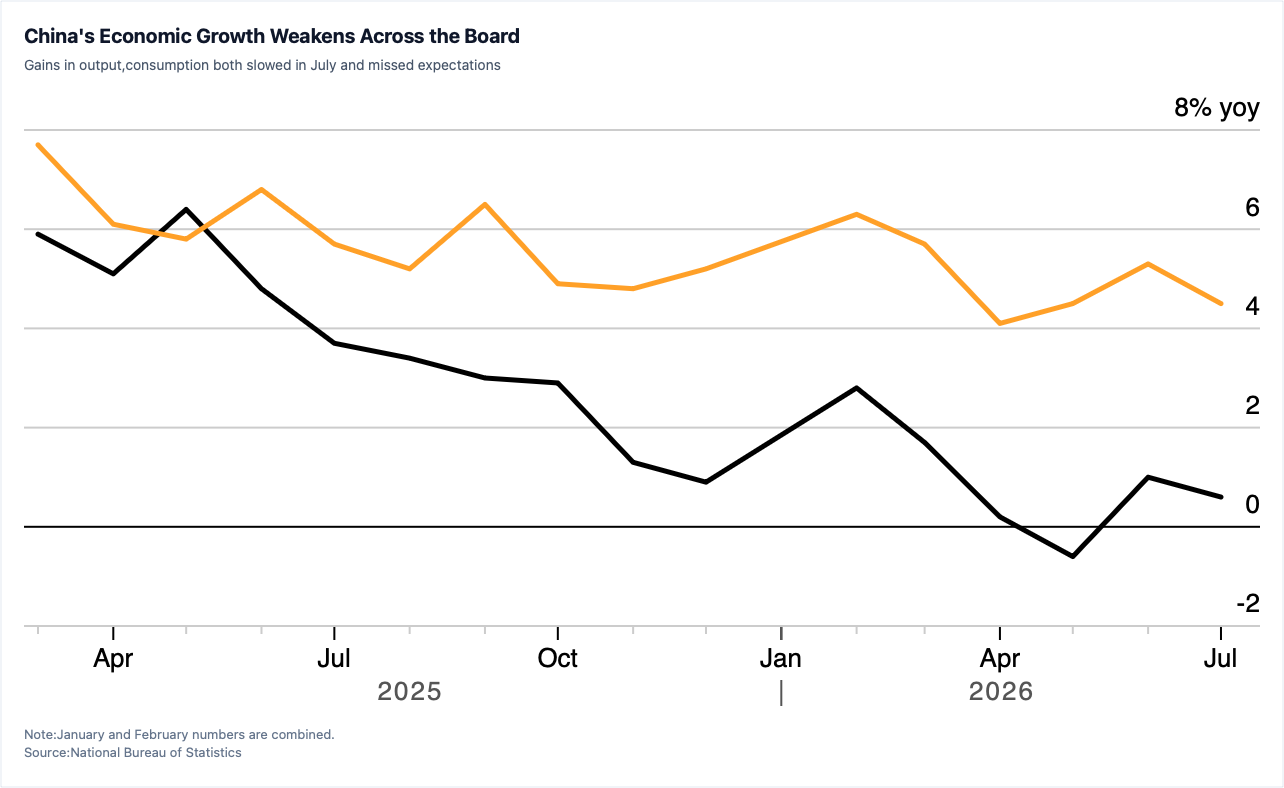
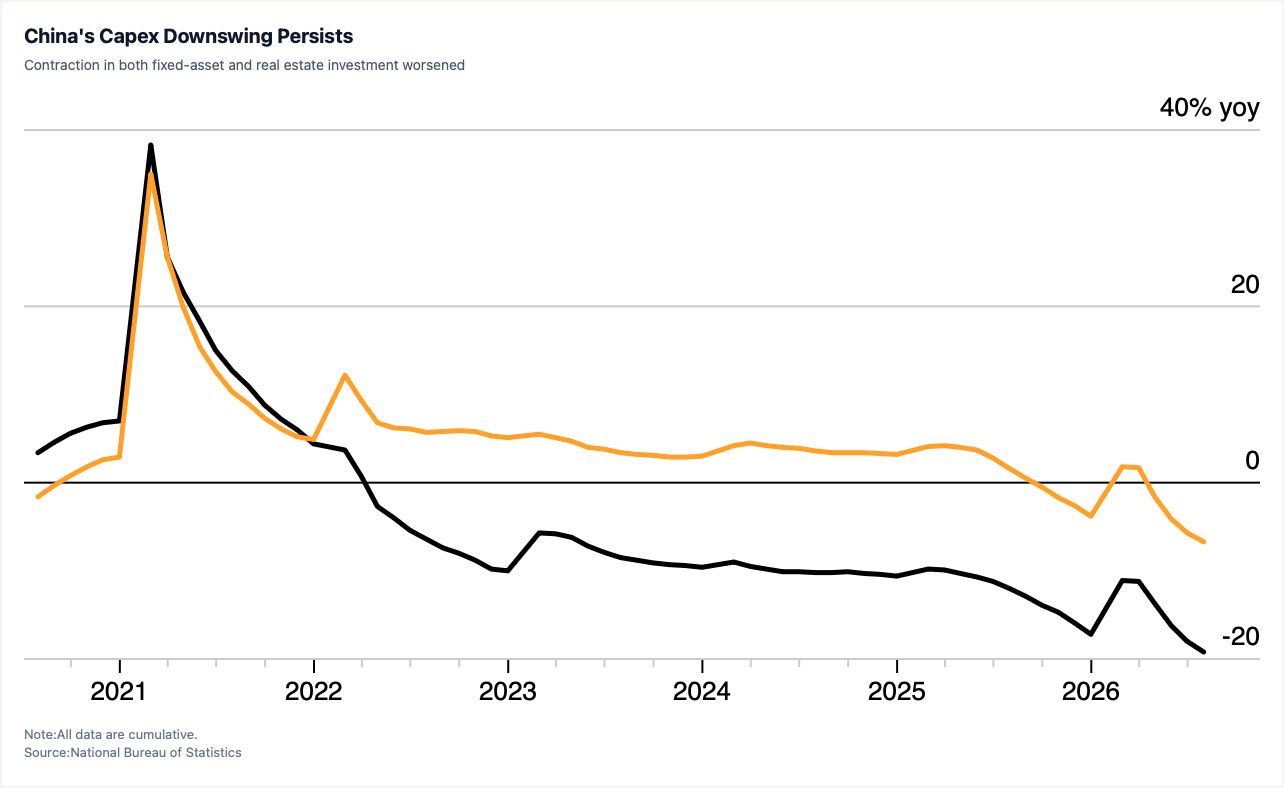
China's economy faced significant headwinds at the start of the second half of the year, with major economic indicators for July falling short of expectations and signaling a broader slowdown. Industrial production growth eased to 4.5%, retail sales growth slowed dramatically to 0.6%, and fixed-asset investment saw a larger-than-expected decline of 6.7% over the first seven months. Additionally, the urban jobless rate climbed to 5.2%, while extreme weather events like heavy rainfall further disrupted factory operations and supply chains, compounding the weakness in domestic consumption.
Despite the overall downward pressure, a starkly polarized trend has emerged within the economy, with the technology and advanced manufacturing sectors serving as the primary bright spots. Driven by robust global demand linked to the artificial intelligence investment boom, the output of electronic equipment soared by more than 19%, alongside significant jumps in the production of industrial robots and integrated circuits. In sharp contrast, traditional real estate investment plunged by a record 19.2%, highlighting the nation's ongoing structural shift away from property-fueled growth toward technology-driven industries.
Faced with persistently sluggish domestic demand and looming deflationary risks, Chinese policymakers are under mounting pressure to introduce additional economic stimulus. Economists warn that excluding the tech sector, growth momentum in other areas is collapsing, and the July data suggests that GDP expansion may have slipped below the pace required to meet the annual target. Markets anticipate that the government could deploy further fiscal support in the coming weeks, such as utilizing special sovereign bond quotas or new policy financing tools, to ensure the full-year growth goal of around 5% remains achievable.