实际上,国内压力同时来自物理与生活层面:乌方对俄乌冲突中的无人机攻击持续深入,Tuapse 的 Rosneft 为中心地区出现毒烟与土壤污染,当地已宣告紧急状态;莫斯科本周五面临超过30次攻击。VTsIOM与普京派背景的 Public Opinion Foundation 周度政治民调在本周未公布,反映政治讯号更不透明。移动运营商预警五月九日阅兵前将有长时间通讯中断,Kremlin 的网路限制被视为加剧不满。5月9日胜利日阅兵首次自2007年以来不展示重型武器,显示安全担忧。国内通胀偏高、利率维持高档、税赋压力、和平进程停滞,使民众情绪持续恶化,且对2022年俄乌战争可能「数字化终局」的期待转为疲惫。
从学术指标与社会行为看,对未来悲观情绪持续上升。俄罗斯人民学院心理研究报告指出,军事行动带来的疲惫与悲观经济预期推高忧郁表征;RBC引述DSM Group资料显示,去年抗抑郁药需求增长24%。Vedomosti 报导自一月起,境外资讯搜寻与离境资讯需求已倍增。以往支持战争的民族主义作者亦转向批评:前支持者 Ilya Remeslo 在约12万追随者平台发文,预测 Putin 今年可能失去权力;Carnegie Berlin Center 的 Alexander Baunov 描述「空气组成」改变。Gennady Zyuganov 警告不改变政策将重演1917式动荡。前线退伍军人 Sergei 等人都认为前线并非人人愿意持续作战。分析人士 Andrei Kolesnikov 认为不满或在高压环境下累积为「地下火种」,可能在意外时点突然爆发。
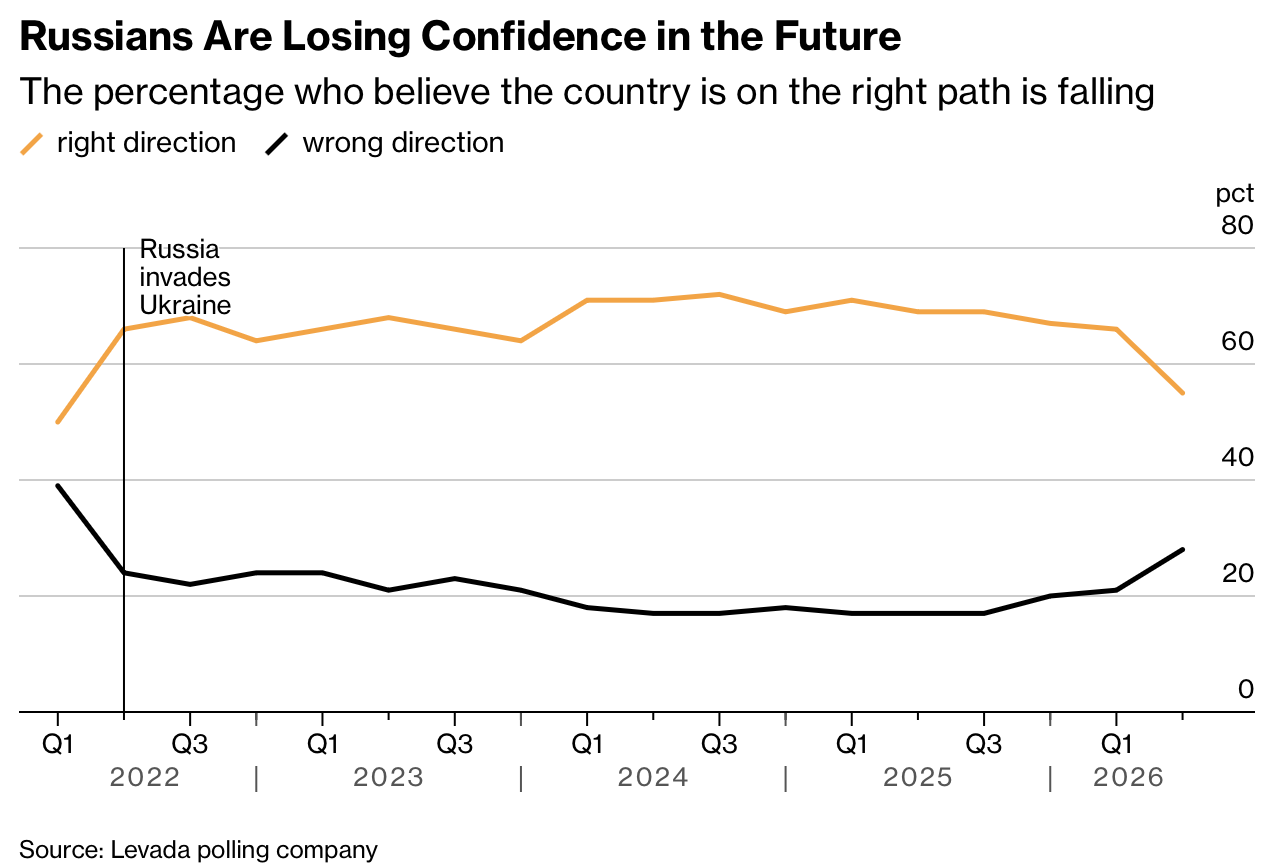
Russia is entering the fifth year of the war in a much darker social mood. In the first weeks, a social-media shockwave helped surface latent anger: Victoria Bonya, a Russian beauty influencer based in Monaco with nearly 14 million Instagram followers, posted a video watched by more than 30 million people and attracting over 86,000 comments. Public criticism, once muted by fear of repression, now includes professionals leaving, business closures, and rising economic strain. Polling shows that while Vladimir Putin remains relatively high, support has weakened—VTsIOM recorded 66% approval in the week to April 19 versus 74% two months earlier, the lowest since the February 2022 war start; Levada found only 55% think the country is on the right path, down from 67% at the end of last year.
The atmosphere of grievance is reinforced by repeated Ukrainian strikes and daily security pressure. Residents in Tuapse near the Rosneft refinery report toxic smoke, oil-spill contamination, and a declared regional emergency, while Moscow faced more than 30 strikes in one day before Victory Day. Economic anxiety compounds this: elevated inflation, high interest rates, and tax burdens are widening personal hardship. For the May 9 parade, there will be no heavy weaponry for the first time since 2007 because officials fear drone attacks; mobile operators have warned of long data and phone disruptions, and tightening internet controls are now publicly controversial. The Kremlin still seeks an image of resilience, but polls and social behavior suggest a growing loss of trust ahead of the September parliamentary election.
Psychological and political warning signs are strengthening. A Russian Academy of Sciences–linked monitoring report linked the rise in pessimistic economic expectations and war fatigue to social distress; RBC data also showed a 24% surge in antidepressant demand last year, and searches for information on leaving Russia have more than doubled since January. Former pro-Kremlin voices such as Ilya Remeslo (about 120,000 followers) now predict Putin could lose power in 2026, while even nationalist figures like Maxim Kalashnikov compare current conditions to a historical turning point and Communist leader Gennady Zyuganov warned of a 1917-like upheaval without policy shifts. Yet no mass protests are visible due to strong repression; analysts argue the mounting discontent may become an unexpected flashpoint, potentially erupting suddenly.