这次抛售反映了投资者对大型科技公司在AI基础设施上持续支出能力的担忧。尽管SK海力士预计将公布创纪录的季度盈利,但市场害怕不断飙升的记忆体价格可能最终会抑制需求,加上南韩主要晶片制造商近期公布的激进扩张计划也引发了对未来产能过剩的疑虑。
尽管市场存在恐慌情绪,但部分分析师对记忆体产业的短期前景仍保持乐观态度。他们认为长期的供应合约能提高获利能见度,且近期股价的回档反而使得SK海力士的估值变得更具吸引力,可望在散户去杠杆化完成后迎来全球资金的重新流入与反弹。
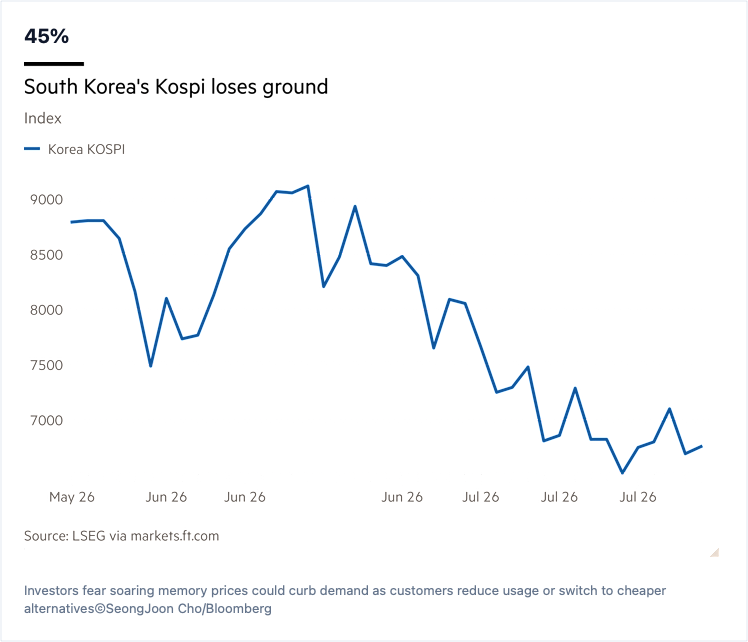
Asian stock markets experienced a significant downturn driven by a sell-off in AI-related shares, with South Korea's Kospi and Japan's Nikkei indices both plunging. Shares of chipmaking giants like SK Hynix and Samsung Electronics plummeted, triggering a temporary halt in morning trading, a decline heavily influenced by the previous day's drop in US tech stocks, notably Nvidia.
This sell-off reflects growing investor concerns regarding the sustainability of Big Tech spending on AI infrastructure. Even though SK Hynix is expected to report record quarterly earnings, the market fears that soaring memory prices could ultimately dampen demand, while recent aggressive expansion plans by leading South Korean chipmakers have also sparked worries about future oversupply.
Despite the market jitters, some analysts maintain a positive outlook on the memory industry's near-term prospects. They argue that long-term supply agreements enhance earnings visibility, and the recent pullback in share prices has actually made SK Hynix's valuation more attractive, potentially setting the stage for a rebound and the return of global funds once retail deleveraging is complete.