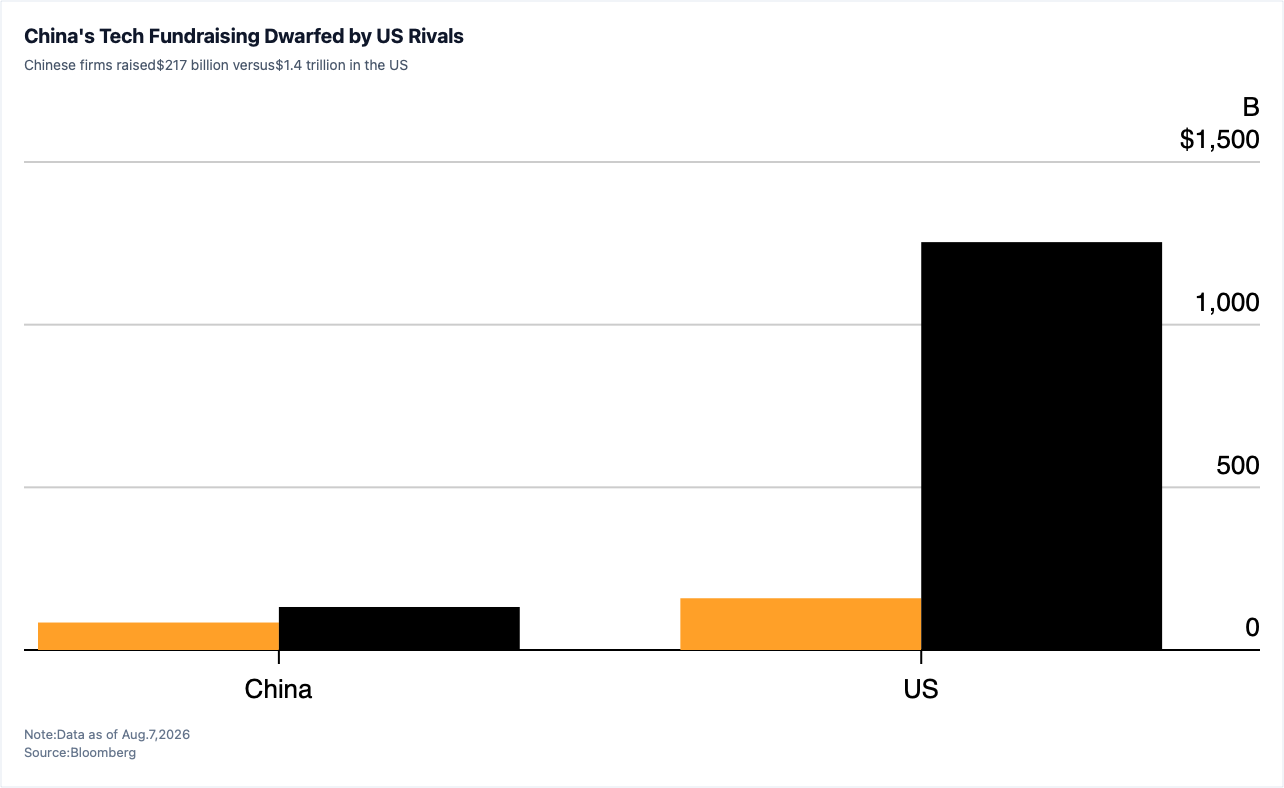
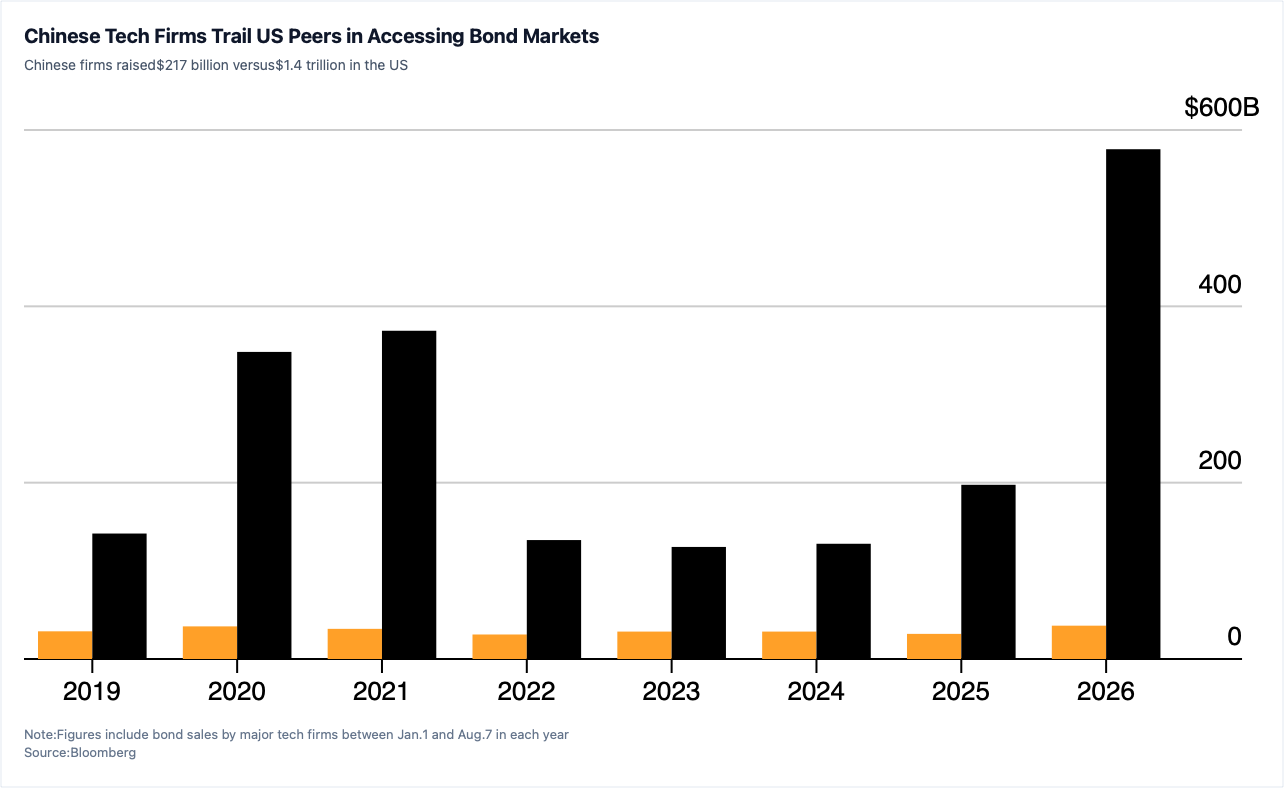
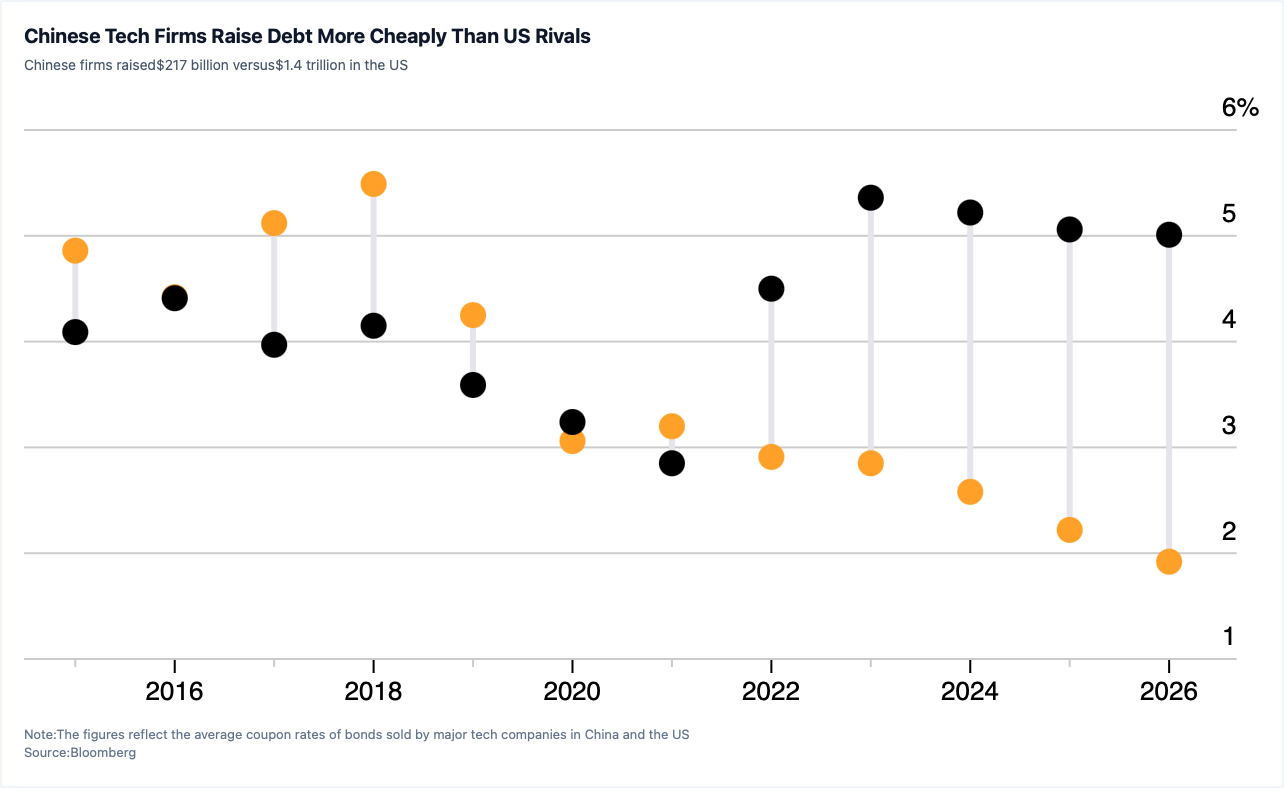
尽管中国科技公司在债券和股票市场的筹资成本低于美国同行,享有更便宜的资金优势,但整体融资规模仍远不及美国。此外,银行在放贷时仍偏好获利稳定的成熟企业,而非处于早期研发阶段的科技新创,这也是监管机构积极推动资本市场发挥更大作用的原因。
虽然充沛的资金是发展科技的必要条件,但单靠资金并不足以完全弥平中美技术差距,过度集中投资也可能导致产能过剩。然而,中国在人工智慧领域可能具备成本优势,其模型训练与 API 价格远低于全球领导者,未来有望透过大规模商业化和深厚的制造基础来增强自身竞争力。
The remarkable trading debut of CXMT in Shanghai highlights China's aggressive push to leverage its massive capital markets to support strategic technology sectors like artificial intelligence. This marks a policy shift in Beijing, transitioning from relying on state subsidies to guiding its $26 trillion in household savings into the tech industry to close the funding gap with the US.
Although Chinese technology firms enjoy a competitive advantage with significantly lower borrowing costs in bond and equity markets compared to their US counterparts, their overall fundraising volume remains much smaller. Furthermore, banks still prefer lending to mature, profitable companies rather than early-stage, research-heavy startups, explaining why regulators are actively expanding the role of capital markets.
While abundant capital is necessary for technological advancement, it is not sufficient on its own to close the US-China tech gap, and flooding sectors with money risks creating excess capacity. Nevertheless, China may possess a distinct cost advantage in AI, with significantly lower training and API costs than global leaders, potentially allowing it to compete through large-scale commercialization and its deep manufacturing base.