美国消费者信心在1月大幅下滑,降至逾十年来最低水平,反映出对经济与劳动力市场前景的明显悲观情绪。世界大型企业联合会的消费者信心指数从上月上修后的94.2降至84.5,为2014年5月以来最低,且低于彭博调查中所有经济学家的预期。未来六个月预期指标降至4月以来最低,而现状指标跌至近五年低点。信心回落发生在12月短暂改善之后,主要受高物价与就业增长乏力的担忧影响。
劳动力市场相关指标明显恶化。认为“工作难找”的消费者占比升至2021年2月以来最高,而认为“工作充足”的比例下降,两者差值收窄至数年来最差水平。更少消费者预期未来收入将上升,促使家庭削减度假计划,并在购车和耐用品等大额支出上更加谨慎。经济学家普遍预计今年就业市场将基本停滞,就业机会有限,但不太可能出现大规模裁员。
信心下降在不同年龄和收入群体中普遍存在。35至54岁人群以及年收入高于5万美元的消费者信心跌至2013年以来的低位区间。调查的书面回应中,消费者频繁提及油价、汽油和食品价格,同时对政治、劳动力市场、医疗保险以及地缘政治紧张局势的提及增加。相比之下,密歇根大学的消费者情绪指数在1月升至五个月高位,显示部分家庭对个人财务状况和整体经济的看法更为乐观。
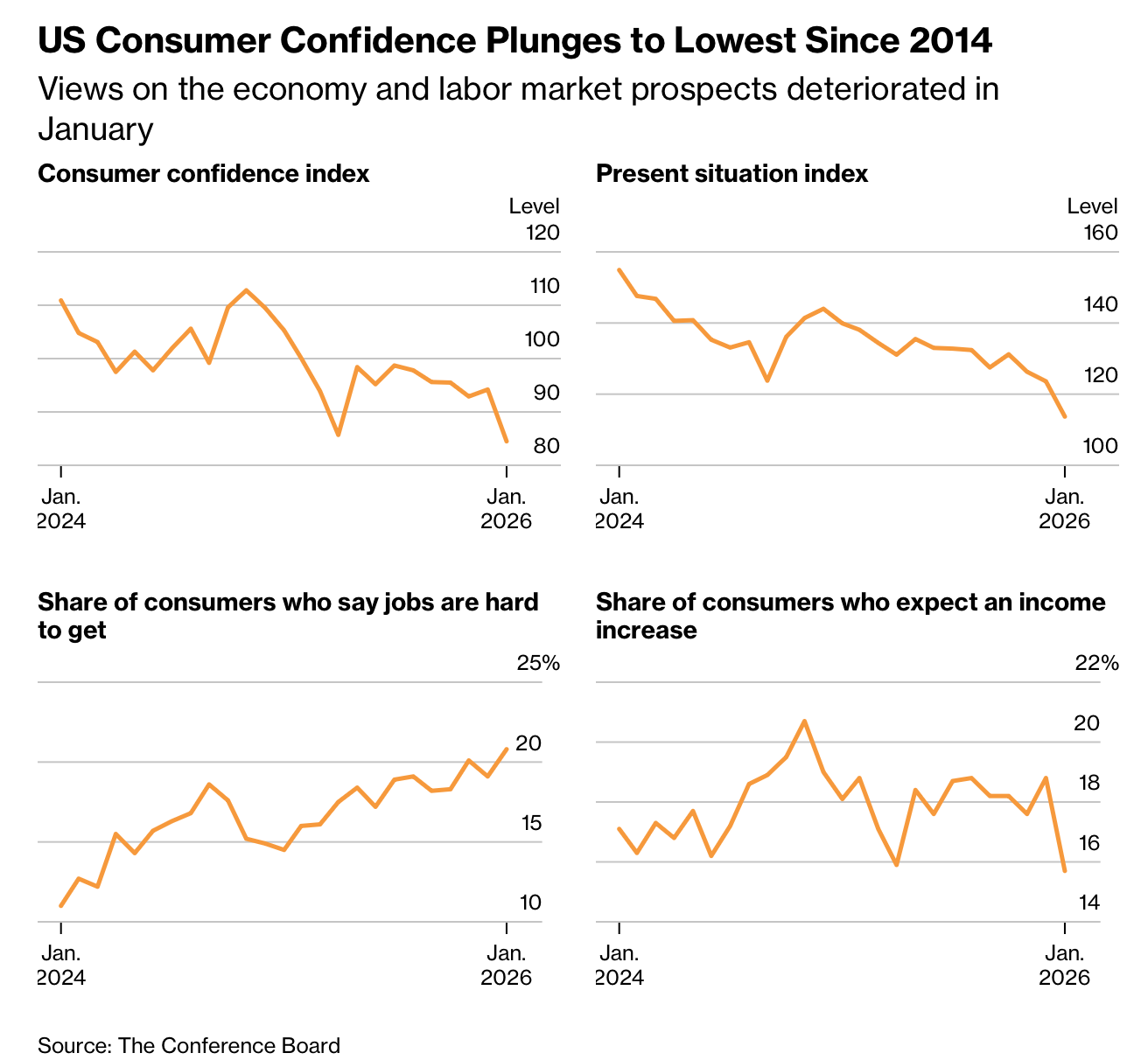
US consumer confidence fell sharply in January to the lowest level in more than a decade, reflecting growing pessimism about the economic and labor market outlook. The Conference Board’s index dropped to 84.5 from an upwardly revised 94.2 in the prior month, marking the weakest reading since May 2014 and undershooting all estimates in a Bloomberg economist survey. The six-month expectations measure slid to the lowest since April, while the present-conditions gauge fell to a nearly five-year low. The decline followed a brief improvement in December and was driven by concerns over high prices and sluggish job growth.
Labor market indicators deteriorated notably. The share of consumers saying jobs were hard to get rose to the highest since February 2021, while the proportion saying jobs were plentiful declined, narrowing the gap between the two to the worst level in years. Fewer Americans expect incomes to rise, leading households to scale back vacation plans and approach big-ticket purchases such as cars and appliances more cautiously. Economists broadly expect the job market to remain largely stagnant this year, with limited openings but no widespread layoffs.
Confidence weakened across age and income groups. Sentiment among consumers aged 35 to 54 and those earning more than $50,000 annually fell to among the lowest levels since 2013. Write-in responses frequently cited oil, gasoline, and grocery prices, alongside increased mentions of politics, health insurance, and geopolitical tensions. By contrast, the University of Michigan’s consumer sentiment index rose to a five-month high in January, indicating more optimism about personal finances and the broader economy.