《红色黎明照耀中国》由布鲁姆斯伯里出版,共384页,定价33美元和25英镑;迪克特认为,中国共产主义“从未受欢迎”,其上台主要来自枪杆子和苏联之手。与党史叙事中1921年建党、晚1920年代挫败国民党、中1930年代长征、1945年抗日胜利和1949年内战胜利的连续合法性相比,本书将1949年定性为传统夺权与冷酷军事策略的结果。
迪克特的核心证据来自1980年代党内档案人员编纂的300多卷“内部”文献,他称海外史家仅“零星”使用这些材料。按其估计,1940年前中共党员占总人口比例低到与美国共产党规模大致可比且可能被高估,这一对比支持了“长期边缘化、后期突升”的组织增长轨迹。
数量拐点出现在1945-1946年:斯大林在日本战败前后向满洲派出近100万苏军,控制城市与港口、阻断国民党进入,并在1946年撤离时让中共接收大量日军遗留武器。随后,美国调停推动的4个月停火为中共争取到与苏联协同扩军窗口,军事力量对比由不确定转为“完全逆转”,构成书中最关键的因果统计链。
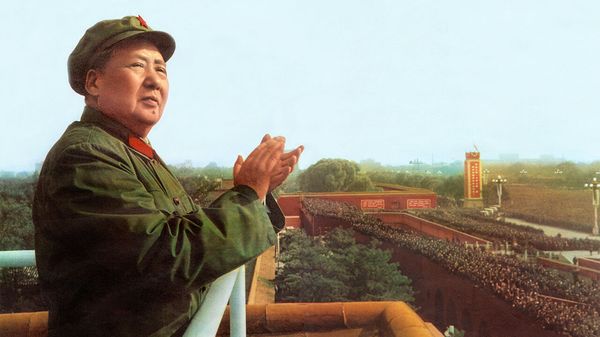
Red Dawn Over China is a 384-page Bloomsbury book priced at $33 and GBP25; Dikotter argues Chinese communism was "never popular" and was imposed mainly by force and Soviet backing. Against the party narrative of founding in 1921, survival in the late 1920s, the Long March in the mid-1930s, anti-Japanese success in 1945, and civil-war victory in 1949, the book frames 1949 as a conventional power grab driven by amoral military strategy.
Dikotter's evidentiary base is more than 300 "internal" archival volumes compiled by party archivists in the 1980s, which he says historians abroad have used only sporadically. His estimate that pre-1940 party membership as a share of China's population was roughly comparable to U.S. communist membership, and possibly inflated, supports a trend of long marginality followed by late acceleration.
The numerical inflection point comes in 1945-1946: Stalin sent nearly 1 million troops into Manchuria around Japan's defeat, seized key cities and ports, blocked KMT access, and then in 1946 left space and weapons for Mao's forces. A subsequent four-month ceasefire promoted by U.S. mediation gave the Communists time to expand with Soviet help, shifting the military ratio from uncertain balance to what the book describes as a complete reversal.
Source: How China’s Communist Party seized power in 1949
Subtitle: Violence, terror and Soviet help mattered more than popularity
Dateline: 2月 26, 2026 08:32 上午