华东大型汽车零部件制造商星宇车灯上月因招聘过量,向入职仅数周的约140名应届毕业生发出要么接受半个月工资离职、要么沦为低薪装配车间工人的最后通牒,导致逾百人出走。该事件罕见引发全网公愤,《人民日报》严厉批评其践踏社会信任,其客户德国大众汽车启动调查,迫使公司公开道歉并开除人力资源总监及削减高管薪酬。这一风波折射出青年就业市场的极度严酷:今年全国高校毕业生人数创下1,270万人的历史新高,同比增加近50万人,相比十年前直接翻倍,而房地产深度调整与内需疲软却导致高端岗位需求断崖式下跌。
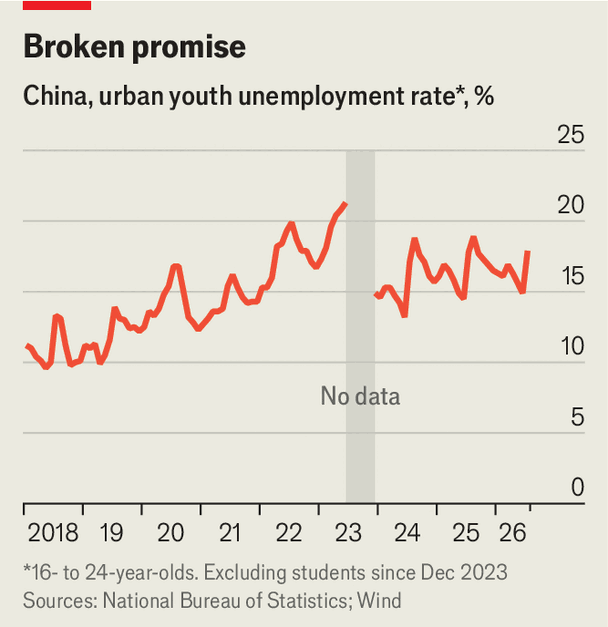
在劳动力供需严重失衡的背景下,青年失业率在2023年突破20%大关后官方一度暂停发布数据,随后调整核算口径推出较低的“优化”统计,然而今年夏季调整后的失业率再度逼近20%。以往容纳海量青年就业的支柱产业全线收缩:行业整顿抹去了数十万个教培岗位,文娱传媒广泛应用AI取代基础演职人员,科技巨头暗中裁减软件工程师,而作为传统就业缓冲池的网约车与外卖零工经济亦因人员严重饱和导致平均收入大幅下滑。尽管政府勒令国有企业扩大吸纳毕业生,并试图通过星宇事件警示民企“分担国家责任”,但体制性困境仍未得到根本缓解。
长期的就业低迷正深刻重构中国年轻群体的社会心态与生存模式。在传统崇尚勤勉奋斗的社会中,越来越多的青年被迫接受劳动力过剩的现实,选择彻底退出内卷而“躺平”,或成为依靠为父母做家务换取零花钱的“全职儿女”。为缓解家庭心理压力并维持社交尊严,各大城市催生了每日收费约30元人民币(4.5美元)的“假装上班公司”,供失业青年租用工位投递简历或消磨时光;包括北京首都图书馆在内的公共文化场所也挤满了消磨时光、打磨简历或开发个人软件的失业青年,“假装上班”正在从一种个体避难策略演化为年轻一代的日常常态。
Last month, Xingyu Automotive Lighting, a major auto-parts manufacturer in eastern China, sparked widespread public outrage after presenting an ultimatum to roughly 140 fresh graduates hired weeks earlier: accept half a month's severance to resign or take poorly paid manual factory floor jobs with screwdrivers, prompting over 100 to quit. The backlash was immediate and intense, with the People’s Daily accusing the firm of trampling social trust and client Volkswagen launching an inquiry, forcing Xingyu to issue apologies, dismiss its HR director, and slash executive compensation. The scandal highlighted a brutal employment reality: a record 12.7m students graduated from Chinese universities this year—nearly 500,000 more than last year and double the cohort of a decade ago—entering a contracting labor market hobbled by a prolonged real estate slump and sluggish consumer spending.
Official metrics underscore this entrenched crisis: after youth unemployment surged past 20% in 2023 prompting authorities to suspend releases and introduce a lower, methodologically altered rate, even this revised metric is creeping back toward 20% this summer. Key sectors that traditionally absorbed educated cohorts are retreating: regulatory clampdowns eliminated hundreds of thousands of tutoring jobs, media and entertainment studios are deploying generative AI to produce content without junior crews, tech enterprises are conducting discreet engineering layoffs, and the gig economy is oversaturated with underemployed drivers, depressing baseline earnings. Although authorities instructed state-owned enterprises to increase graduate hiring and leveraged Xingyu's public humiliation to urge private employers to shoulder social responsibility, systemic labor absorption remains critically deficient.
Years of structural underemployment are reshaping societal values across China's hyper-competitive youth. Conceding that their credentials are unmarketable, thousands are embracing “lying flat” by withdrawing from competitive rat races, or transforming into “full-time children” supported by family allowances in exchange for domestic chores. To alleviate familial stigma and preserve professional habits, co-working ventures dubbed “pretend to work companies” have proliferated across metropolitan hubs, charging nominal fees of roughly 30 yuan ($4.50) daily for desks, wifi, and office camaraderie; simultaneously, major facilities like Beijing’s Capital Library are overwhelmed by displaced white-collar workers revising resumes, coding independent projects, and passing time in an emerging culture of institutionalized waiting.
Source: Unemployment is becoming a way of life for China’s young
Subtitle: Some are pretending to work to keep up appearances
Dateline: Sep 17th 2026\n