研究进一步指出,受AI自动化冲击最严重的全职员工主要集中在行政与办公室支援、零售与销售,以及运输与物流等三大领域,包含客服代表、收银员与仓储人员等职位。低收入群体面临转职的可能性更是高收入者的近八倍。尽管考量到企业采纳AI的速度及人口高龄化等不确定因素,受影响人数估计在600万至1600万之间,但转型急迫性已堪比新冠疫情期间的剧烈变动,甚至需要持续约长达十年。
面对这场规模庞大的劳动市场变革,麦肯锡呼吁联邦、州及地方政府应积极介入,包括提供更详尽即时的就业市场数据,并为劳工在职培训计划提供专项资金。作者指出,现行教育体系主要针对青年阶段,难以因应大量在职劳工持续提升技能与中年转职的迫切需求,政府与社会各界必须尽早展开政策讨论并健全成人职能重塑体系,以防就业机会虽多却无法与既有劳动力技能匹配的失业困境。
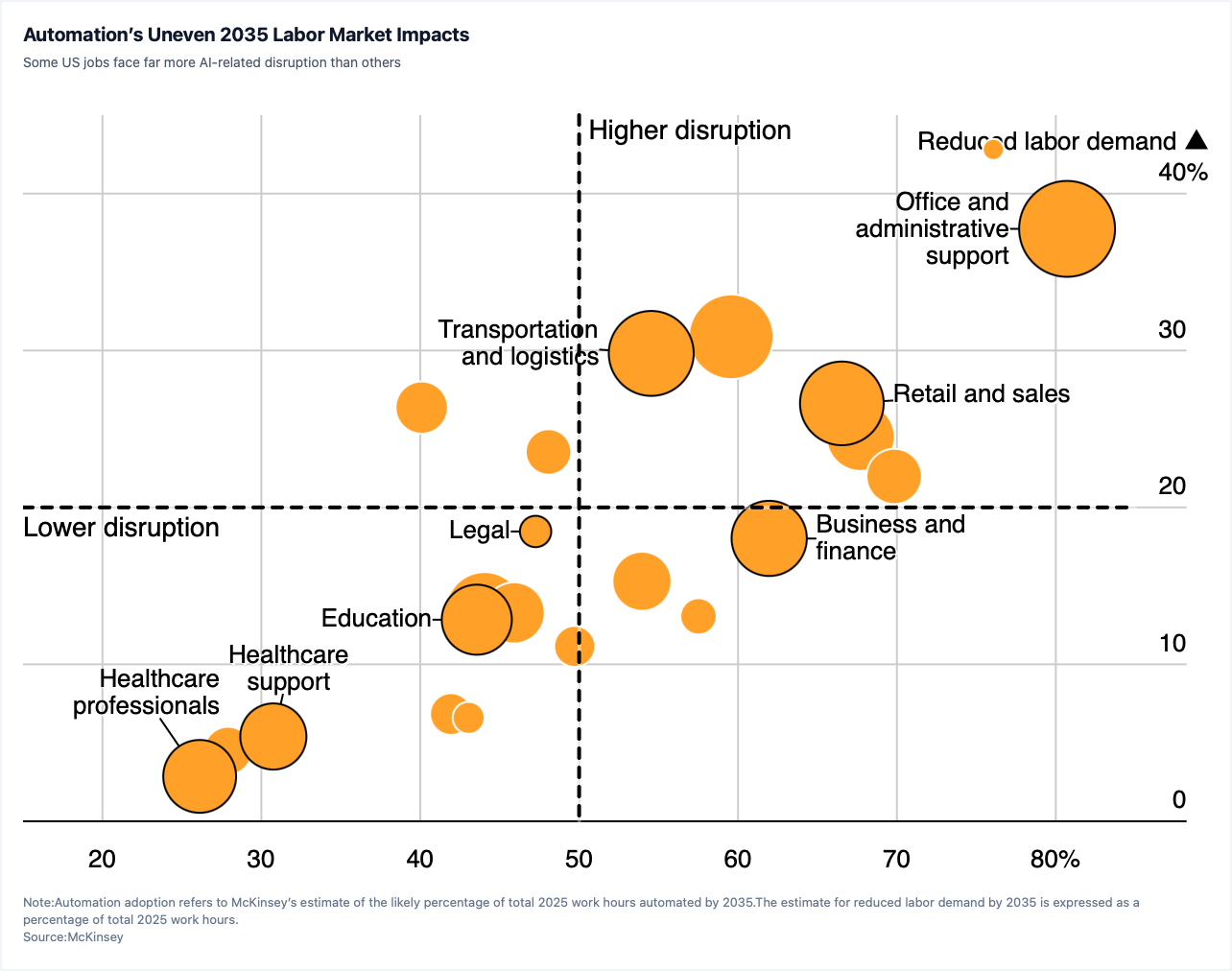
According to a study by McKinsey & Co., the primary challenge over the next decade may not be an outright AI jobs apocalypse, but rather facilitating the transition of millions of workers into new occupations. The report estimates that roughly 11 million American workers—about 7% of the current workforce—may need to switch jobs by 2035 due to AI-driven displacement, potentially tripling the annual rate of occupational changes. This shift is projected to be arduous, with six out of seven displaced workers facing substantial retraining requirements and income reductions.
The analysis reveals that the workers most vulnerable to AI disruption are heavily concentrated in administrative support, retail and sales, and transportation and logistics, affecting roles such as customer-service representatives, cashiers, and warehouse staff. Lower-income earners are projected to be nearly eight times more likely to change occupations than higher earners. Depending on enterprise adoption speed and demographic aging, total transitions are estimated between 6 million and 16 million, presenting a pace of sustained disruption comparable to what was experienced during the COVID-19 pandemic. (Key numbers: 600, 1600)
To mitigate these workforce disruptions, the report urges federal, state, and local governments to intervene proactively by delivering timely labor-market data and funding large-scale workforce retraining programs. McKinsey's researchers emphasize that because the current education system remains heavily oriented toward youth, there is an urgent need to formulate strategies for adult upskilling and career pivots, ensuring that available jobs match the evolving skills, credentials, and geographic distribution of the displaced workforce.