然而,这种股权结构的改变也带来了前所未有的系统性风险与市场张力。虽然分散投资带来了资产增值,但当超过六成家庭的财富与股市紧密绑定时,一旦市场暴跌,所引发的全国性财富效应冲击将显著打击消费需求并加剧经济衰退,甚至直接危及广大劳工的退休生活保障。(关键数字:60)
庞大的市场曝险进一步改变了政策诱因,迫使政治人物与决策者竭尽全力维持股市繁荣,甚至在经济过热时维持低利率或抗拒监管政策。这种被动长期投资虽加深了资本市场,但也让整体总体经济暴露在更高的股市下行与泡沫破裂风险之中。
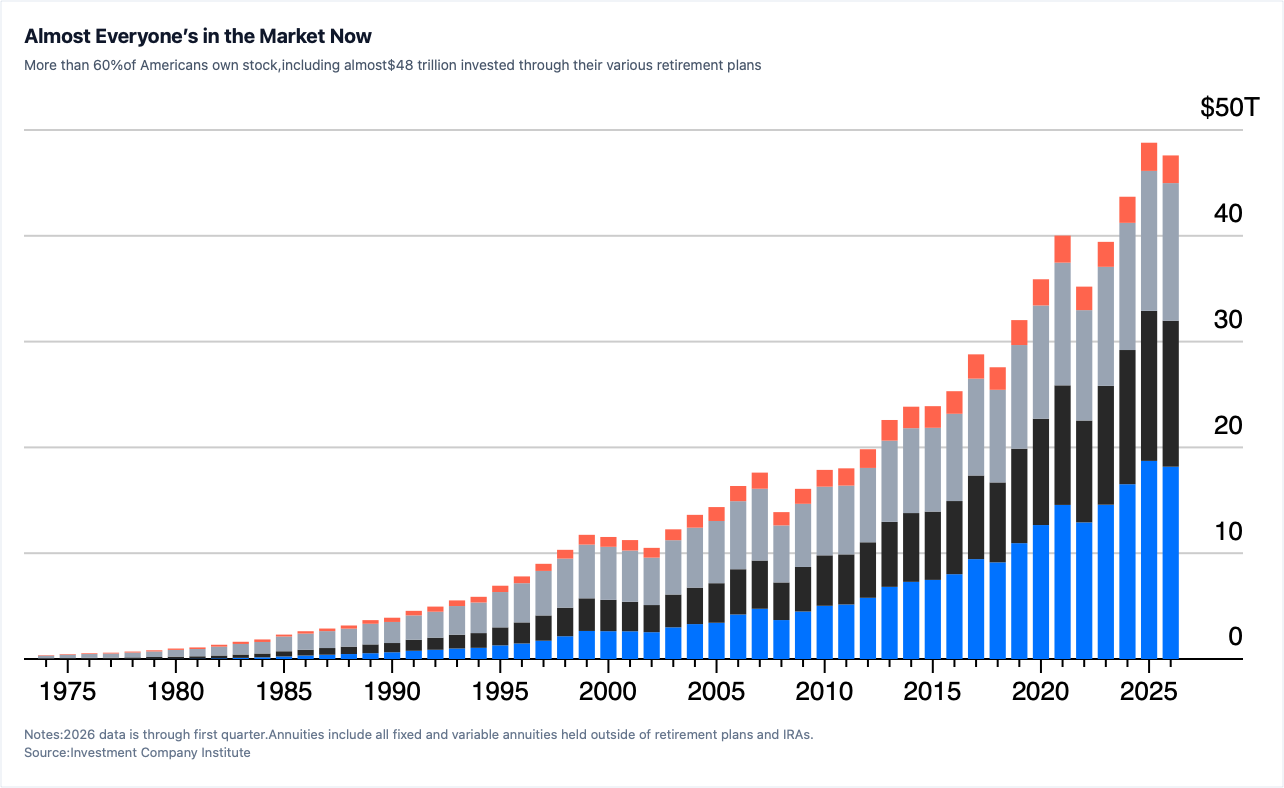
Over the past forty years, the United States has transformed into a nation of stock investors, with more than 60% of Americans owning equities predominantly through automated workplace retirement accounts. These accounts direct substantial capital into passive index funds and tech equities, significantly increasing household wealth on paper while creating a steady stream of recurring purchases that acts as a partial floor during market downturns.
However, this shift in stock ownership introduces unprecedented systemic risk and tension into the economy. While broader participation aids diversification and wealth creation, having over 60% of households tethered to equity markets means that a sharp market downturn creates an economy-wide negative wealth shock, severely dampening consumer demand, deepening recessions, and imperiling retirement security.
Furthermore, widespread market exposure creates strong political incentives for policymakers to prop up asset prices at all costs, potentially prolonging loose monetary policy or resisting necessary regulatory interventions. While passive retirement investing deepens financial markets, it ultimately leaves the broader economy much more vulnerable to severe tail risks and financial shocks.