堪萨斯州麦克弗森中学在2022年采用数字化学习项目IXL,但效果不佳。学生觉得内容重复、僵硬且乏味,在配发的笔记本电脑上更容易分心。2025年学校收回设备,回归纸笔教学。此案例并非孤例。如今技术高度渗透校园:约90%的高中生、84%的小学生以及80%的幼儿园儿童配有学校设备,但学习成效与注意力、安全问题引发担忧。
独立研究普遍发现,教育技术对学习提升有限甚至有害。2024年一项涵盖119项研究的早期读写能力技术干预荟萃分析显示,充其量只有边际提升,多数效果甚微或为负。另一位学者回顾涵盖数万项研究的分析后指出,教育技术几乎从未达到“有意义的学习影响”门槛。尽管如此,2024年美国学校在教育技术上的支出达300亿美元,全球市场规模约1650亿美元,主要由营销而非证据驱动。
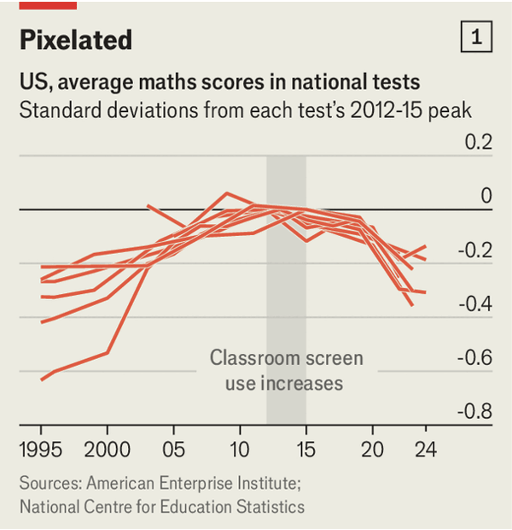
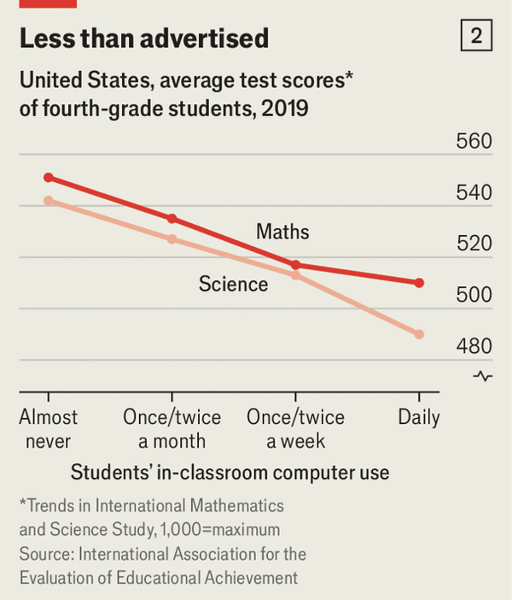
长期趋势更令人警惕。21项全国性基准测试成绩在1994年至2012—2015年间上升,随后随课堂屏幕使用激增而下滑。2011—2019年的大型测评显示,课堂中计算机使用越多,数学、科学和阅读成绩越低;几乎不用电脑的班级成绩最高。分心、过度游戏化以及削弱课堂人际互动是可能原因。证据仅支持在少数情境中有限使用,如特定学习障碍或算术、拼写等明确对错的自适应练习。十余年与数千亿美元后,结论愈发清晰:教育技术收益有限,投入教师或许更有效。
McPherson Middle School in Kansas adopted the IXL digital programme in 2022, but results disappointed. Students found it repetitive, rigid and boring, and laptops amplified distraction. By 2025 the school reclaimed devices and returned to pencil-and-paper instruction. This mirrors a broader pattern. Technology now saturates classrooms: about 90% of high-schoolers, 84% of primary pupils and 80% of kindergarteners have school-issued devices, raising concerns about learning outcomes, attention and security.
Independent research consistently finds little benefit from ed tech. A 2024 meta-analysis of 119 studies on early-literacy interventions reported, at best, marginal test-score gains, with most effects negligible or negative. Another scholar reviewing meta-analyses spanning tens of thousands of studies concluded ed tech rarely meets the minimum threshold for meaningful learning impact. Yet spending surges: American schools spent $30bn in 2024, within a $165bn global industry, driven more by marketing than evidence.
Long-run trends are troubling. Scores on 21 national benchmarks rose from 1994 to a 2012–15 peak, then fell as in-class screen use soared. Major assessments from 2011–19 show more computer use correlates with lower maths, science and reading scores; classes with little or no computer use score highest. Distraction, gamification and weakened classroom relationships are likely factors. Evidence supports only limited uses—such as drills for certain learning disabilities or narrow domains like arithmetic. After a decade and hundreds of billions spent, the verdict is clearer: ed tech yields modest returns; investing in teachers may deliver more.