Big Fund 是在中共对美国先进晶片设备限制背景下推动半导体自给自足战略的核心金融工具之一。该基金在 2024 年完成第三轮融资时,向财政部、地方政府与国有银行汇聚 47bn 美元,主要投向晶片设备与材料,而非公开投资其他 LLM 企业。其过去支持的代表性标的包括中芯国际(SMIC)与长江存储(Yangtze Memory Technologies),这凸显其供应链导向。DeepSeek 则将其 V4 模型的推理(inference)优化于华为 Ascend 950PR 晶片,呼应中国模型与晶片协同发展路径;同时华为 AI 晶片今年销量在中国超越 Nvidia,但全国 AI 晶片总产量仍仅及美国的一小部分,且至少落后两个世代。
文章最后指出,若中国能形成「模型+软体+晶片」本土生态,不仅可对抗美国出口管制,也可能重塑全球硬体依赖格局。Nvidia 执行长 Jensen Huang 直言,当 DeepSeek 在华为设备上形成成功案例,对其所在国家是「严重不利」,且可能促成模型普遍在非美国硬体上表现最佳的局面。从商业化角度看,DeepSeek 仍偏重训练前沿模型而非对外销售AI 服务;其最初融资目标仅是以较小规模给选择权定价以抑制人才外流(股权激励通常占 AI 研究人员薪酬核心)。随估值上修,核心人员也可能改以更大规模融资建立算力扩张资金池。市场同时关注同行 Zhipu、Moonshot 等收入增速预期,且 Zhipu 在港上市市值达 52bn 美元,形成竞争参照。
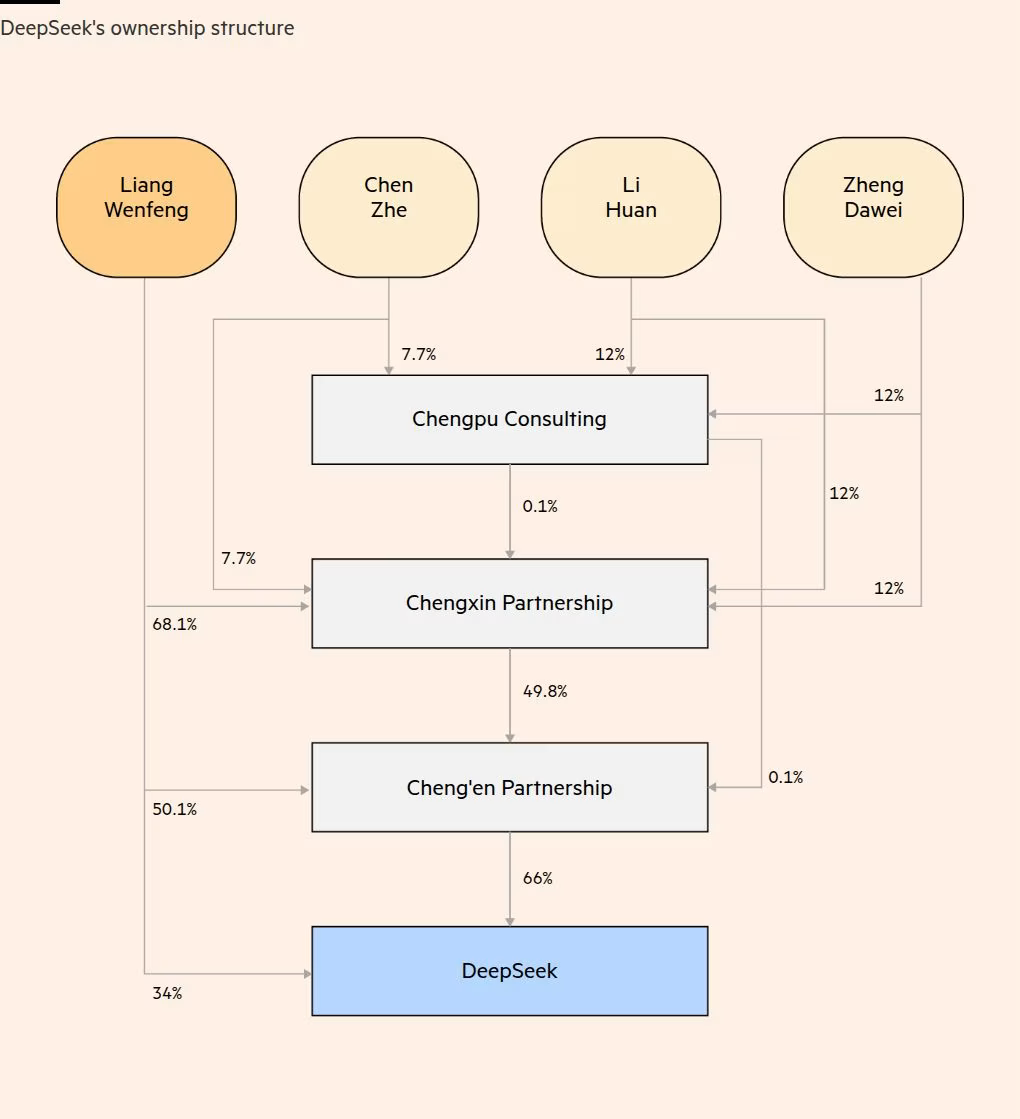
China’s state-backed semiconductor flagship, the China Integrated Circuit Industry Investment Fund (Big Fund), is reportedly leading talks to headline DeepSeek’s first funding round at roughly USD 45 billion. Tencent is also among investors still discussing a stake, though no final investor list has been confirmed. DeepSeek’s valuation has already risen sharply from USD 20 billion only weeks after fundraising talks began, indicating sustained market appetite for its frontier model potential. Founder Liang Wenfeng controls 89.5% of DeepSeek through personal and affiliated holdings, and sources said he may also invest personally in this round. The company, Big Fund, and Tencent have not immediately commented.
The Big Fund has been a core tool in China’s semiconductor self-sufficiency push under tightened U.S. technology controls. In its 2024 third funding phase, it raised USD 47 billion from the finance ministry, local governments, and state-owned banks, with a mandate focused on semiconductor equipment and materials; it has not publicly backed other Chinese LLM players. Its portfolio includes key firms such as Semiconductor Manufacturing International Corporation (SMIC) and Yangtze Memory Technologies, underscoring a supply-chain strategy. DeepSeek optimized the inference stage of its V4 model on Huawei’s Ascend 950PR chips, while Huawei’s AI chip sales surged in China this year and reportedly overtook Nvidia locally. Still, China’s total AI chip output remains only a fraction of the U.S. and is at least two generations behind.
The strategic implication is ecosystem control: China hopes coordinated progress from chipmakers and model builders can preserve competitiveness despite U.S. export constraints. Nvidia CEO Jensen Huang warned that a successful DeepSeek deployment on Huawei would be a bad outcome for the U.S., arguing it could lead to a world where “AI models around the globe are developed and run best on non-American hardware.” DeepSeek still prioritizes frontier model training over commercial AI sales. The first funding objective, according to FT reporting, was to assign option value to keep researchers from being poached—a sector where stock options form most compensation. With valuation now higher, Liang may raise a larger amount to build a war chest for future computing capacity, while peers like Zhipu and Moonshot are expected to keep revenue momentum; Zhipu’s Hong Kong listing value is USD 52 billion. (Key numbers: 52bn)