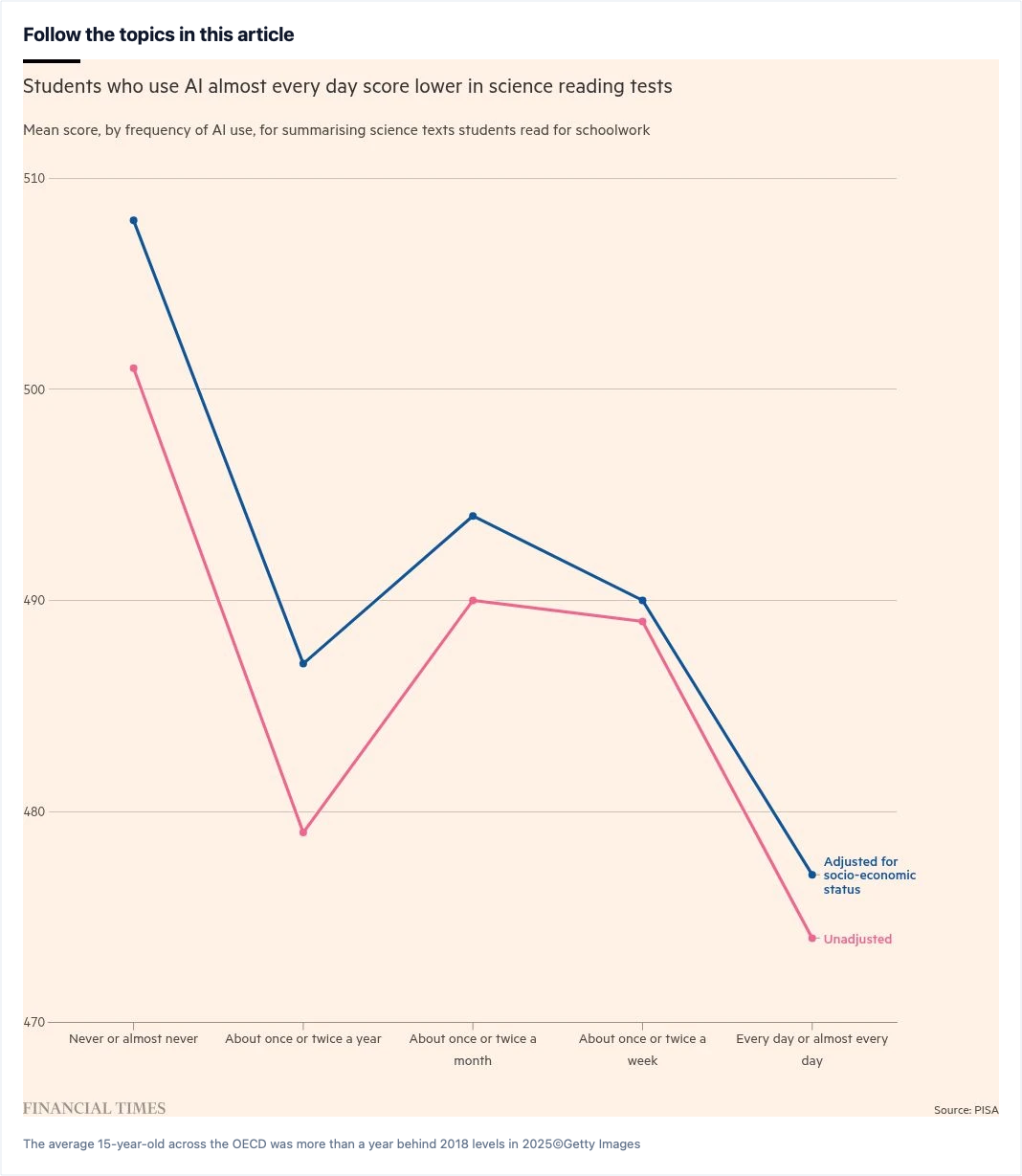
调查同时指出,对人工智慧(AI)的过度依赖使学生在科学科目的表现更为低落,许多学生倾向依赖常识而非科学推理。几乎每天使用AI的学生在总结与撰写文本上的表现明显较差,OECD教育主管对此比喻「看运动比赛无法强身健体」,直言若过度仰赖AI代劳作业,虽然看似迅速产出成果,实质上却无法促进真正的学习与认知发展。
尽管被动消费科技带来负面影响,专家仍强调AI若能以引导式或苏格拉底式提问的方式设计,仍可在提升教育品质上扮演关键角色。报告赞扬韩国等教育体系的深思熟虑,由教师主导科技应用的设计以辅助教学,而非任由学生漫无目的使用,并建议更多学校应严格限制智慧型手机的使用,以协助学生重新建立专注力。
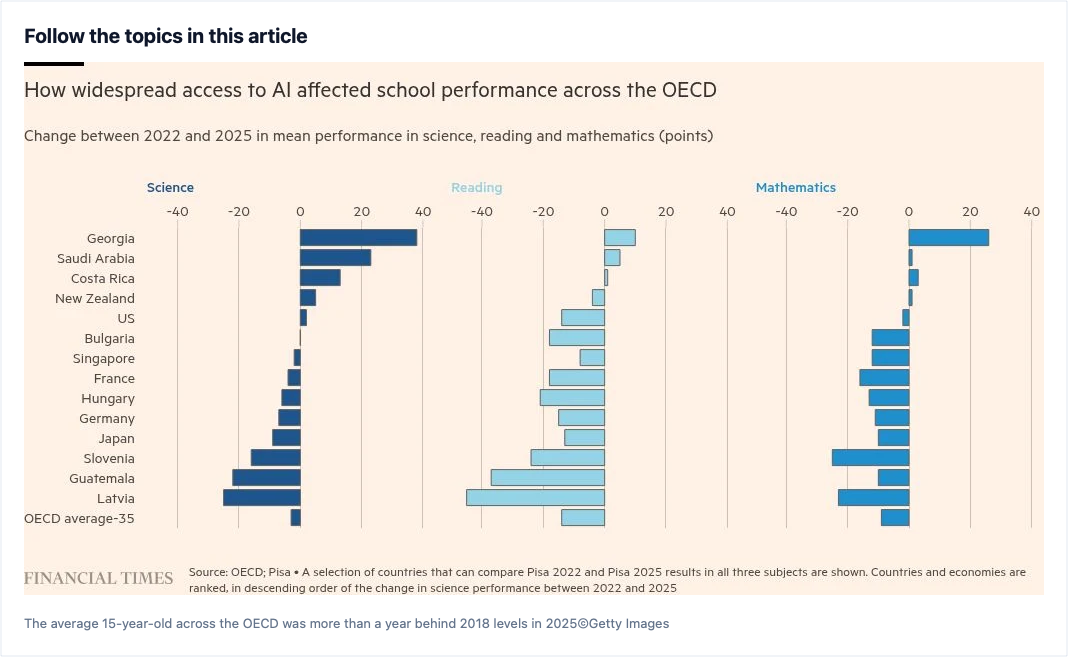
The latest PISA survey released by the OECD shows a sharp decline in reading and mathematics skills among teenagers across developed nations, with the average 15-year-old in 2025 falling more than a year behind 2018 benchmark levels. The report links this downturn to widespread digital distraction and the consumption of short-form social media videos, which have eroded sustained concentration and replaced critical evaluation and comprehension with superficial skimming.
The findings also reveal that heavy reliance on artificial intelligence correlates with poorer student performance in science, as many pupils increasingly favor intuition over rigorous scientific reasoning. Students who rely on AI almost daily struggle significantly more with summarizing and drafting texts compared to rare users, prompting OECD officials to caution that passive reliance on tools that complete coursework easily undermines genuine learning and cognitive development.
Despite the downsides of passive technology use, the report suggests that AI can still play a vital constructive role if deployed thoughtfully through tailored tools that promote active inquiry and Socratic dialogue rather than automatic answers. Praising structured approaches such as South Korea's teacher-led integration of educational technology, experts recommend that schools restrict smartphone usage to mitigate distraction and help students rebuild focus.