然而,人类对消费品的无尽需求正将全球航运网络推向极限。随著中国出口激增以及全球贸易失衡加剧,港口拥堵问题达到了历史新高,航运公司也不得不承担越来越高的空货柜回程运输成本。
为了应对持续增长的需求,航运公司订购了尺寸更大、载货量更高的超级货柜船,但许多港口的基础设施已无法负荷。如果港口扩建与自动化技术无法跟上步伐,持续了半个世纪的廉价全球贸易时代可能面临终结。
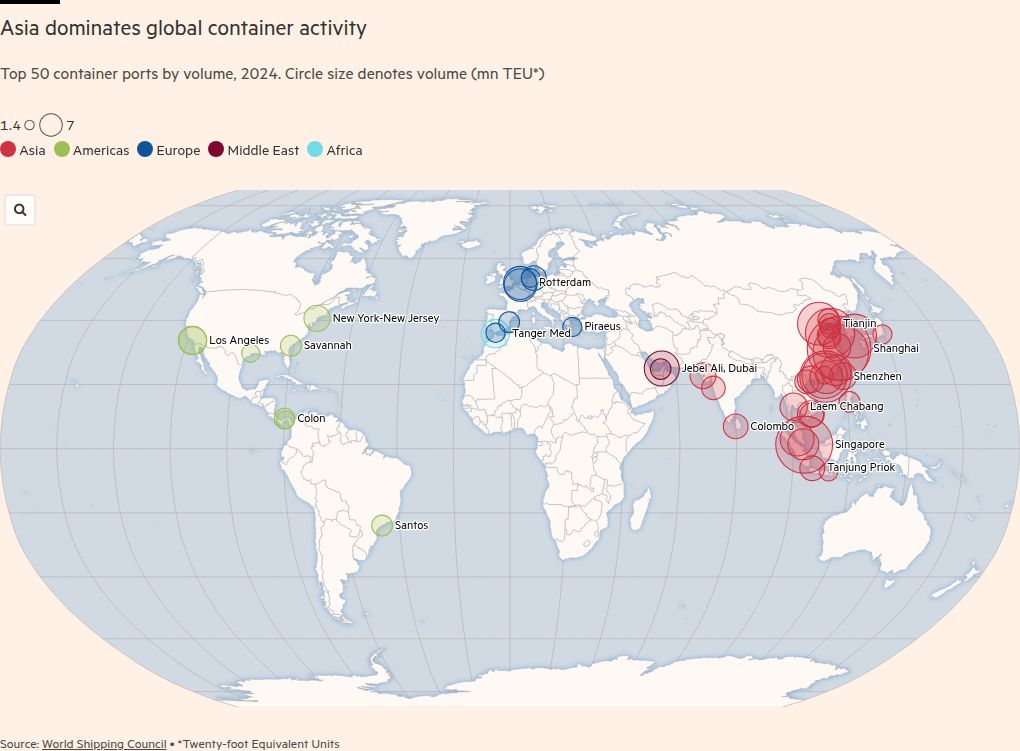
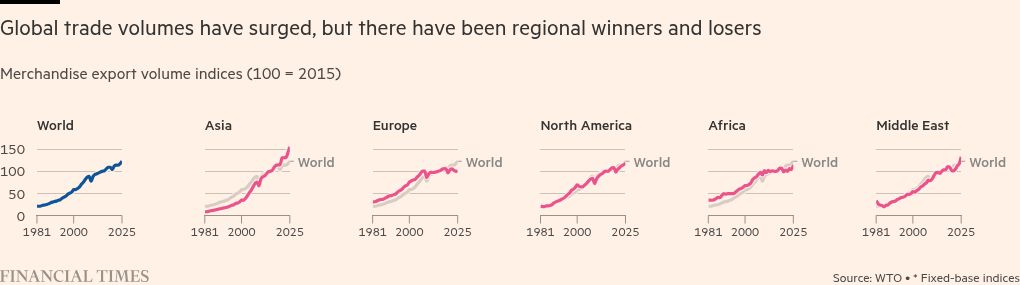
Seventy years ago, port loading and unloading was time-consuming and inefficient, but the invention of the standardized shipping container revolutionized the industry. These durable steel boxes drastically reduced shipping costs, enabling the rapid expansion of global trade over the past decades and directly fueling the manufacturing boom in Asia.
However, humanity's insatiable demand for consumer goods is now pushing the global shipping network to its absolute limits. Driven by a surge in Chinese exports and worsening trade imbalances, port congestion has reached historic highs, forcing shipping lines to absorb the rising costs of transporting empty containers on return legs.
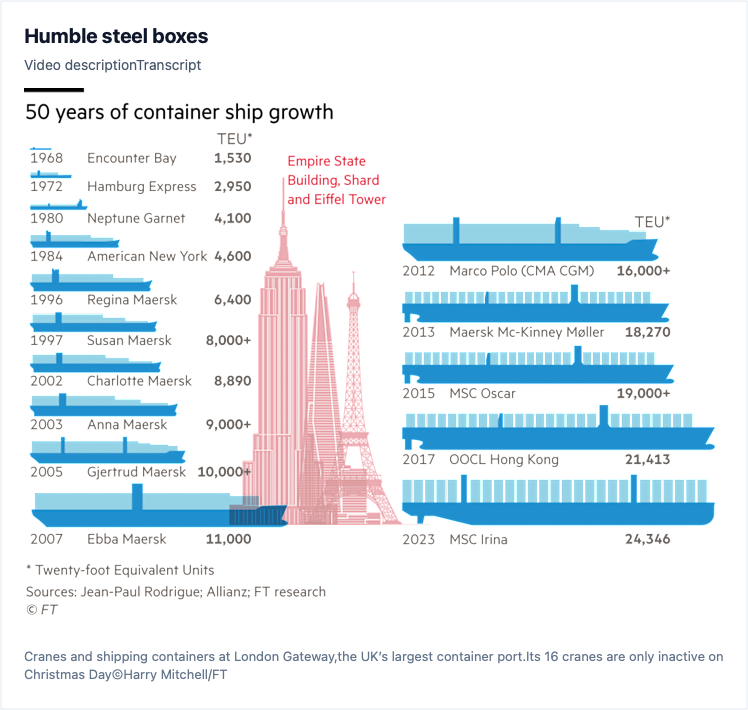
To meet the continuously growing demand, shipping lines are ordering increasingly massive vessels with unprecedented carrying capacities, yet many ports lack the infrastructure to accommodate them. Unless port expansion and automation technologies can keep pace, the half-century era of cheap global trade may soon come to an end.