过去二十年的科技发展让中国人深切体会到技术带来的繁荣与便利,因此他们更倾向将AI视为创造新机会和提升生产力的实用工具。相反地,美国人经历了社交媒体带来的负面影响与科技巨头的权力集中,导致他们对未受监管的AI可能加剧不平等或取代人类工作感到焦虑,进而呼吁建立更多防护机制。
此外,两国对政府监管的信任度也影响了对AI的接受度。中国民众相信政府会有效约束科技企业,防止其失控,加上社会高度竞争带来的「内卷」压力,使得人们因害怕落后而积极拥抱AI。而在美国,政商关系的交织让民众担忧缺乏公正的技术监管,从而加深了对AI未来的悲观情绪。
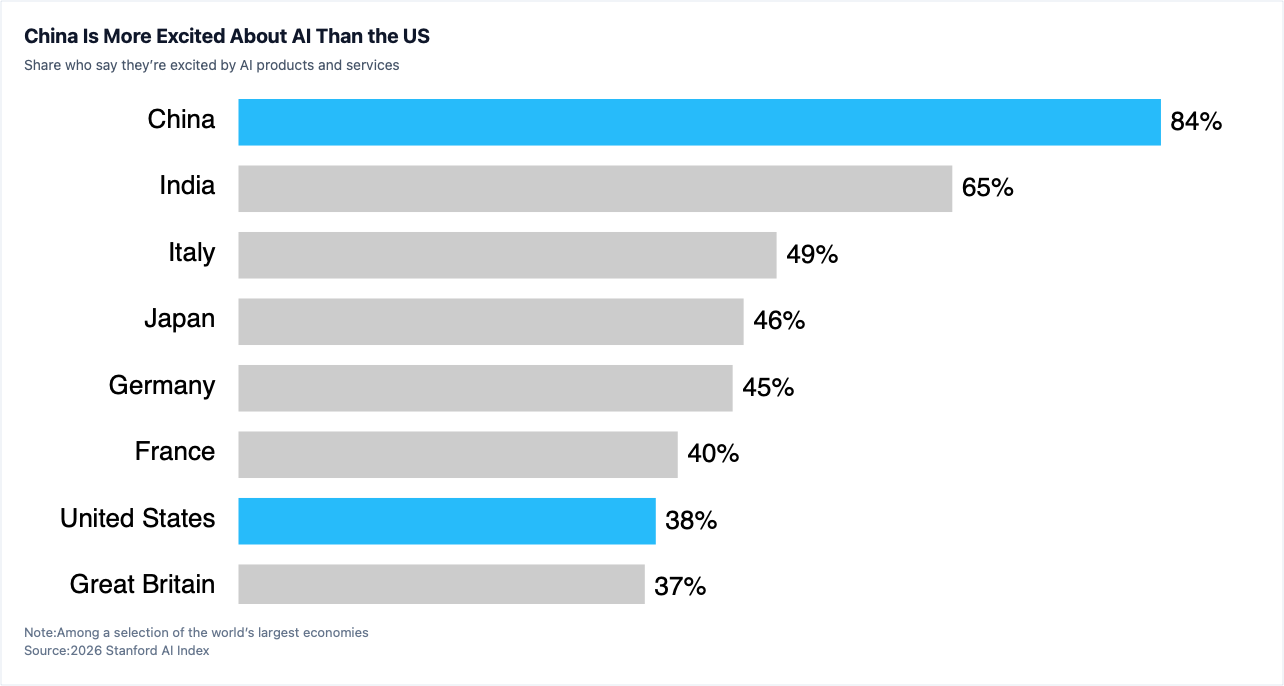
There is a significant divergence in attitudes toward artificial intelligence between the United States and China, with Chinese citizens showing much higher enthusiasm for AI. Surveys indicate that a large majority of Chinese people are excited about and trust the technology, whereas Americans generally harbor skepticism and concern. This gap exists not because Chinese individuals ignore the risks, but rather because of differing perceptions regarding how technology impacts personal opportunities and benefits.
Over the past two decades, technological advancements have brought tangible prosperity and convenience to the Chinese public, making them more inclined to view AI as a practical tool that creates new opportunities and boosts productivity. Conversely, Americans have experienced the negative impacts of social media and the concentration of power among tech giants. This has led to anxiety that unregulated AI might exacerbate inequality or replace human jobs, thereby driving demands for stronger guardrails.
Furthermore, differing levels of trust in government regulation influence AI adoption. The Chinese public believes their government will effectively restrain tech companies from running wild, and the intense societal pressure of "involution" pushes people to aggressively embrace AI out of a fear of being left behind. In the US, the intertwining of political and corporate interests makes citizens worry about a lack of impartial technological oversight, deepening their pessimistic outlook on the future of AI.