2025年6月,英国下议院通过一项法案,允许预计寿命不足六个月且具备精神健全能力的成年人在严格保障下获取致命药物处方,这使英国看似接近加入目前已有30多个地区执行协助死亡制度的行列,并与近年泽西以及美国特拉华州、伊利诺伊州、纽约州的立法同步。 但该法案仍未成法,尽管民意支持度较高:约有五分之四英国民众支持对痛苦的终末期患者实施协助死亡,苏格兰成年人支持率为81%,且这类支持自1930年代起即长期占多数。
该法案由金·利德比特(Kim Leadbeater)的议员私法提出,暴露出英国制度的结构性弱点:苏格兰立法机构因分权限制在就业法领域无法写入医护人员良知退出条款,而威斯敏斯特上议院又可对私有法案进行大量修正且缺乏政府纲领法案常有的党派承诺性保护。 上议院共提交近1300项修正案,平均每页约23条,近三分之二来自7位反对协助死亡的议员,议题范围从收紧厌食症患者漏洞到要求所有申请者做妊娠测试,呈现出从修订实质到荒诞条款并存的特点。
2018年哥本哈根大学研究显示,英国政策与公众多数意见一致率仅为55%,低于31个欧洲国家的63%平均水平,道德议题在选民优先序列中不突出时更易出现背离。 法案审议节奏差异显著:麦克阿瑟草案在苏格兰议会耗时约2年,利德比特草案在下议院耗时8个月,而堕胎去刑事化修正仅5周便通过;若同类法案在2027年重启,最早也要到2031年才能生效,即便约100名工党议员已催促政府推进议程。

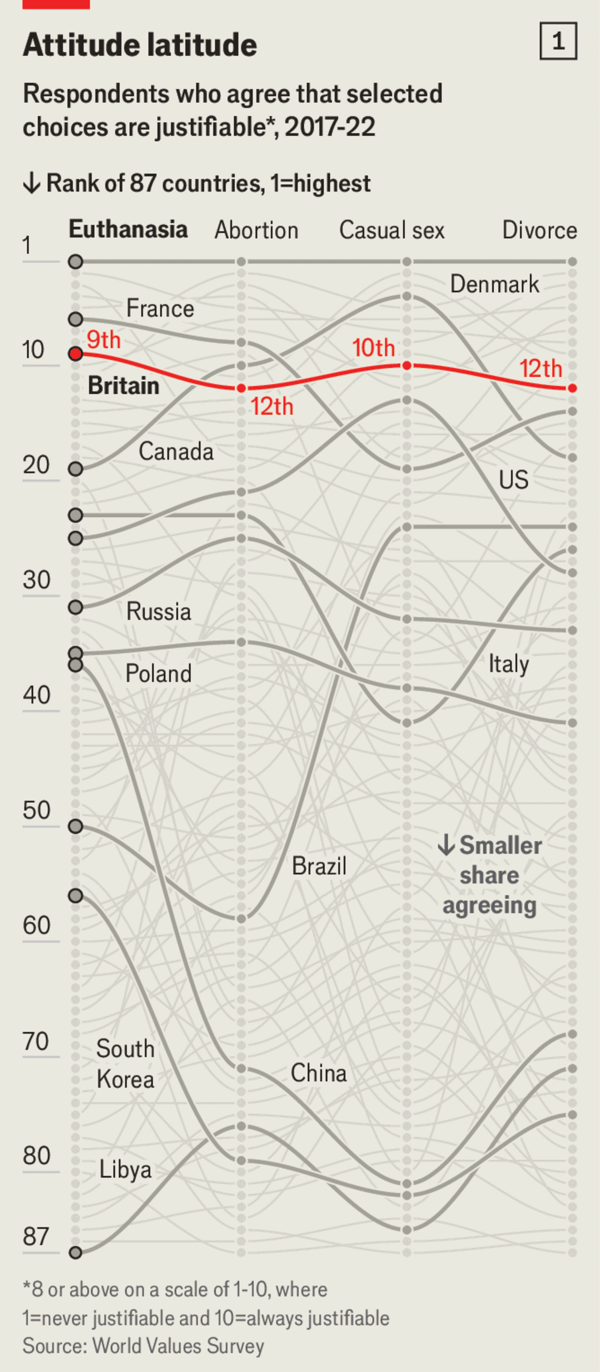
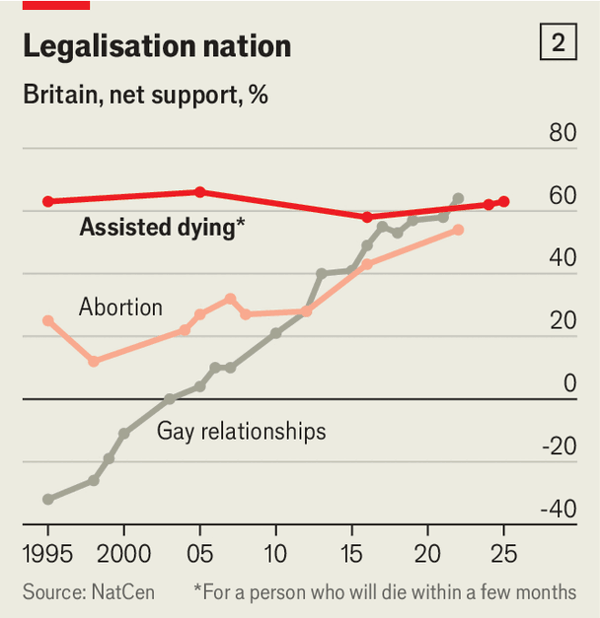
In June 2025, MPs passed a bill allowing mentally competent adults with less than six months to live to obtain a lethal prescription under strict safeguards, making Britain appear close to the more than 30 jurisdictions that already legalize assisted dying and in step with recent adopters like Jersey, Delaware, Illinois and New York. Yet the law is still blocked despite strong public support: around four-fifths of Britons favor it for terminally ill patients in severe pain, 81% of Scottish adults support it for terminal illness cases, and majorities date back at least to the 1930s.
The bill was introduced as a private-member measure, exposing structural weakness: Scotland could not include a conscientious-objector option for healthcare workers because employment-law powers are not devolved, while the House of Lords can heavily reshape a private bill without protections usually attached to government manifesto commitments. Peers tabled nearly 1,300 amendments—about 23 per page—with almost two-thirds from seven peers opposing assisted dying, ranging from legitimate anti-loophole fixes (including for anorexia cases) to absurd demands like mandatory pregnancy tests.
A 2018 University of Copenhagen study found British policy aligns with majority public opinion only 55% of the time, versus 63% across 31 European countries, and issues with lower voter salience are more prone to misalignment. Timing amplified the outcome: McArthur’s bill spent about two years in the Scottish Parliament, Leadbeater’s spent eight months in the Commons, while abortion decriminalization passed in five weeks; if a similar bill returns in 2027, implementation is unlikely before 2031, despite about 100 Labour MPs urging action.
Source: Why can’t Britain pass an assisted-dying bill?
Subtitle: A case study of legislative failure
Dateline: 4月 09, 2026 04:24 上午