伊朗战争正通过民意与油价双重渠道伤害 Trump。尽管他声称已摧毁伊朗 100% 的军事能力,但剩余的“0%”仍掐住了全球 10%–15% 的石油供应。该战争比近年任何冲突都更不受欢迎,并提高了共和党在 11 月中期选举中惨败的概率。加油站价格牌每天都在放大这一冲击,而 2024 年支持 Trump 的红州由于燃油税通常更低,油价上涨传导到零售端时往往比蓝州更陡。
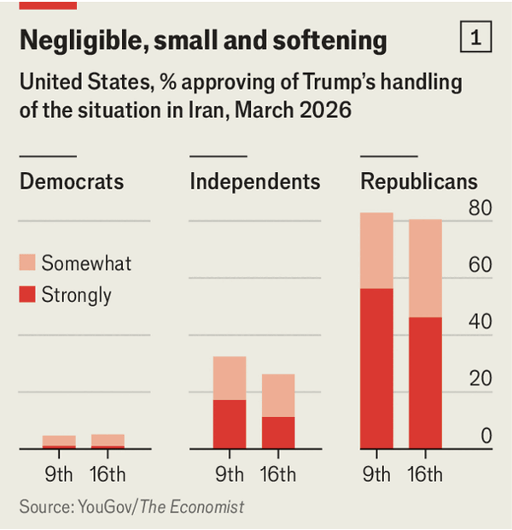
民调与选举算术进一步恶化。对战争的认可在民主党中几乎为零,在独立选民中偏低,在共和党中虽高但“强烈支持”快速下滑。青年与 Latino 这两个 2024 年明显转向 Trump 的群体,汽油支出占收入比重高于其他美国人,因此更易受打击。所有摇摆州油价都上涨了至少 20%。民主党大概率赢得众议院,而要拿下参议院只需再增 4 席;在 North Carolina,这一席位的博彩市场已给出民主党翻盘约 80% 的概率。
战争持续时间是决定变量。乐观派认为经济痛苦虽重,但战争可能数周内结束,若夏季驾驶季前油价回落,共和党的中期前景未必绝望。悲观派则指出,Trump 没有解释战争目标,也未为显而易见的风险做准备;伊朗的廉价无人机却需要高成本拦截,威胁油轮和油气设施,而真正解决问题可能需要政权更替与地面部队,这是他不愿承担的。联盟层面也出现反噬:他在未事先协商的情况下要求盟友协助重开霍尔木兹海峡,却几乎未获响应。
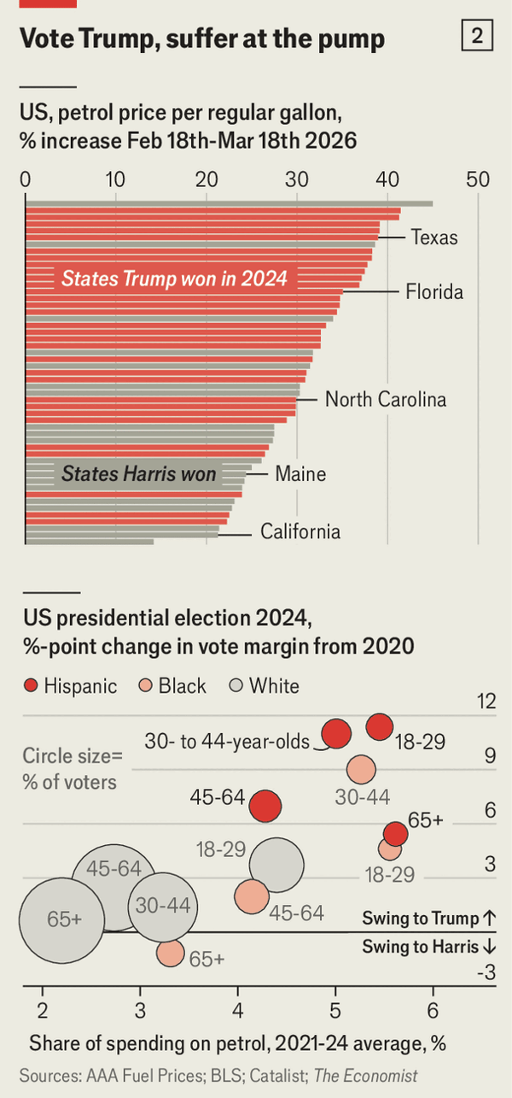
The Iran war is hurting Trump through both opinion and oil prices. Although he claims to have destroyed 100% of Iran’s military capability, the remaining “0%” is still choking off 10%-15% of global oil supply. The war is more unpopular than any recent conflict and increases the probability of a Republican drubbing in the November midterms. Petrol-station signs magnify the shock daily, and in red states that backed Trump in 2024, lower fuel taxes often make pump-price increases steeper than in blue states.
Polling and electoral arithmetic worsen the picture. Approval of the war is negligible among Democrats, low among independents and high among Republicans, but strong approval among Republicans is falling fast. Young people and Latinos, two groups that swung strongly toward Trump in 2024, spend a higher share of income on petrol than other Americans and are therefore more exposed. All battleground states have seen fuel-price rises of at least 20%. Democrats are likely to win the House, and need only 4 more seats for the Senate; in North Carolina, betting markets already give about an 80% chance of a Democratic gain.
War duration is the key variable. Optimists argue that the economic pain may be severe but brief, and that if oil prices ease before the summer driving season, Republican midterm prospects may recover. Pessimists note that Trump failed to explain the war’s purpose and prepare for obvious risks; Iran’s cheap drones require costly interceptors and can menace tankers and energy plants, while solving the problem may require regime change and ground forces he does not want to commit. Alliances are also backfiring: after starting the war without consultation, he asked allies to help reopen Hormuz and got almost no response.