年长员工较不受 AI 发展的冲击,且能更有效地运用大型语言模型。凭借其丰富的专业经验,资深工作者能够撰写更精确的提示词并轻易辨识出 AI 产生的错误资讯。这也使得市场上对资深工作者的需求增加,高阶职缺的广告数量有所增长,而基层职缺则呈现下滑趋势。
企业界积极推动将客户支援、研究及草拟行销素材等入门级任务自动化,进而加深了年轻员工对机器学习的相对悲观情绪。整体而言,虽然各个世代中多数人对这项技术仍持批评态度,但在职涯中具有较高资历的员工,在面对这波 AI 浪潮时确实感受到了较多的保障与益处。
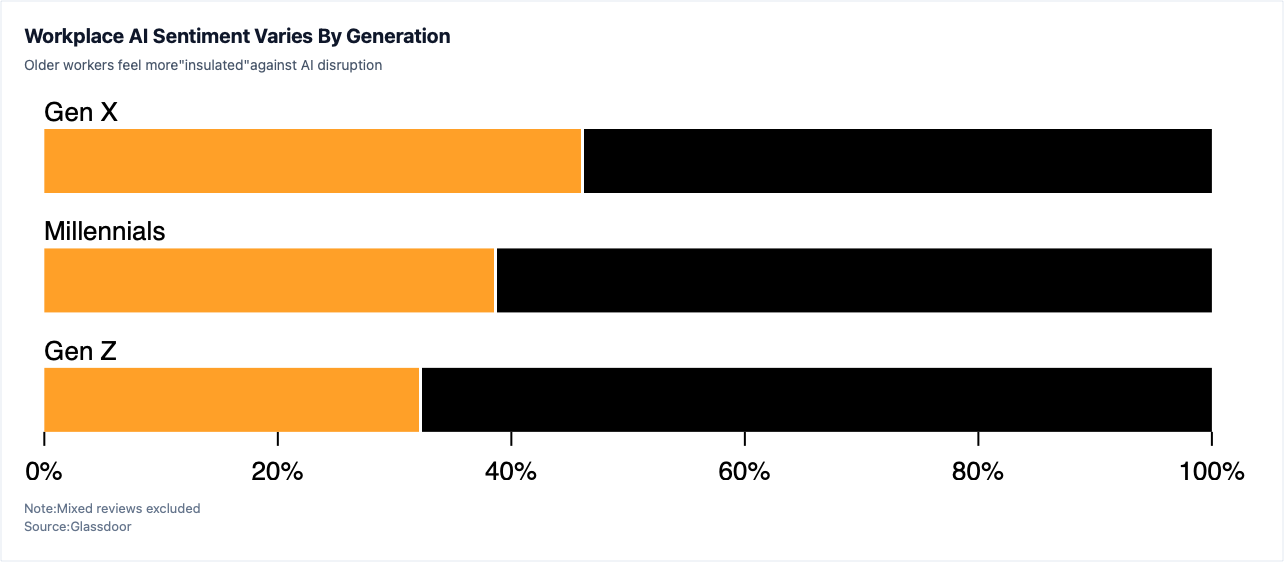
According to recent research by Glassdoor, seasoned workers in their 40s, 50s, and 60s hold the most positive attitudes toward artificial intelligence. This optimism largely stems from the fact that the AI transition is creating more opportunities for senior-level roles. In contrast, while younger generations use AI more frequently, their attitudes are relatively negative because entry-level jobs face the risk of being automated.
Older employees are less vulnerable to AI disruption and can utilize large language models more effectively. Drawing on their extensive professional experience, seasoned workers can draft more precise prompts and easily identify AI-generated misinformation. This dynamic has driven up demand for experienced talent, resulting in a growth of job advertisements for senior roles while entry-level postings have declined.
The push by the corporate world to automate entry-level tasks—such as customer support, research, and drafting marketing materials—has deepened the relative pessimism among younger workers regarding machine learning. Overall, although the majority of individuals across generations remain critical of the technology, employees with more seniority in their careers definitely feel more insulated and benefit more from the current AI boom.