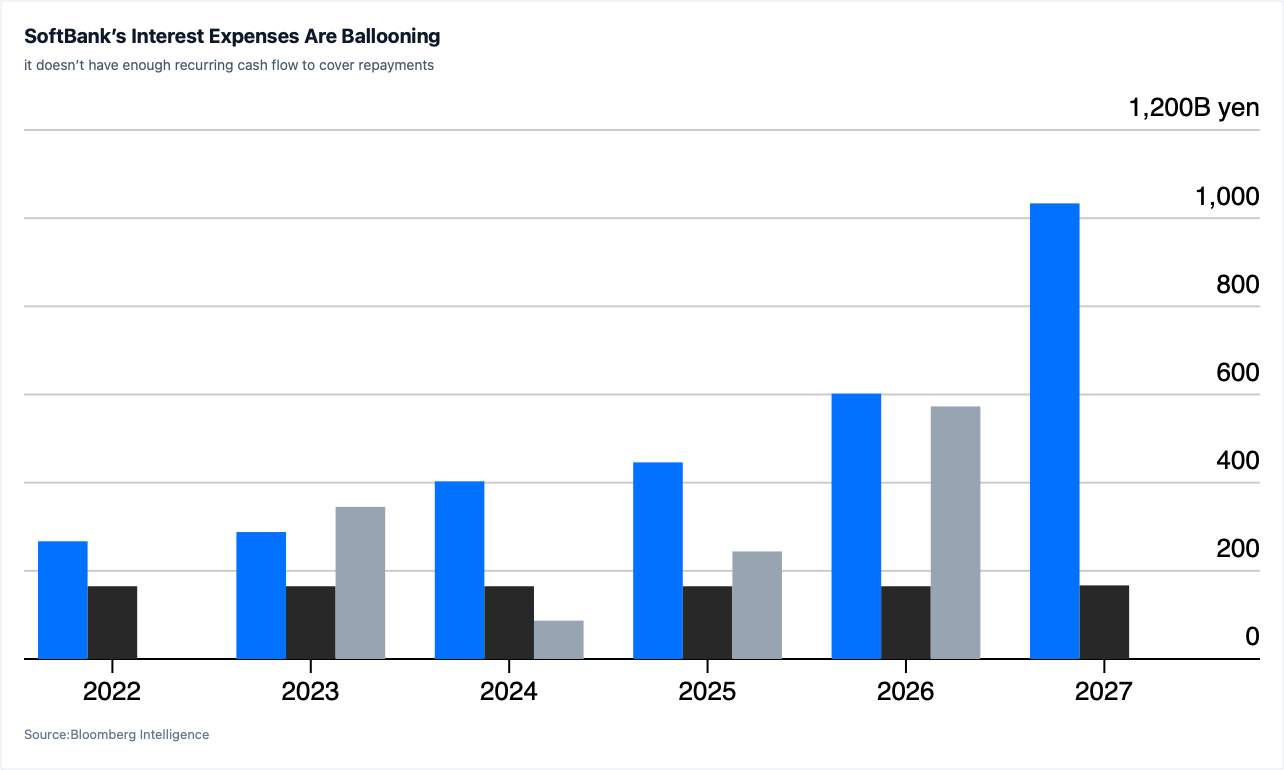
软银目前面临至少 200 亿美元的资金缺口,正准备推动一项历史性的美元债券发售案,计划筹集 100 亿至 200 亿美元,以偿还当初为注资 OpenAI 所借调的 400 亿美元过渡贷款;在软银的资产组合中,Arm 与 OpenAI 合计占据了约 75% 的总资产价值,且利息支出已大幅超越其电信业务等经常性现金流,财务杠杆压力持续攀升。
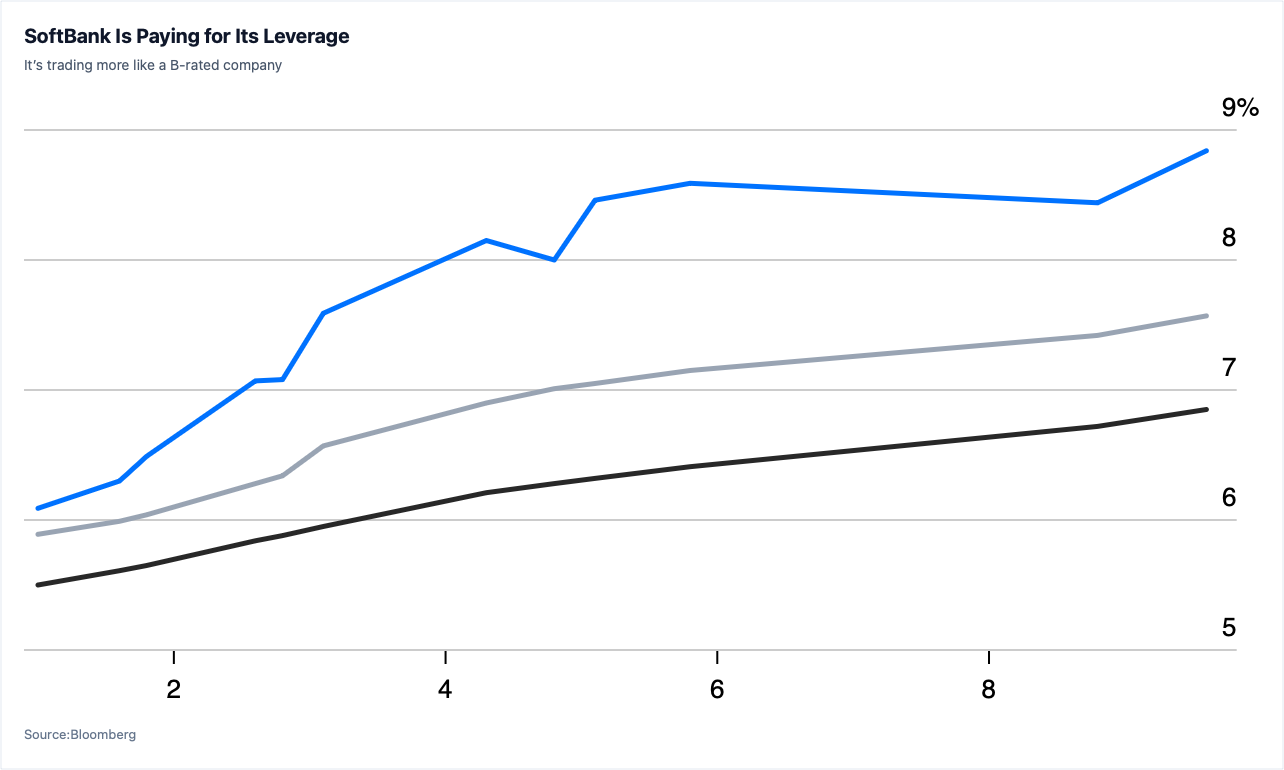
随著日本 10 年期公债殖利率攀升至约 3% 且日本央行准备升息,孙正义长期仰赖的低成本日圆融资套利交易模式已难以维系,软银不得不转向美国市场发债筹资;投资人与交易员预期债券供给过剩,正要求更高的收益率溢价,使软银现有美元债券的交易水准逼近垃圾债评级,显示出信贷市场对孙正义高度集中押注 OpenAI 的激进策略充满疑虑。
OpenAI Chief Executive Officer Sam Altman announced that the startup will not go public this year, despite having confidentially filed in June, in order to address AI safety concerns; this decision prevents SoftBank Group from cashing out of its 13% stake anytime soon, triggering severe market anxiety over concentration risk and causing SoftBank's shares to plunge 11% in Tokyo alongside a sharp widening of its credit default swaps.
SoftBank faces a funding shortfall of at least $20 billion and is preparing a historic dollar bond sale seeking $10 billion to $20 billion to repay a $40 billion bridge loan taken out for its OpenAI investments; with Arm and OpenAI making up approximately 75% of its total portfolio value, SoftBank's ballooning interest expenses have now dwarfed recurring cash flows from its domestic telecom business, intensifying balance-sheet strain.
The unraveling of the traditional yen carry trade—driven by rising Japanese sovereign yields toward 3% and prospective Bank of Japan rate hikes—has stripped Masayoshi Son of cheap domestic funding, forcing the company to court US credit investors who are demanding heavy risk premiums; consequently, SoftBank's existing notes are trading like low B-rated debt, underscoring growing skepticism toward Son's aggressive, undiversified bet on OpenAI.