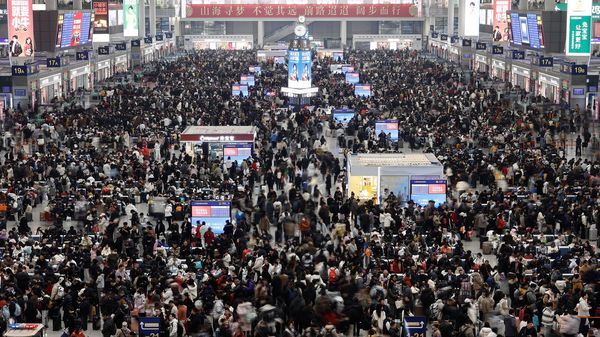
在为期40天的春运中,官方预计出行将达创纪录的95亿人次,较2024年的84亿增加11亿人次(约增长13.1%),尽管人口在下降。随着2025年假期延长至2月15日至23日,人均支出仍低于疫情前水平,但在对多出的一天进行调整后,旅游总收入同比仍增长了5.7%。
交通模式显示出结构性变化:目前约五分之四的旅客使用私家交通工具,而铁路在商业客运出行中的占比已从十年前的11%升至去年的28%,且预计还会进一步上升。这一变化与高铁网络扩张相一致,线路里程从2010年的2000公里增至2025年底的50000公里,不过对更便宜的传统列车的需求仍然可见。
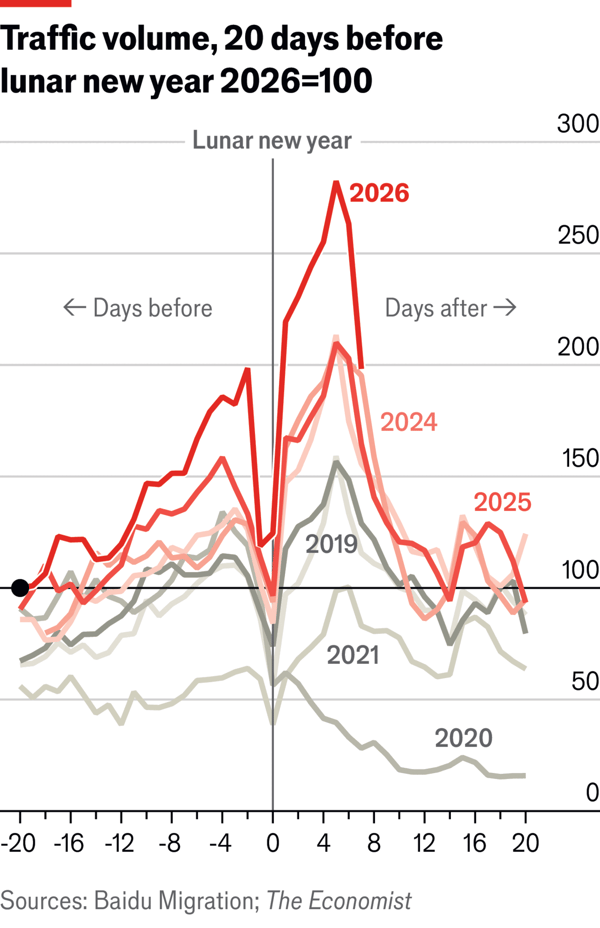
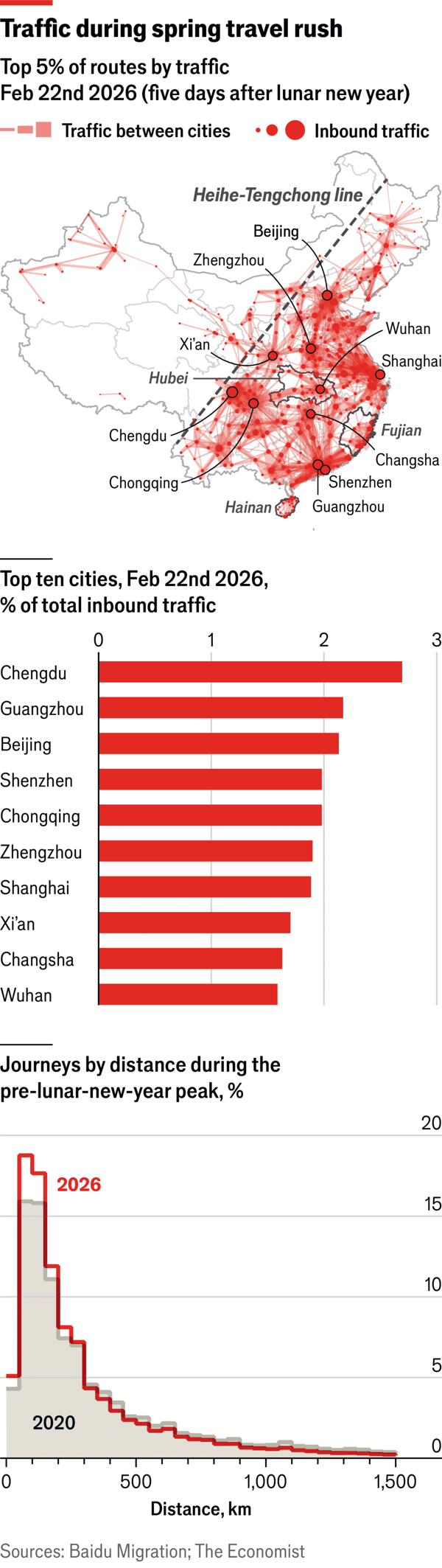
百度迁徙数据表明,出行在时间和空间上都在压缩,节前客流峰值从2019年春节前4天、2023年前3天,移动到今年前2天。出行本地化也在增强,省内出行占比从2020年的54%升至62%,最繁忙走廊是西安至咸阳,连接兵马俑附近城市与一个400万人口、仅24公里外的邻近城市。
During the 40-day chunyun, officials expect a record 9.5bn trips, up 1.1bn from 8.4bn in 2024 (about 13.1% growth), even as population declines. With the 2025 holiday extended to February 15-23, per-capita spending stayed below pre-pandemic levels, yet total tourism revenue still rose 5.7% year on year after adjusting for the extra day.
Transport patterns show structural change: about four-fifths of travelers now use private vehicles, while rail’s share of commercial trips rose from 11% a decade ago to 28% last year and is expected to increase further. This shift aligns with high-speed rail expansion from 2,000 km of track in 2010 to 50,000 km by end-2025, though demand for cheaper legacy trains remains visible.
Baidu Migration data indicate temporal and spatial compression, with the pre-holiday peak moving from four days before Lunar New Year in 2019 to three days in 2023 and two days this year. Trip localization also intensified, as within-province travel climbed from 54% in 2020 to 62%, and the busiest corridor was Xi’an–Xianyang, linking a city near the Terracotta Army to a 4 million-person neighbor only 24 km away.
Source: Mapping China’s holiday rush
Subtitle: How travel during the Spring Festival is changing
Dateline: 2月 26, 2026 04:27 上午