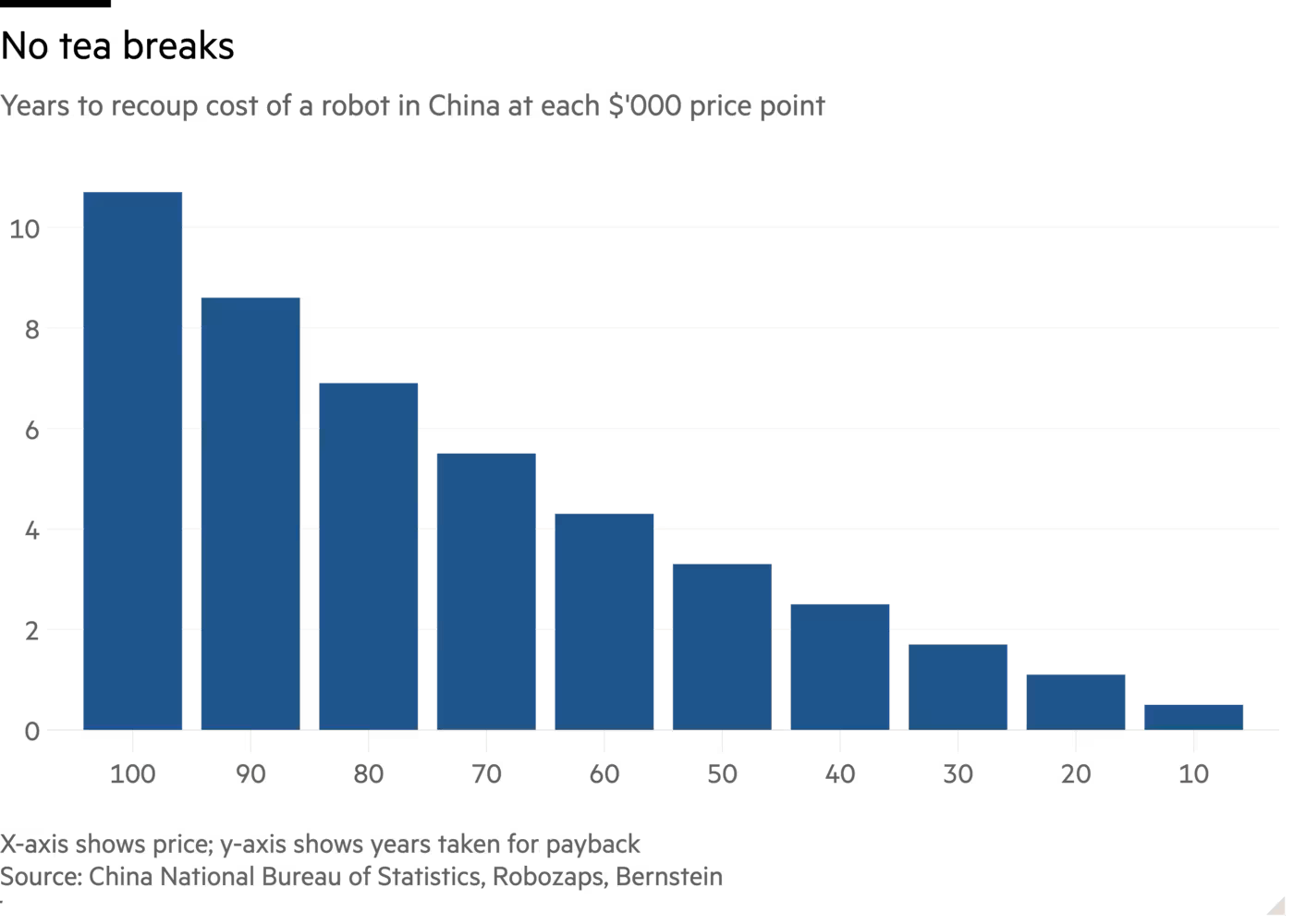
随著供应增加和技术进步降低成本,经济可行性正在提高。Barclays 的报告指出,人形机器人的价格在过去十年中骤降了 30 倍,降至每台约 100,000 美元,这与一名美国制造业工人的年薪相当。在中国,价格显著更低,Unitree 提供的模型起售价为 13,500 美元,而 Elon Musk 则预计 Tesla 的 Optimus 最终零售价将在 30,000 美元左右。尽管电池改进将提高运行时间,但供应链脆弱性依然存在。McKinsey 估计,依赖中国严格控制的稀土磁铁的执行器占了总材料成本的 50%。
政治和社会因素也塑造了人形机器人的转型。与办公室人工智慧流失工作不同,工厂和仓库的工作流失具有重大的政治影响力,国内保护主义政策便证明了这一点。尽管工人们感到焦虑,但机器人的普及似乎不可避免,不过这一转变仍是渐进的。目前,人类劳动力依然至关重要,正如 Tesla 在美国为开发 Optimus 专案而广告招募的大约 200 个工作职缺所强调的那样,这表明人类的专业知识在构建未来的自动化劳动力中仍然是必需的。
The integration of artificial intelligence into physical humanoid robots is accelerating, transitioning from science fiction to factory floors. Currently, a conservative estimate of 25,000 humanoids exists globally, primarily in China. However, Morgan Stanley predicts exponential growth to 1 billion droids by 2050. At that point, assuming their capabilities match human performance, humanoids would represent approximately 25% of the current global workforce and 20% of the projected 2050 workforce. This expansion is driven by tech giants like Google’s DeepMind and Alibaba, alongside electric-vehicle manufacturers like Tesla, Xpeng, and Xiaomi, which are moving toward mass production.
Economic viability is improving as increased supply and technological advancements drive down costs. Barclays reports that humanoid prices have plummeted 30-fold over the last ten years to approximately $100,000 per unit, aligning with the annual compensation of a US manufacturing worker. In China, prices are significantly lower, with Unitree offering models starting at $13,500, while Elon Musk projects Tesla’s Optimus will eventually retail for around $30,000. While battery improvements will boost uptime, supply chain vulnerabilities persist. McKinsey estimates that actuators, which rely on rare earth magnets heavily controlled by China, constitute 50% of total material costs.
Political and social factors also shape the humanoid transition. Unlike office-based AI displacement, factory and warehouse job losses carry significant political weight, as evidenced by domestic protectionist policies. Despite worker anxiety, the adoption of androids seems inevitable, though the transition remains gradual. For now, human labor remains essential, as highlighted by the approximately 200 job openings advertised by Tesla in the United States to develop the Optimus project, indicating that human expertise is still required to build the automated workforce of the future.