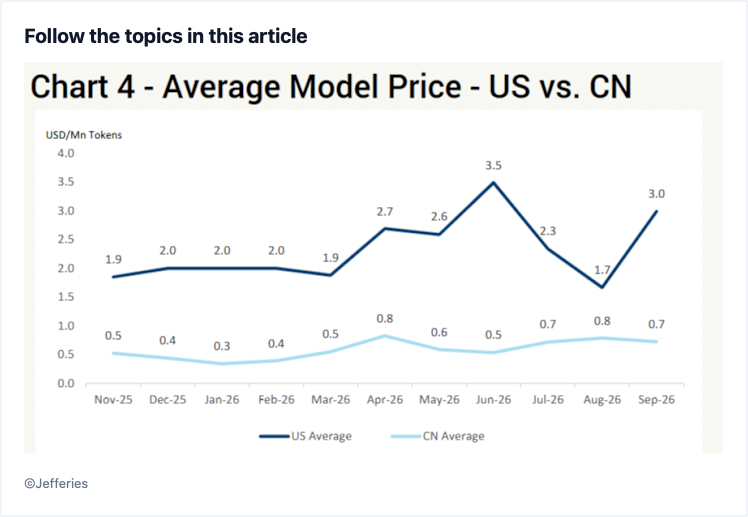
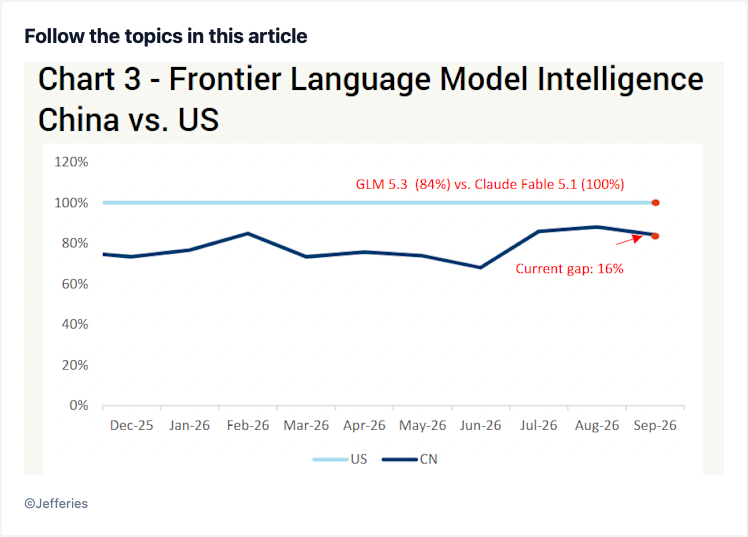
相较于乐观论调,杰富瑞分析师提出警讯,指出随著新进业者借由模型蒸馏技术以较低成本迅速追赶前沿表现,大型语言模型的定价权正逐渐被削弱;在美中厂商竞争加剧、折扣差距扩大且市场玩家过多的情况下,整体AI产业恐面临投资过剩与资本支出过高的挑战,未来可能需要走向整合以维持合理的投资回报率。
巴克莱分析师进一步指出,纯粹的模型参数与降价竞争并非未来核心,真正的战场在于推论经济效益与工作负载的灵活编排。随著合成智慧日益商品化,价值链正转向具备治理、路由与资料监控能力的战略控制架构,而拥有品牌信任度与合规优势的传统西方科技企业或将在这场竞争中脱颖而出。
Citigroup analysts emphasize that frontier AI developers see no slowdown in compute scaling, viewing safety and alignment as compute-intensive processes that continue to drive robust demand across hardware, power, and data center infrastructure; concurrently, Morgan Stanley pitches SpaceX as an effective AI portfolio hedge, highlighting that its core rocket and satellite operations anchor most of its valuation while providing resilient enterprise AI exposure and strong liquidity.
Offering a more cautious perspective, Jefferies warns that large language model pricing power is eroding as new low-cost entrants leverage model distillation to rapidly bridge performance gaps; this escalating competition and widening price discounts—particularly from Chinese labs—suggest the sector is experiencing overcrowding and excessive capital expenditures, which may ultimately require industry consolidation to restore sustainable returns.
Barclays analysts argue that raw model metrics and price wars are becoming secondary to inference economics and workload orchestration flexibility. As synthetic intelligence becomes commodified, strategic value is shifting toward governance, routing frameworks, and trusted corporate brands capable of helping enterprises manage the total economic cost and execution of complex AI workflows.