今年,印度的活跃互联网用户数预计将突破10亿大关,高于2020年的6.22亿。这一迅速扩张得益于价格低廉的数据流量(每吉字节仅需15卢比,约合16美分,不足全球平均水平的十分之一)以及低至2000卢比(约合21美元)的二手中国品牌智能手机。数字化的增长在农村地区尤为集中,其互联网使用率的增长速度是城市的四倍。在北方邦的纳格普尔等村庄,智能手机和人工智能正在改变教育模式;目前,人工智能应用程序在全国的下载量已超过6亿次,而在使用手机进行学习的儿童中,有四分之三报告使用人工智能工具进行练习和辅助学习。
除了教育,智能手机还在改写印度农村的社会与经济规则。年轻的农村女性正在通过手机获取更多的独立性,甚至反抗地方限制,例如去年拉贾斯坦邦15个村庄曾试图对已婚女性实施智能手机禁令(该禁令后被撤销)。此外,数字化连接正在改变人口结构,它让农村女性接触到城市生活方式,从而加速了生育率的下降,并使年轻人能够到瓦拉纳西以外的地方寻找技术性工作。然而,数字接触也带来了挑战:孩子们越来越容易因短视频和游戏分心,许多男孩不再愿意从事体力劳动。
由于印度30岁以下人口中仅有约一半拥有工作,屏幕上瘾已成为一个主要问题,以至于新成立的“蟑螂民众党”要求成员每天至少在线11个小时。为了应对这些担忧,安得拉邦和卡纳塔克邦最近禁止儿童使用社交媒体,国家信息技术部部长也在考虑实施联邦层面的限制。然而,专家警告说,在仅有约一半农村女性拥有手机且设备经常共享的国家,一刀切的禁令可能会适得其反;他们主张应加强对平台的监管并提高数字素养,以解决学校教育质量差和就业岗位匮乏等根本性的线下挑战。
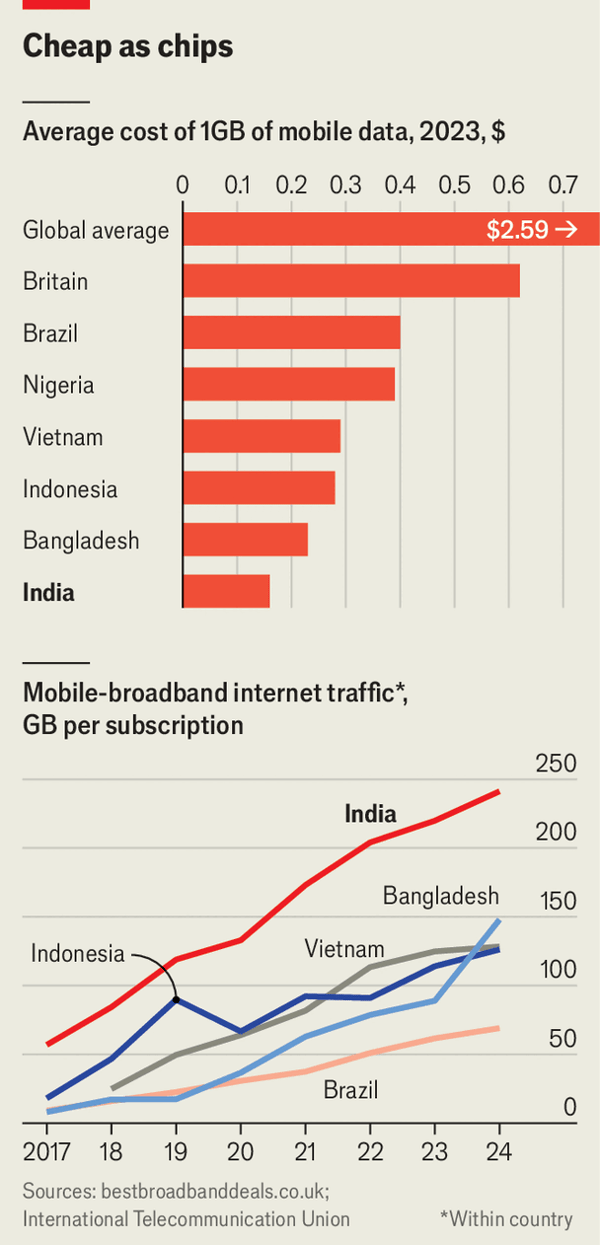
India's active internet user base is projected to exceed 1 billion this year, rising from 622 million in 2020. This rapid expansion is driven by affordable data priced at 15 rupees (16 cents) per gigabyte—less than one-tenth of the global average—and cheap devices like used Chinese smartphones costing as little as 2,000 rupees ($21). Digital growth is particularly concentrated in rural areas, where internet usage is expanding four times faster than in cities. In villages like Nagepur in Uttar Pradesh, smartphones and AI are transforming education, as AI apps have surpassed 600 million downloads nationwide, and three-quarters of students using phones for study utilize AI tools for practice and learning support.
Beyond education, smartphones are rewriting the social and economic rules of rural India. Younger rural women are gaining more independence through mobile access, defying local restrictions such as a temporary smartphone ban proposed for married women across 15 villages in Rajasthan last year. Furthermore, digital connectivity is changing demographics by exposing rural women to urban lifestyles, accelerating fertility decline, and enabling youth to seek skilled jobs beyond Varanasi. However, digital access also brings challenges: children are increasingly distracted by short-form videos and games, and many boys are turning away from manual labor.
With only around half of India's under-30 population employed, screen addiction has become a major issue, symbolized by the "Cockroach Janta Party" requiring members to spend at least 11 hours online daily. In response to these concerns, states like Andhra Pradesh and Karnataka recently banned children from social media, and the national IT minister is considering federal restrictions. However, experts warn that blanket bans in a country where only half of rural women own phones and devices are shared could backfire, arguing instead for stronger platform regulations and better digital literacy to address the root offline challenges of poor schooling and job scarcity.
Source: Smartphones and AI are remaking rural India
Subtitle: Villages have fallen in love with short-form videos and chatbots
Dateline: 6月 25, 2026 04:18 上午 | Nagepur