在与伊朗战争引发的海湾冲突后,许多南亚和东南亚移民被迫返乡,其中包括27岁的尼泊尔人厨师Pushpa Kumar Chaudhary,他在阿联酋的餐厅倒闭后离开;他曾是海湾地区近170万尼泊尔工人中的一员。伊朗对海湾国家反击中,约二十多名遇难者中有超过一半是印度、尼泊尔和巴基斯坦移民,显示受冲击最直接的是外籍劳动者而非富裕移民。
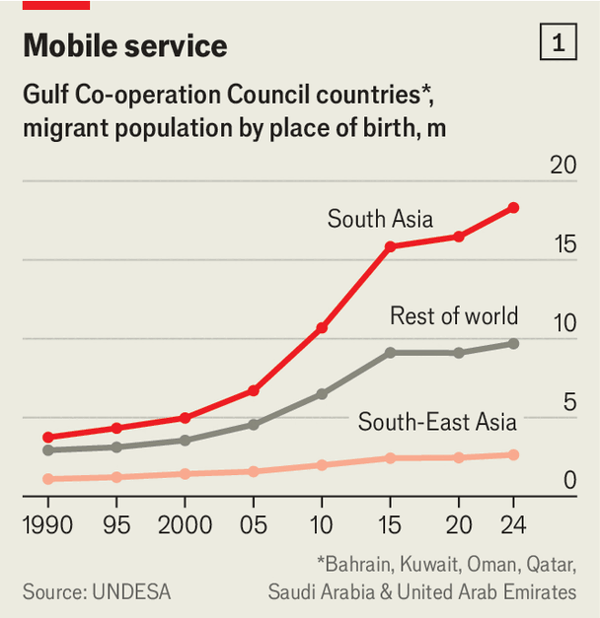
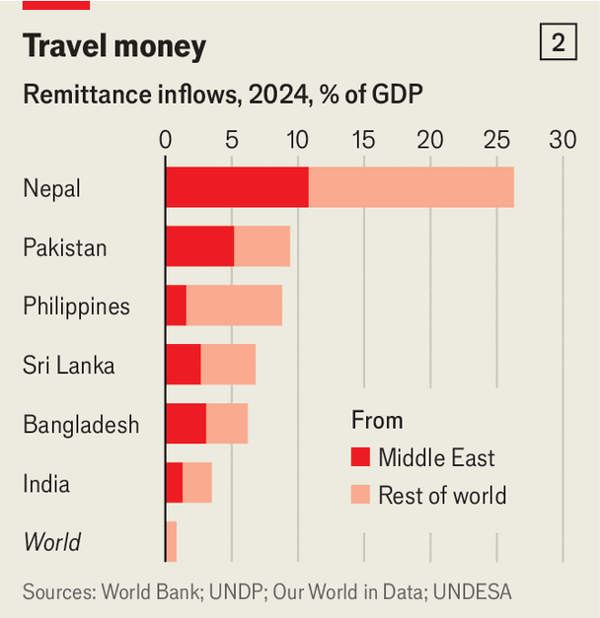
2024年,海湾合作委员会(GCC)六国雇用了超过2000万南亚和东南亚劳动者,比2010年增长了65%,其中大多从事厨师、建筑、保姆等蓝领岗位。迁出规模正在收缩:孟加拉国3月获得去海湾就业的批准降至31,279人,较去年同期92,460人大幅下滑,尼泊尔也因安全担忧暂停新工签;同时汇款高度依赖各国经济,孟加拉国2025年汇款约320亿美元(约占GDP的6.5%)、尼泊尔占GDP的约25%,印度占3.5%,资本经济学估算海湾GDP每下滑1%—2%通常对应汇款减少约5%。
若局势长期持续,孟加拉国、尼泊尔等输出国需要更快开辟新通道,包括已吸引大量人学习日语和韩语的日本和韩国,以及东南亚地区。日本和韩国移民占比分别仅3%和5%,远低于经合组织平均15%和海湾约50%,说明重新分流并不容易;4月9日马来西亚重开向孟加拉劳工开放市场,并通过双边协议扩大岗位并降低被剥削风险,显示政策分流存在可行窗口。
The Gulf conflict after the Iran war is forcing many migrants from South and Southeast Asia to return home, including 27-year-old chef Pushpa Kumar Chaudhary after his UAE restaurant closed; he had been among nearly 1.7 million Nepalis working across Gulf states. In Iranian counter-strikes on Gulf countries, more than half of roughly two dozen deaths were Indians, Nepalese, or Pakistanis, showing that migrant laborers, not wealthier expatriates, are the group most exposed.
In 2024, GCC states employed over 20 million workers from South and Southeast Asia, up 65% from 2010, with most in blue-collar roles such as cooking, construction, and domestic care. Outflows are now shrinking: Bangladeshi emigration clearances for Gulf jobs fell to 31,279 in March from 92,460 a year earlier, while Nepal slowed departures by halting permits, and remittance dependence is high—Bangladesh got about $32bn in 2025 (6.5% of GDP), Nepal about 25% of GDP, and India 3.5%; Capital Economics estimates a 1–2% Gulf GDP drop is usually linked to a 5% fall in remittances.
If instability persists, Bangladesh, Nepal and similar countries must open alternatives beyond the Gulf, including East Asia and Southeast Asia, where interest is already rising as workers learn Japanese and Korean. But the shift is difficult: migrant shares are only 3% in Japan and 5% in South Korea versus a 15% OECD average and roughly 50% in GCC states, so the re-routing path is not yet mature. A notable policy change came on April 9 when Malaysia reopened its labor market to Bangladeshi workers through a bilateral deal to expand jobs and reduce exploitation, reinforcing calls for stronger labor diplomacy.
Source: Collapsing remittances will compound Asia’s energy shock
Subtitle: Could workers kicked out of the Gulf find fortune in East Asia?
Dateline: 4月 16, 2026 04:16 上午 | DHAKA, KATHMANDU and SINGAPORE