在 Edelman 于 late 2025 进行的年度信任调查中,只有 21% 的美国人表示他们预期下一代会过得更好,较前一年下降 9-point,使美国低于受访国家的中位数。密西根大学(University of Michigan)的每月消费者调查中,受访者是否预期自己5年后财务状况会更好的指标,在 October 创下有纪录以来最低。Gallup 也发现 2025 年的乐观情绪变化因政治立场而异:Democrats 下降 7.6 points,independents 下降 1.5 points,而 Republicans 整体上并未比前一年更乐观。
可能的解释包括:标准指标未能捕捉到的经济因素(不确定性、不平等,以及对 AI 等技术的恐惧)、透过萤幕更大量接触负面新闻、社会孤立,以及对美国力量的地缘政治焦虑。政党掌控情势愈来愈影响人们对经济的感受,但两党通常此消彼长的抵消模式似乎变弱,出现一方下滑而另一方未上升的情况。与此相关、关于第 2nd Trump administration 反应的民调显示,双方情绪都很强烈,但回报的「hope」很少,凸显 乐观(一般相信事情会顺利)与 希望(相信自己能采取行动改善结果)之间的差异;这也可能有助于解释所谓的「vibecession」(脱节):即使经济数据正面,情绪仍然低迷。
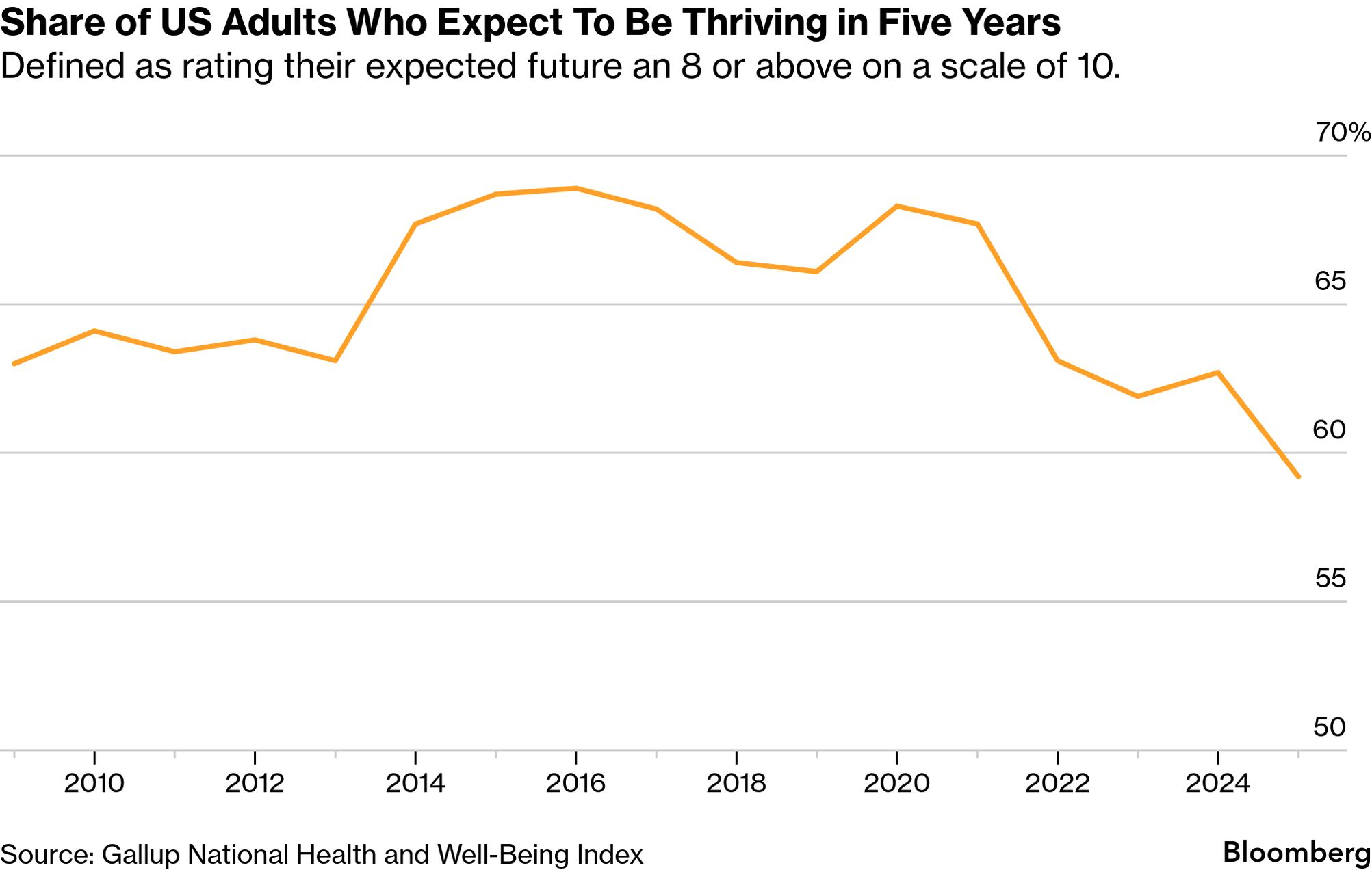
Gallup released a poll this week asking US adults what they expect their lives to be like in 5 years, and the share expecting to be “thriving” is the lowest since Gallup began reporting the series in 2009. Gallup defines “thriving” as scoring 8 or higher on a 10-point ladder, so the bar is high, but the decline aligns with other indicators that Americans are growing less optimistic about the future.
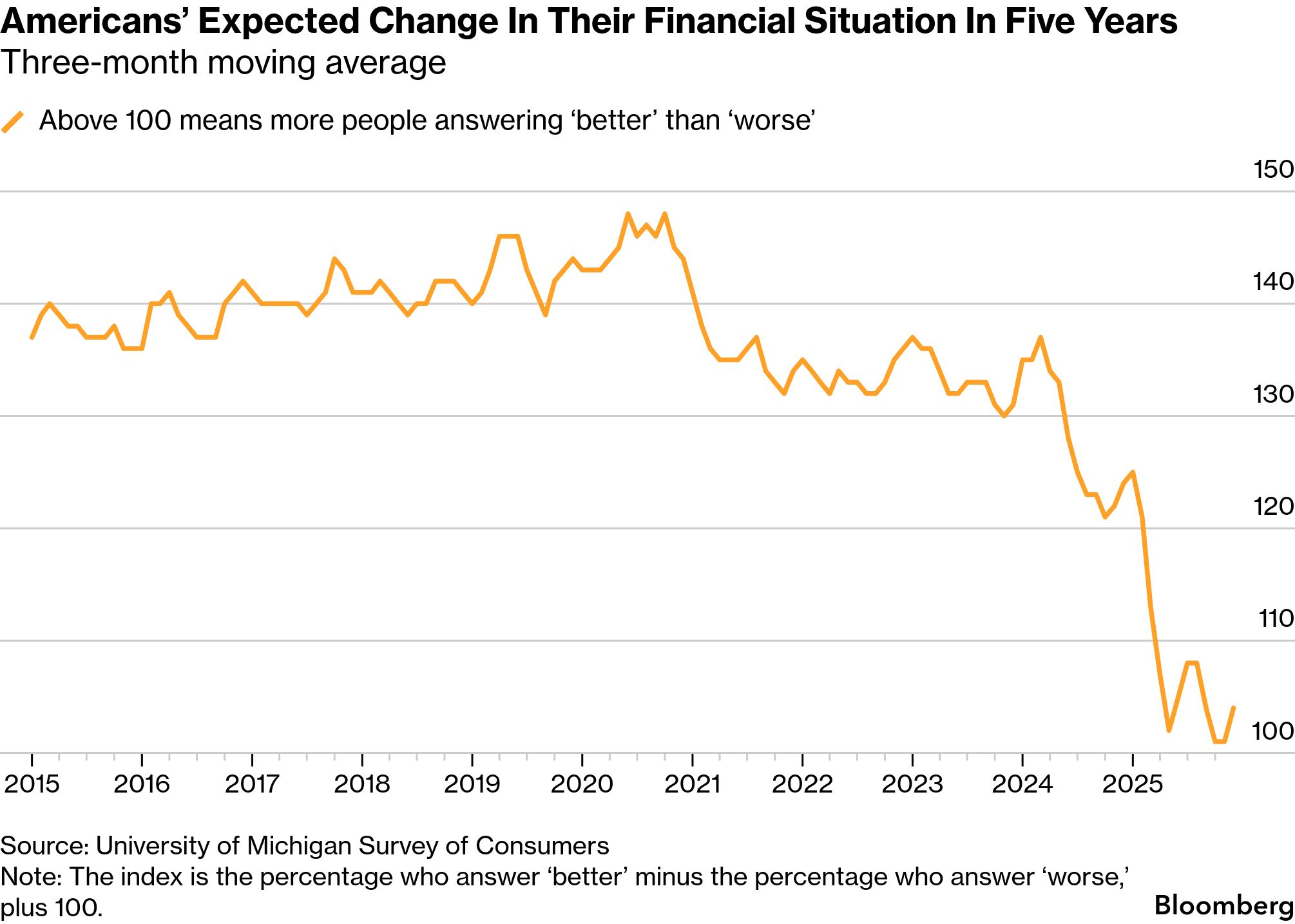
In Edelman’s annual trust survey conducted in late 2025, only 21% of Americans said they expect the next generation to be better off, a 9-point drop from the prior year, placing the US below the median country surveyed. The University of Michigan’s monthly consumer survey measure of whether respondents expect their financial situation to be better in 5 years hit its lowest recorded level in October. Gallup also found optimism changes in 2025 varied by politics: Democrats fell 7.6 points, independents fell 1.5 points, and Republicans were not more optimistic than the year before in aggregate.
Possible explanations include economic factors not captured by standard indicators (uncertainty, inequality, and fear of technologies like AI), heightened exposure to negative news via screens, social isolation, and geopolitical anxiety about US power. Partisan control increasingly shapes perceptions of the economy, yet the usual offsetting pattern between parties appears weaker, with one side declining and the other not rising. Related polling about reactions to the 2nd Trump administration found strong emotions on both sides but little reported “hope,” underscoring a distinction between optimism (a general belief things will work out) and hope (a belief one can act to improve outcomes), which may help explain the “vibecession” where sentiment stays poor despite positive economic data.