全球人口正快速集中到低洼、洪涝高风险的亚洲与非洲中等收入巨型城市。2025 年联合国数据显示,雅加达(4,200 万)、达卡(3,700 万)与东京(3,300 万)成为全球最大城市;上海与开罗也进入前十。未来至 2050 年新增的 10 亿城市人口中,约 50% 将落在七国:印度、尼日利亚、巴基斯坦、刚果(金)、埃及、孟加拉国与埃塞俄比亚。与此同时,季风带正经历更极端的降雨事件:过去数周洪灾导致近 1,000 人死亡,其中印尼苏门答腊北部逾 442 人、泰国南部至少 160 人。随着气温每升高 1°C,大气含水量提升约 7%,传统经验与历史洪水模型快速失效。
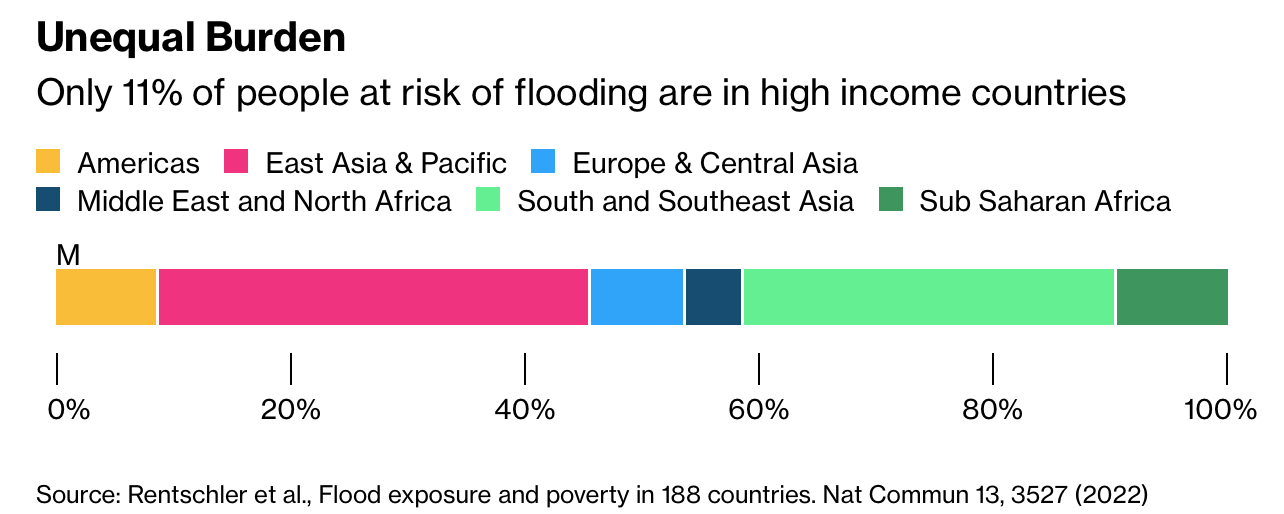
城市扩张速度远超基础设施建设能力,使洪灾风险在都市地区尤为严重。农村人口将在 2040 年代开始永久下降,而城市移民多被迫居住在最危险的区域,如滑坡带、沼泽地或历史上被视为不可居住的边缘地带。全球 18 亿暴露于洪水风险的人口中,仅 11% 生活在高收入国家,意味着多数高危城市缺乏资金进行大规模排水、堤防或海岸工程建设。近期洪灾在泰国合艾与斯里兰卡科伦坡等经济中心造成最严重破坏,说明灾害源于发展滞后,而非贫困本身。
未来几十年城市被视为经济增长核心,但基础设施落后将使城市脆弱性加剧,正如印度因水资源短缺和污染所显现的压力。河流与海岸长期推动城市繁荣,如今海平面上升与极端暴雨正将这些生命资源转化为潜在毁灭力量。全球快速增长的巨型城市正处在被洪水重塑的前线。
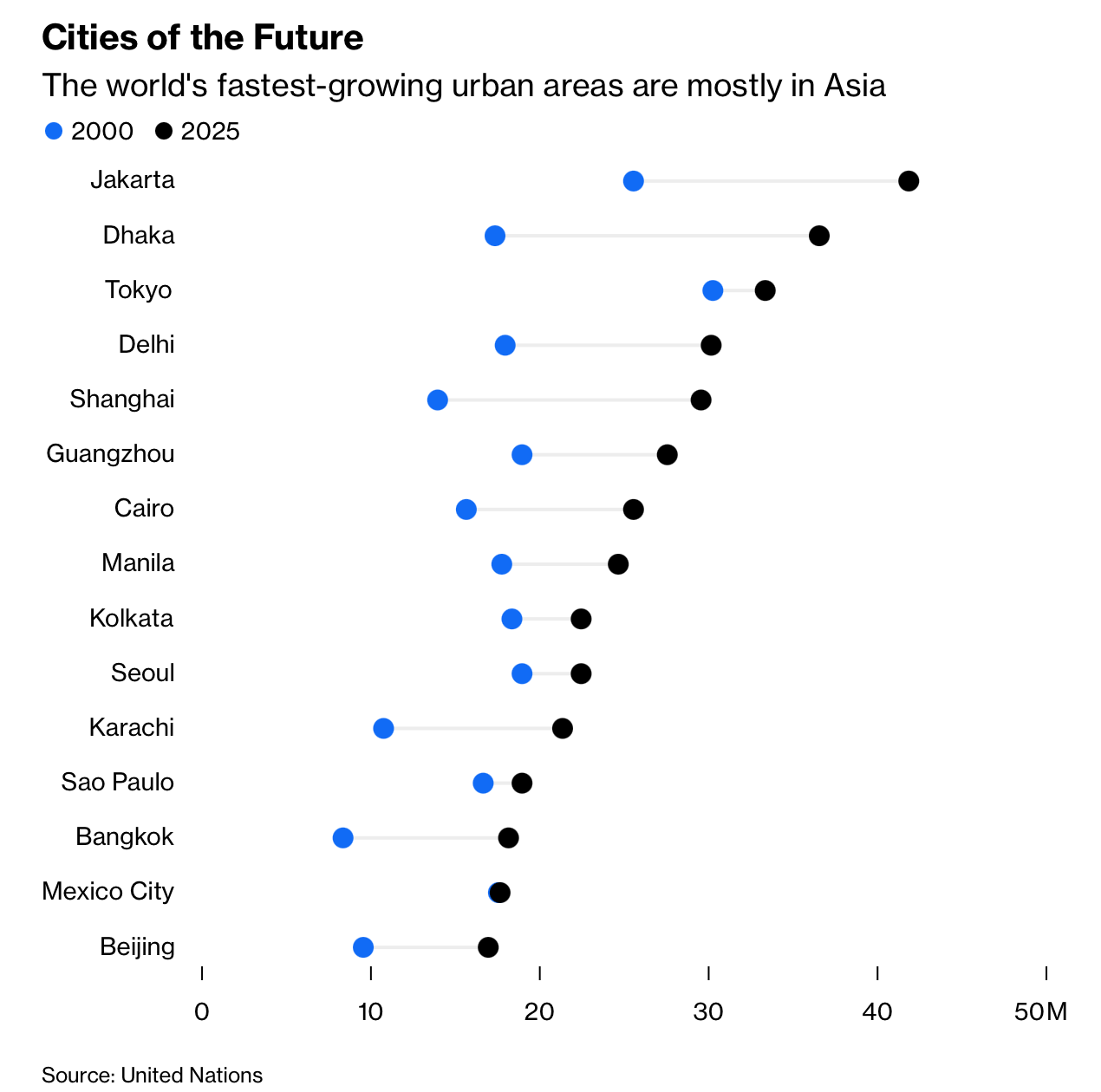
Global population is concentrating rapidly in low-lying, high-flood-risk Asian and African megacities. A 2025 UN report shows Jakarta (42 million) and Dhaka (37 million) have surpassed Tokyo (33 million), while Shanghai and Cairo have entered the global top ten. Roughly half of the additional one billion urban residents expected by 2050 will be in seven countries: India, Nigeria, Pakistan, the DR Congo, Egypt, Bangladesh and Ethiopia. At the same time, the monsoon belt faces surging extreme rainfall: nearly 1,000 people have died in recent storms, including more than 442 in northern Sumatra and at least 160 in southern Thailand. With each 1°C of warming, atmospheric moisture capacity rises about 7%, making traditional flood expectations obsolete.
Urban growth is outpacing infrastructure, magnifying flood risks. Rural population will begin permanent decline in the 2040s, while urban migrants often settle in the most dangerous zones — landslide slopes, swamps and previously avoided marginal land. Only 11% of the world’s 1.8 billion flood-exposed people live in high-income countries, leaving most vulnerable cities without the engineering capacity for drainage or coastal defenses. Recent disasters in Hat Yai and Colombo show that flooding reflects developmental lag rather than absolute poverty, striking fast-growing economic hubs unable to keep pace with their own expansion.
Cities will remain central to economic strategy, but mounting water stress and environmental degradation — already evident in India’s major centers — highlight the risks of failing urbanization. Rivers and coastlines have historically enabled metropolitan growth; rising seas and intensifying floods threaten to invert this advantage. Many of the world’s fastest-growing megacities now lie directly in the path of climate-driven inundation.